

A beautifully made, emotional love story
I’m not a young person. I’ve had many adventures, and discovered many loves in life, including my soon-to-be wife – my favourite person on the planet, whom I met almost 20 years ago. Our lives are so entwined and my love for this person so strong, that I often have the thought that life with her is the only kind of future I want. Forever Ago is a narrative adventure about love and life from Third Shift, an indie studio founded by two best friends. It focuses heavily on relationships, specifically on a life lived with “your person.”
This review will be story spoiler-free outside of the trailer elements, because I believe this game is best enjoyed as something you discover over the course of the roughly six hours you’ll spend with it. Playing as Alfred, a semi-belligerent retiree on a road trip, you adventure across parts of the United States, on a tour of memories. The general purpose of your adventure is to do some scrapbooking – take some photos, tick some goals Alfred has set for himself, and reminisce about his past.
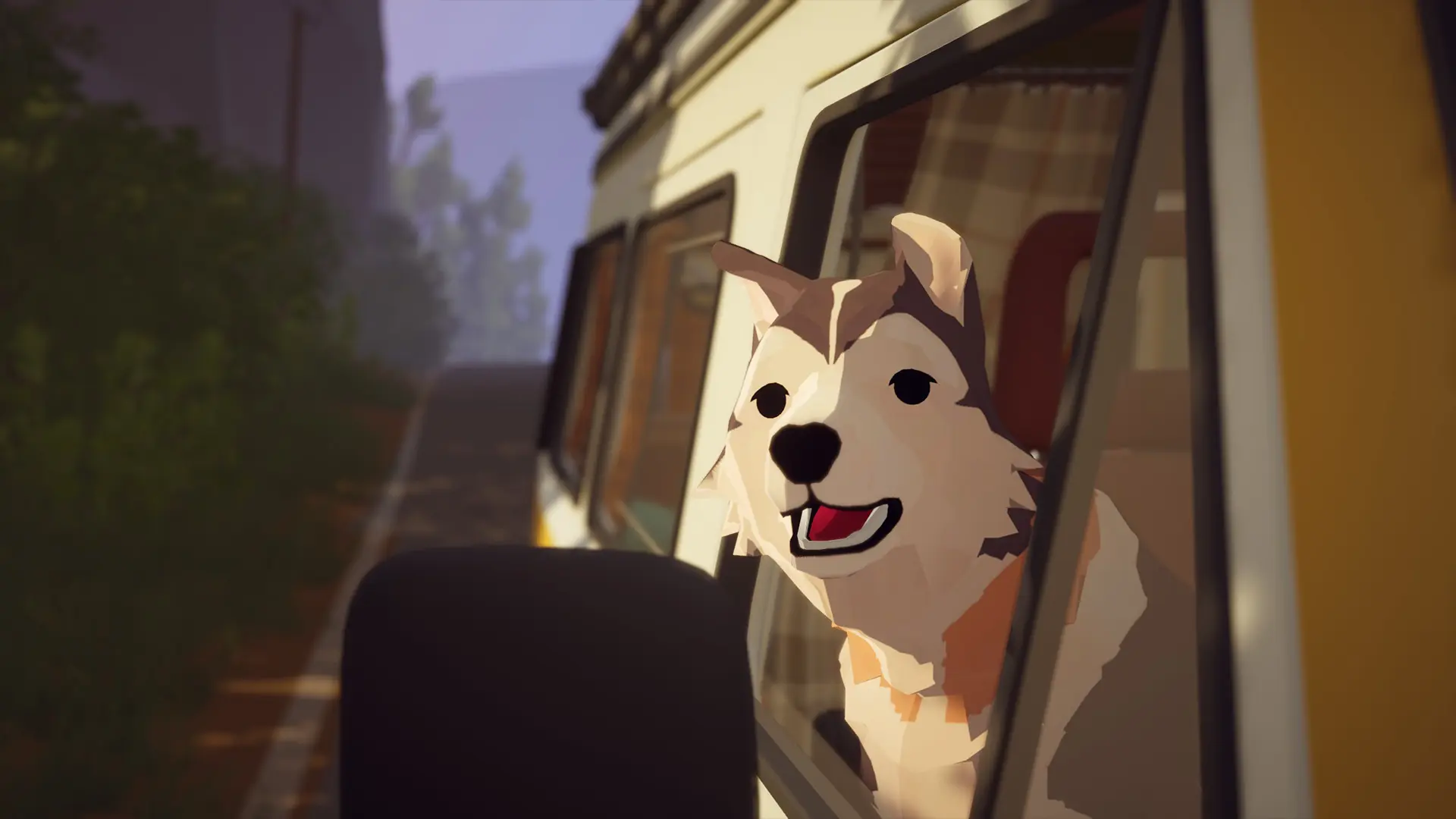
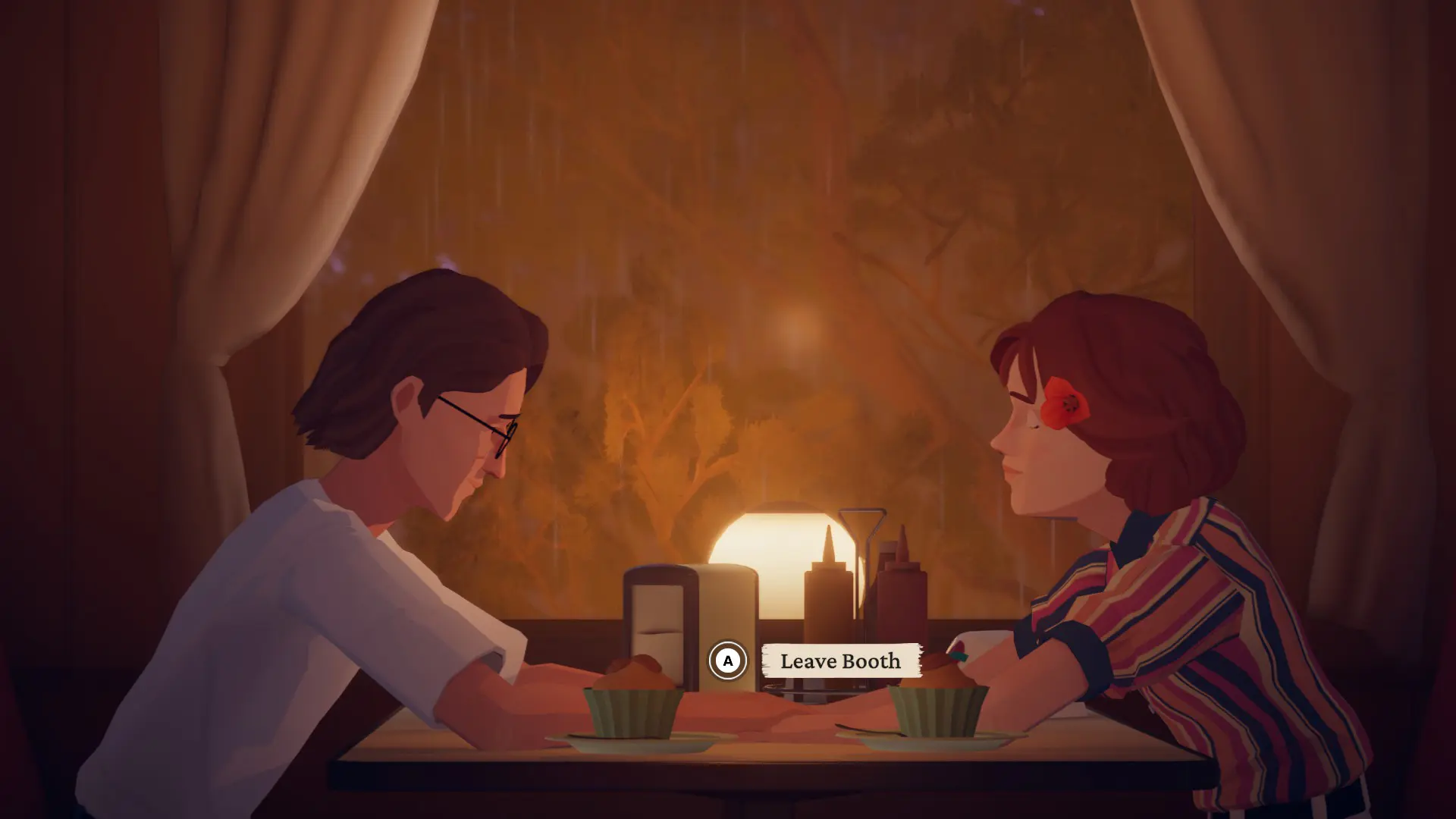
Now, you might say that this sounds fun and cosy, and it is, but Forever Ago is one of the most melancholic games I have ever played in my life. My partner and I played this on the lounge and right from the beginning, I would comment to her about the similarities she had with the character Audrey, and her love of art and going with the flow, and she would point out my irrational grumpiness at change, like Alfred shows. This led to us picturing ourselves when the characters’ stories were told, and by the end of the game, we’d each cried at least three times.
As I mentioned before, this game is about relationships, and for me personally, this resonated in a way games seldom manage, and almost never with this much sincerity. We were engaged in the story, which is masterfully told with huge gaps that get filled as the journey progresses, spanning about fifty years from the 1970s. You essentially get to experience Alfred’s adult life, and Third Shift has made that half-century so endearing that I feel this game is on par with any good series, movie, or book in storytelling, to the point where I would say that the game really should be considered an interactive story – a film or short series, but with you in control of the camera, quite literally.
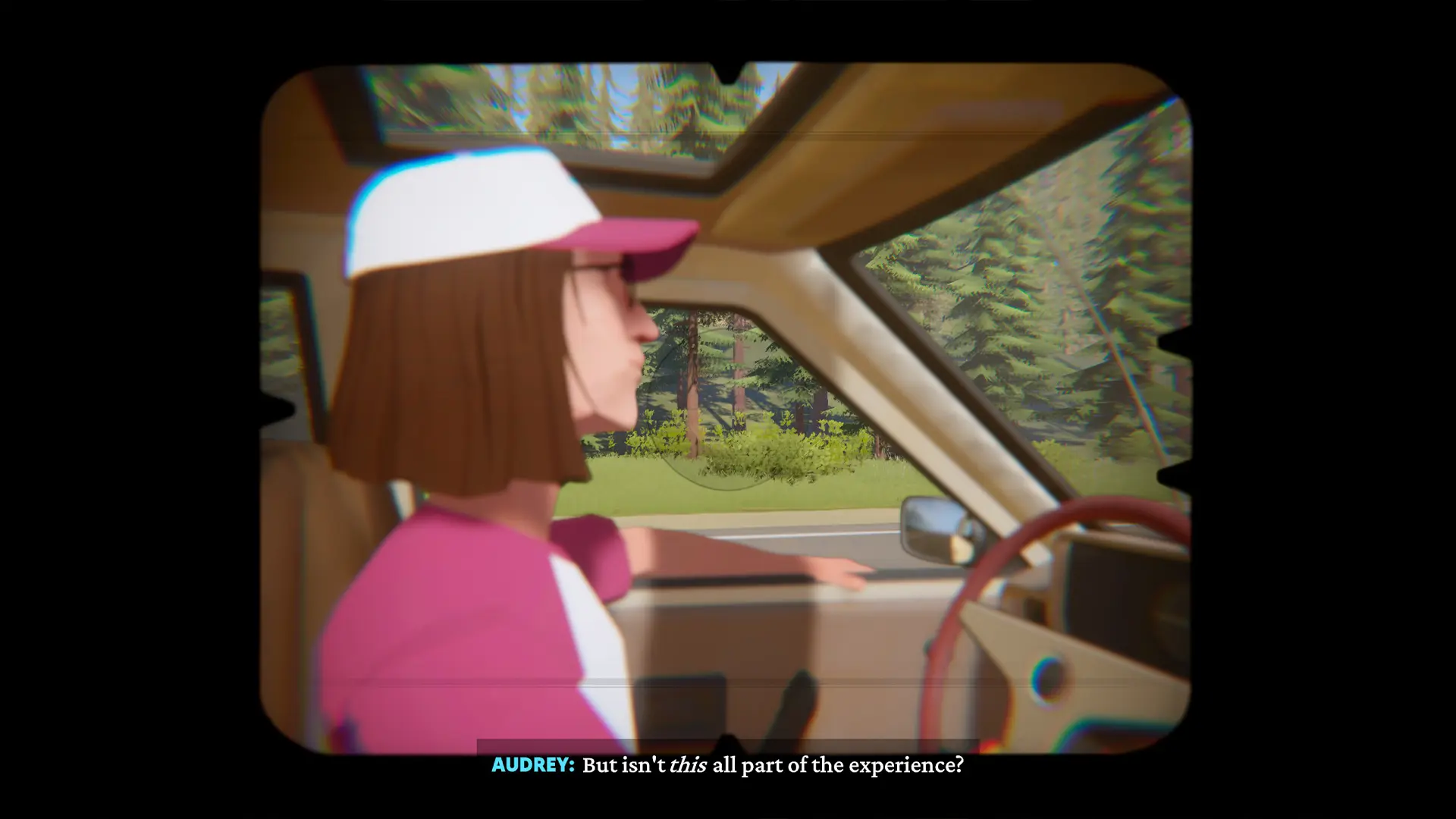
In terms of mechanics, you can instantly grasp this is an exploration game through and through – no failure, no reaction mechanics, and no pressure. The very first scene starts with learning to use the camera, taking photos around a room, with Audrey describing key items you photograph. Almost everything is explored through this lens of instant film photography, with characters explaining things as you zoom, focus and snap away through Alfred’s late-life road trip. As you might naturally expect when reminiscing about places you’ve been before, often you are tasked with taking photos of places Alfred has made memories in, and this is where the main story comes in. Memories and present-day observations weave together to spin a tale of how things were, and how Alfred feels now.
Another standout is the immersive and reactive cast. I have played many narrative games, and interacted with many a game system, but it’s refreshing to see a game, especially at indie scale, so well programmed as to have NPCs that seemingly go about their day doing their own thing until you interact with them. In one scene, I was taking photos of flowers for my own pleasure, when I heard someone talking behind me. When I left the viewfinder and turned around, an employee had parked their car, hopped out and was on their mobile phone, having a full conversation with their mother, before opening a diner door and walking in. This might sound obvious and ridiculous to point out, but this kind of immersion, where you are a character in a moving world, is the kind of small but technically demanding detail you rarely find in even the most ambitious roleplaying games.
Top these great points off with superb voice acting, delivering quality scripts, inside intriguing levels that genuinely had me excited to pull out the camera to take beautiful photos for the scrapbook, and you’ve got a strong contender for the best story game of the year, and a bold and uniquely emotional narrative for the medium. As for issues, I only ran into some small pain points with the camera controls – interactive elements had to be approached head on, so a few times I had to walk away and reapproach – a few seconds of annoyance for the hours of enjoyment involved.
Overall, if you are looking for a game that is slow, methodical and heavy in story, and you’re willing to sit with something quite sobering, then I must implore you not to miss Forever Ago, which for me is a new high-water mark in interactive storytelling that I will never forget.
Reviewed on PC | Review copy supplied by publisher
Like our content on covergeek? Hate dodgy AI summaries? Click here to add us as a Preferred Source on Google and see our posts more often!


Australian live-streamer and indie-gaming creator, Kymothy “Zigarot” Kennedy has been into gaming and its creative process since his very first PC build, reconstituted from scraps of military hardware in order to play the likes of AngbandTK and Scorched Earth.