
AI is bad. Humans are an expandable impedance to progress. You are the last guy, tasked with exposing and eliminating whatever rogue system has kicked off the end of life as we know it. This is charted territory in fiction, a cautionary tale repeated over decades. But few masters of doomsday sci-fi possessed the kind of twisted foresight to grasp how insidious the advent of AI would actually be – where man’s folly wasn’t simply in creating the math to prove itself practically redundant, but in robbing itself of self-determination, cultural purpose and critical thinking in the same, fell stroke.
Pragmata‘s story is one about the unquantifiable, irreplicable essence of human connection. It’s an indictment of unchecked capitalism and throwaway culture. And it’s an AI cautionary tale for a post-genAI world. It’s also really goddamned good.
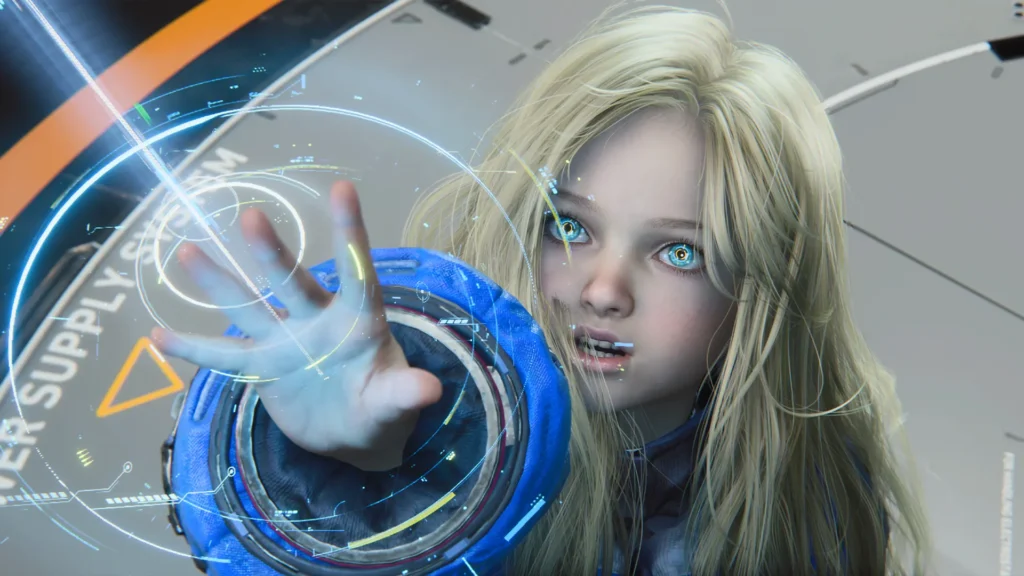
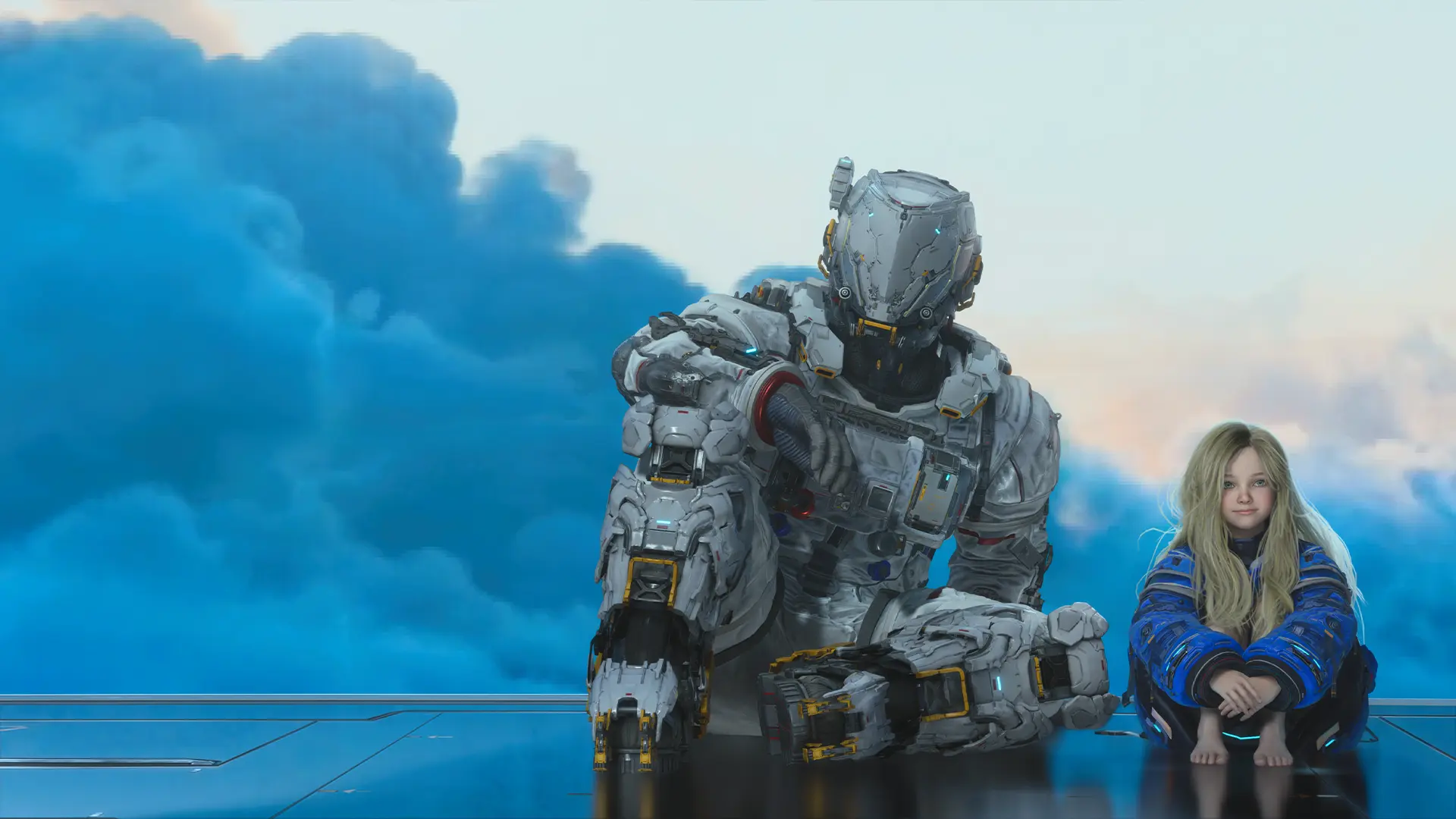
Hugh Williams arrives at The Cradle, a station on the moon operating to advance lunafilament, a material of near-limitless potential in 3D printing everything from skyscrapers to synthetic organs. His team is there to help recover after a moonquake, but things are more complex than first apparent as the station’s human population is MIA, and a sudden accident wipes out all but him. It’s from here that we meet Diana, a strikingly human-like android bearing the resemblance of a young child, who becomes Hugh’s escort on a mission to get back in touch with Earth and find a way home.
Pragmata quickly establishes a symbiotic relationship between these two, with Diana offering her ability to manipulate the station’s systems as the only means for the pair to progress and effectively take on the killer bots being thrown at them by I.D.U.S., the game’s choice of evil AI overseer. In return, Hugh is a chance for Diana to recoup a father figure – we won’t go into specifics for fear of spoiling anything – and start a new life off-moon, the pair forming a predictable but inarguably sweet bond that gives the whole, bleak affair its emotional centre.
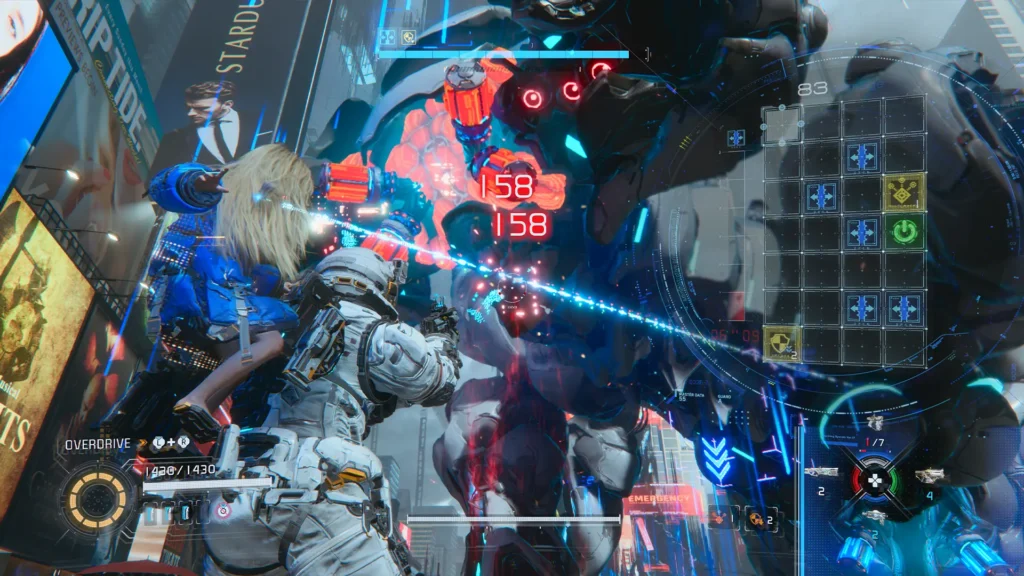
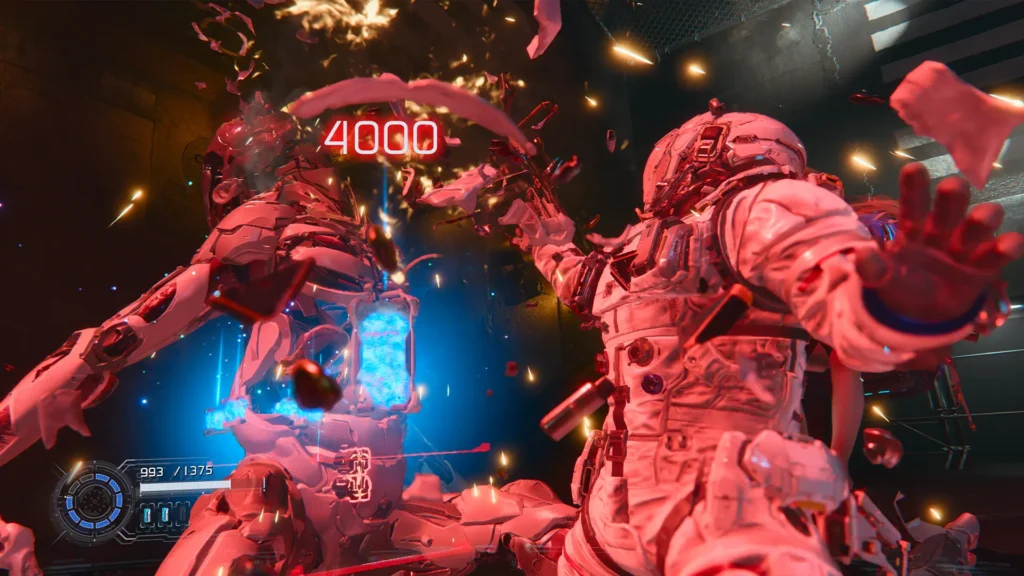
Despite an imposing heft and high-tech arsenal, Hugh is by default unable to make a dent in The Cradle’s population of robotic wardens, and so Diana’s hacking skills are needed to first expose each machine’s weak points. This becomes Pragmata’s big gameplay twist, introducing a system where players strafe, jump, dodge and shoot as Hugh while simultaneously managing a simple hacking minigame as Diana to open up enemy robots to gunfire. It’s initially daunting in a pat-your-head-and-rub-your-stomach kind of way, but thanks to a very deliberate pace, plenty of flashing tells and a healthy complement of gear to amass, it all coalesces into an extremely moreish activity that feels wonderful when you get into a flow state.
It never gets old either, thanks to constant evolution and frequent twists on how hacking is applied, and how it’s challenged. Once you start squaring off against different and more menacing robots, and unlock a variety of consumable Hacking Nodes to inflict different effects on your targets, it becomes a game of picking your marks and malware accordingly. Without getting too into the weeds about how things escalate through the story, you’ll no sooner get a handle on executing hacks in the thick of combat than the game will start piling on new things to consider, and there’s a nice amount of freedom in how you tackle what’s thrown at you. And if all else fails? Use the Confuse and Multihack nodes to turn every robot in the room against each other and safely watch the chaos unfold.
Pragmata’s roughly 12-hour campaign is laid out across various sectors of The Cradle, each accessible by a tram network that opens as the campaign goes on. Each new area has its own distinct vibe, offering something fresh and visually arresting to look at, new approaches to combat or environmental puzzles, and plenty of reasons to go back and re-explore for secrets. The return point of the tram line is a Shelter that acts as a hub of sorts, giving Hugh and Diana a safe space to recover, upgrade their equipment, tackle bonus challenges and gear up to go back for more.
The Shelter is also home to a growing collection of “Read Earth Memories” that set Diana up with replicas of pastimes enjoyed by Earth kids, like TV, water pistols and playgrounds. It’s these, along with recorded conversations and bits of evidence found around the station that point to the game’s sentiment towards genAI and its erosion of culture and community, more so than its immediate text. It’s not all grim, though. Pragmata has a goofy streak emblematic of a Capcom game, offering plenty of levity and helping suspend disbelief just enough to get some key plot points across the line by the end.
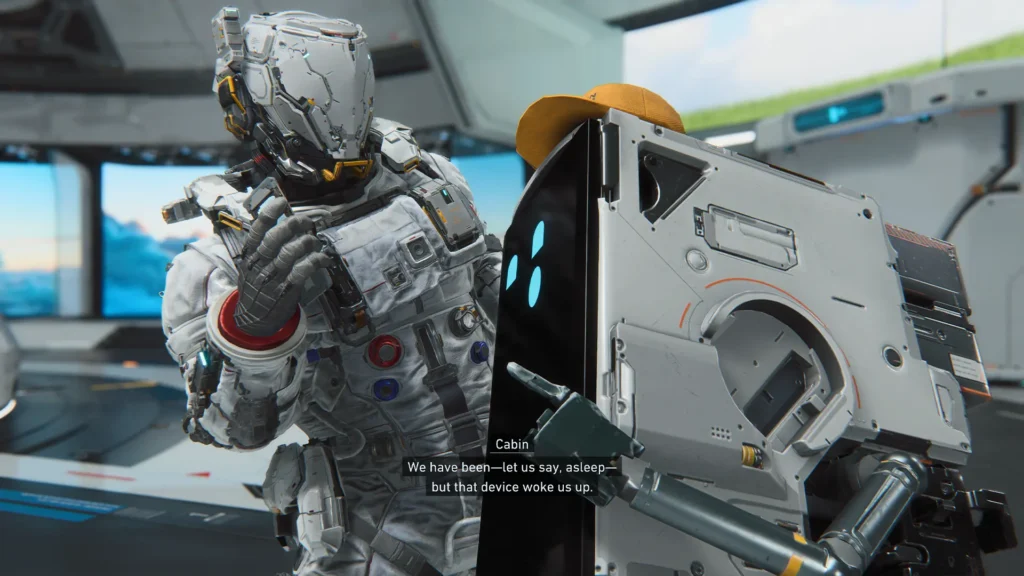
I feel it comes through best in Cabin, a robotic companion at the Shelter that’s in charge of some of your extracurricular activity, and all around Great Little Guy. But even Hugh, a walking red flag for Generic Video Game White Guy, finds an in not just through his relationship with Diana, but as a relatable proxy for the player. There are a charming number of knocks at the fourth wall, as Hugh vocalises his dismay at the pair being put through increasingly convoluted steps to simply move through the station or locate the next McGuffin, with Diana’s naivety and curiosity providing a perfect foil. “Because it’s more fun that way.”
There’s a heap I can’t speak to in a review without giving things away, but the game does a lot to earn its closing moments, and the slickness of the whole thing had me compelled to dive right back in after. Thankfully, there’s a healthy heaping of post-game content with new reasons to load up a completed save and a New Game+ mode with a more punishing difficulty to test yourself with.
Reviewed on PS5 Pro | Review copy supplied by publisher