
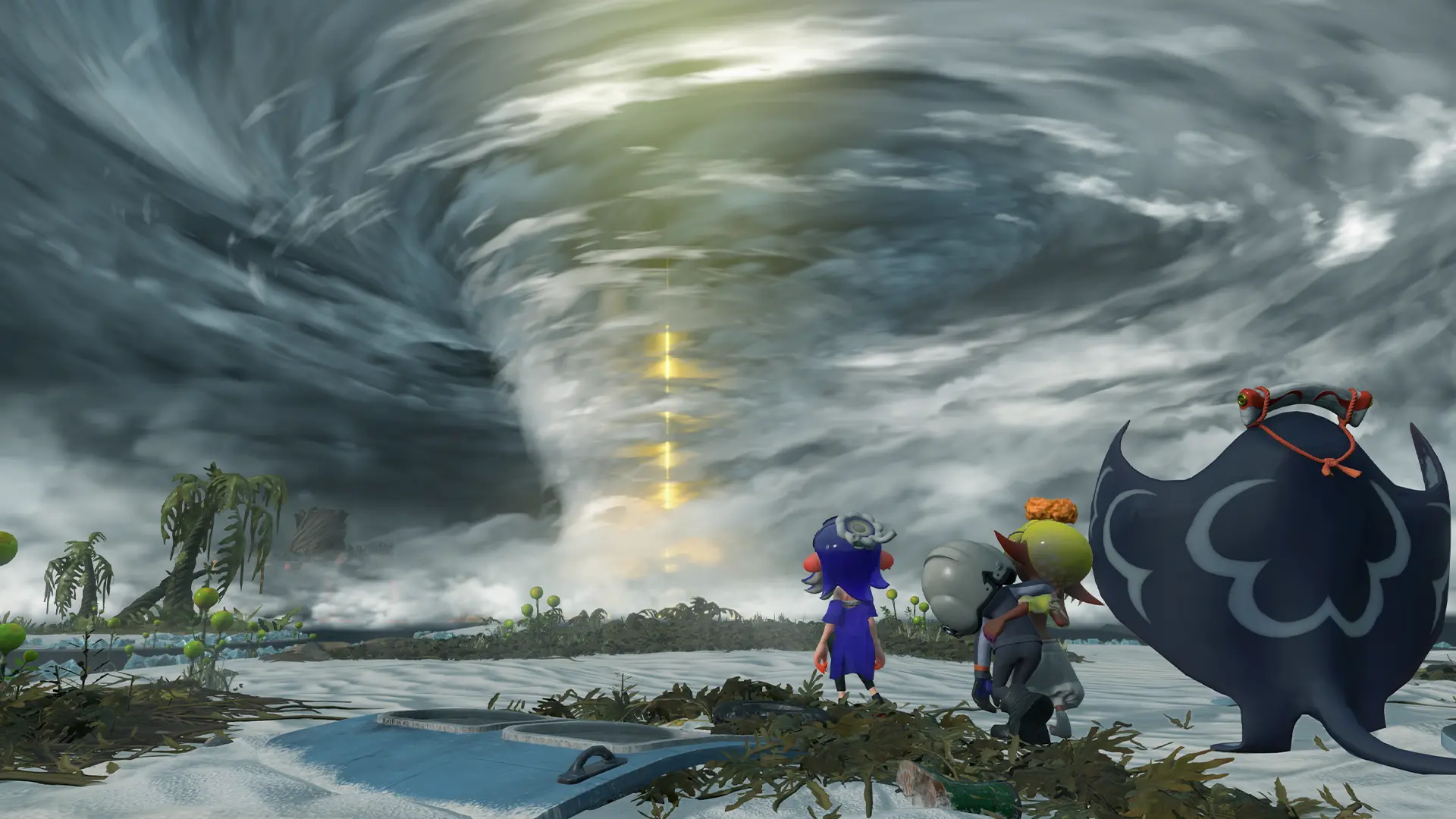
Splatoon is a series that initially eluded me, at least between the first two entries, mostly down to the bulk of the games’ longevity hinging on a dedication to the PvP Turf War aspect. 2022’s Splatoon 3 turned that around a bit with its brisk but fun Story Mode campaign, rogue-ish Side Order DLC and diversions like Tableturf Battle, but the dream of a properly single-player focused game in the Splatoon universe remained a dream.
But that’s about to change. Enter Splatoon Raiders, a standalone Splatoon title that takes a few of the ideas from Side Order and the wave-based Salmon Run, mixes them up with some RPG-esque progression and build crafting and extends them out to a big, island-hopping adventure. It is, essentially, a looter shooter, and damned if that isn’t the perfect fit for this franchise. I was recently invited to Nintendo‘s offices here in Melbourne to play a couple hours of the game and get a feel for whether this might finally be the Splatoon game made just for me.
Kicking things off from the very beginning of the game, I was asked to pick from one of three difficulties (none of which affect your loot rewards, just the enemy strength), then watched a very cinematic introductory cutscene where my character – a combination pilot and mechanic – was flying Splatoon 3’s iconic idol trio, Deep Cut, to a location called the Spirhalite Islands. But thanks to a mysterious weather event that sees us crash-land on the islands, the four wind up stranded and living on a cobbled-together ocean base called the Hideout Ship.
From here I’m able to create my custom Inkling or Octoling and get cracking on the game’s core goal – setting out to key locations across the Spirhalite Islands on treasure “raids” to find loot to build up the Hideout Ship and eventually take it home. It’s a decent enough setup for a more solo-focused Splatoon adventure, with a clear mission and a compelling vehicle for the kind of looting and shooting we’re about to be doing.
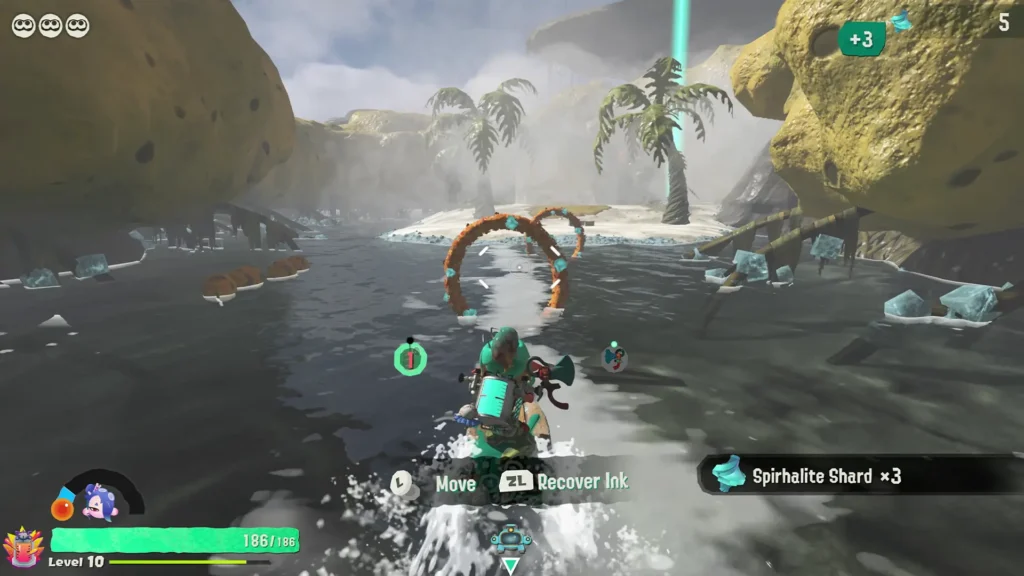
Heading into the opening tutorial raid, there’s no mistaking this for a Splatoon game. If you’ve spent time wielding a Shooter, Roller, Slosher or any other kind of ink-splatting device in the past, your muscle memory should kick in pretty well right away. The main difference so far is the island setting itself, creating big levels with a distinct, beachy atmosphere and some neat traversal tricks like makeshift surfboards to cross bodies of water and tall plant stalks that you can ride up into the air for a handy glide.
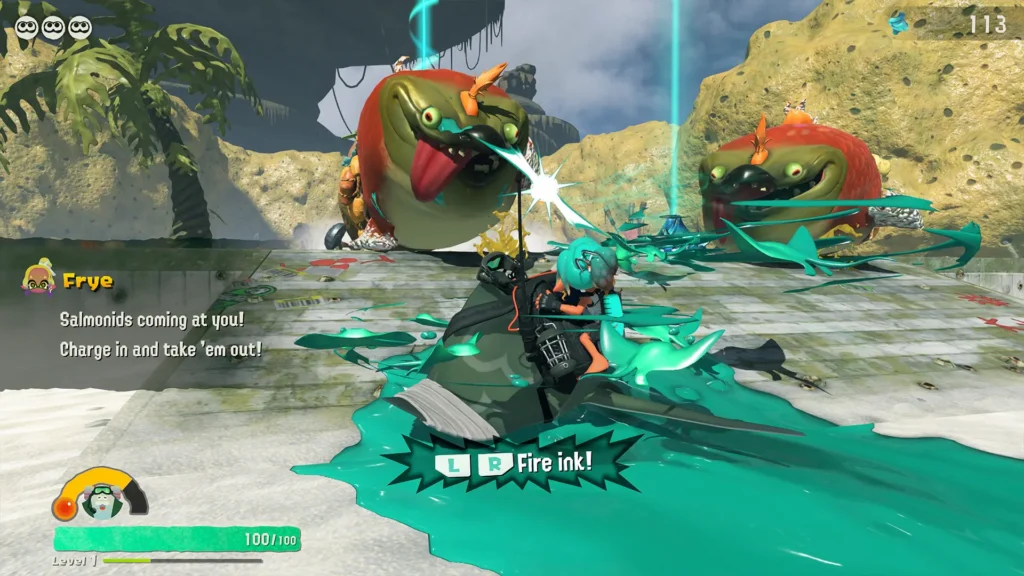
It’s not long before we cross some enemy Salmonids, of course, in forms from the most basic to the most salty. I say that because the boss enemies here are dubbed “Seasoned Salmonids” and are covered in thick layers of salt. Brilliant. Taking these down is much the same as you’d expect, and rewards you with the all-important and familiar Power Eggs, though you’ll have a couple of new tools for the job, like equippable Gadgets that give you new abilities tied to the left and right bumpers. These range from boots that launch you into the air and then explode with ink on landing, a turret that indiscriminately fires at any nearby Salmonids or crates, and a cool “Hi-Fiver” that is basically a big handle with five ink pens duct-taped to it – Gadgets retains the same scrapped-up vibe that have define Splatoon’s iconic weapons.
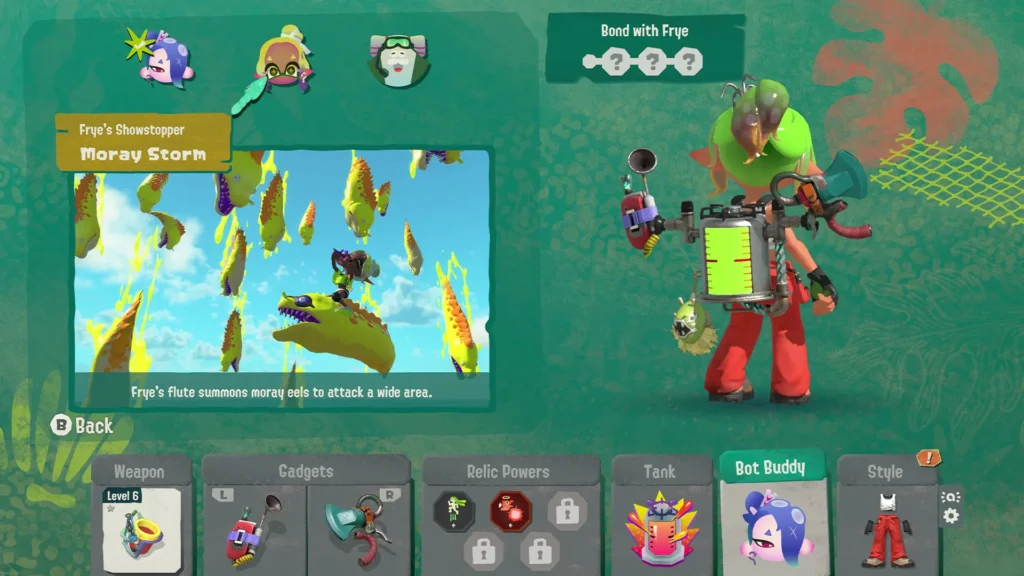
Another big piece of the combat and exploration puzzle here is the Buddy Bot, a mech suit piloted by whichever among the Deep Cut crew you decide to bring along on a raid. The Bot is your key to locating and mining the Spirhalite crystals in each stage, but it’s also, as the name implies, a handy partner that follows you around and offers support. You can use it to execute high jumps to out-of-reach spots, summon it to drop down on hordes of Salmonids, and it’ll give you a small amount of ink-fire support to boot. Best of all, filling it with enough Power Eggs opens up a screen-clearing Showstopper move that changes based on its pilot – Shiver summons a huge shark, Frye creates a rain of eels, and Big Man steps out to let you ride his back and ink up a storm.
Often, collecting Power Eggs is the only way to power up the Buddy Bot enough to nab a raid’s ultimate Spirhalite crystal and claim victory. In some raids this is straightforward, with stages like Carbanyara Wetlands offering a big area to explore at your leisure with a particularly tough fight to conquer once you locate the biggest crystal. In others, you’ll race a countdown timer to fuel up enough to finish the objective, balancing a desire to hoover up as much other loot as possible first. I was incentivised to hit stretch goals for my Power Egg stockpile, with the final crystal offering up exponentially richer spoils the more extra juice I had in the tank.
Further raids I tried out put even more emphasis on skill and working under pressure, sending me underground to complete intense battles in more cramped quarters where my goal was simply to amass as many Power Eggs as I could within the allotted time, kind of like a simplified take on Salmon Run. These wound up being the most fun in the (completely optional) online co-op, where my fellow media joined me in coordinating our different playstyles and loadouts to tackle the various types of Salmonid spewing forth just begging for their eggs to be harvested. You can similarly play the regular, above-ground levels in co-op, where lives are more plentiful but shared between the team, and enemies come both in larger numbers and larger sizes than the equivalent level played solo. You’ll also share a Buddy Bot, but retain the Showstopper move of your individually-equipped partner character.
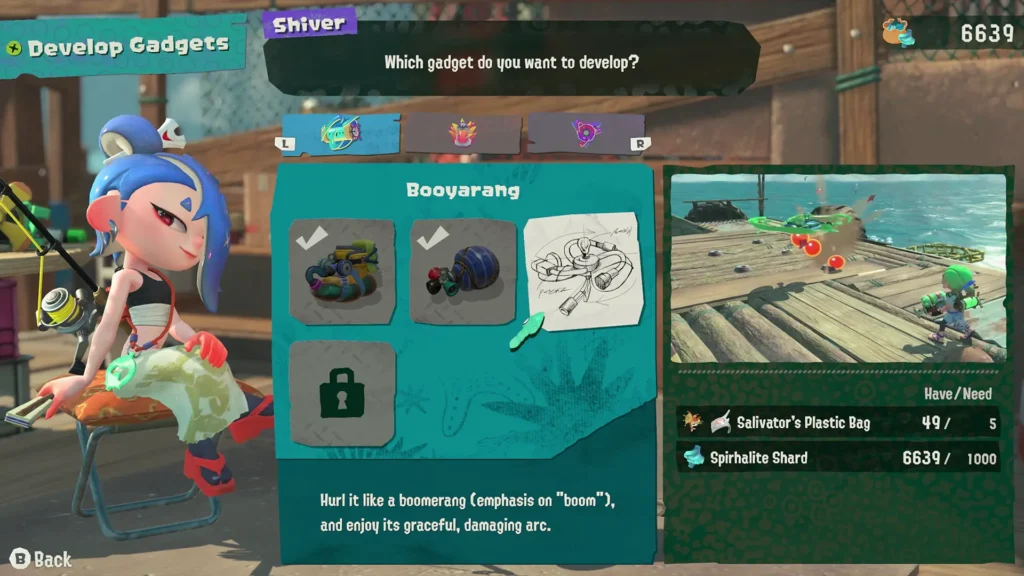
All of these raids are bound by a difficulty rating, gating your progress by demanding you advance your character’s skills and equipment through a number of different channels. You’ve got the aforementioned Gadgets, which can be developed in a lab with loot found in raids, three separate classes of ink tank that suit different playstyles and can be upgraded to increase things like HP and damage, Relic Powers that offer handy new abilities in a limited number of slots, and of course a huge catalogue of unique weapons with their own power levels and quirks to consider. Phew.
Thing is, despite getting in deep with my equipment and honing my skills, I did manage to fail a couple of the higher-level raids. Thankfully, you don’t lose any of the loot you’ve acquired along the way if you suffer a defeat and have to start again. In addition, the game will feature a sort of “summoning” help system that sounds almost similar to what you’d find in a Souls game, allowing you to ping for assistance from other players online. Nintendo couldn’t say exactly how that part works in relation to the company’s typically-strict social systems, but we’ll no doubt learn more very soon.
There was a ton to cover off in just a couple of short hours for this preview, more than I’ve mentioned here. Splatoon Raiders is shaping up to be quite a meaty experience with a very moreish looter shooter loop that makes the perfect case for a more solitary Splatoon adventure – though friends are still more than welcome. I anticipate this being in constant rotation in my household once it launches exclusively for the Nintendo Switch 2 on July 23, 2026.
Previewed on Nintendo Switch 2 at an event hosted by Nintendo

Born into the world of video games through SEGA, and in particular Sonic the Hedgehog, Kieron’s gaming tastes now consist of the latest, shiny AAA thing, an indie darling or two, and an embarrassing number of hours of Balatro.