
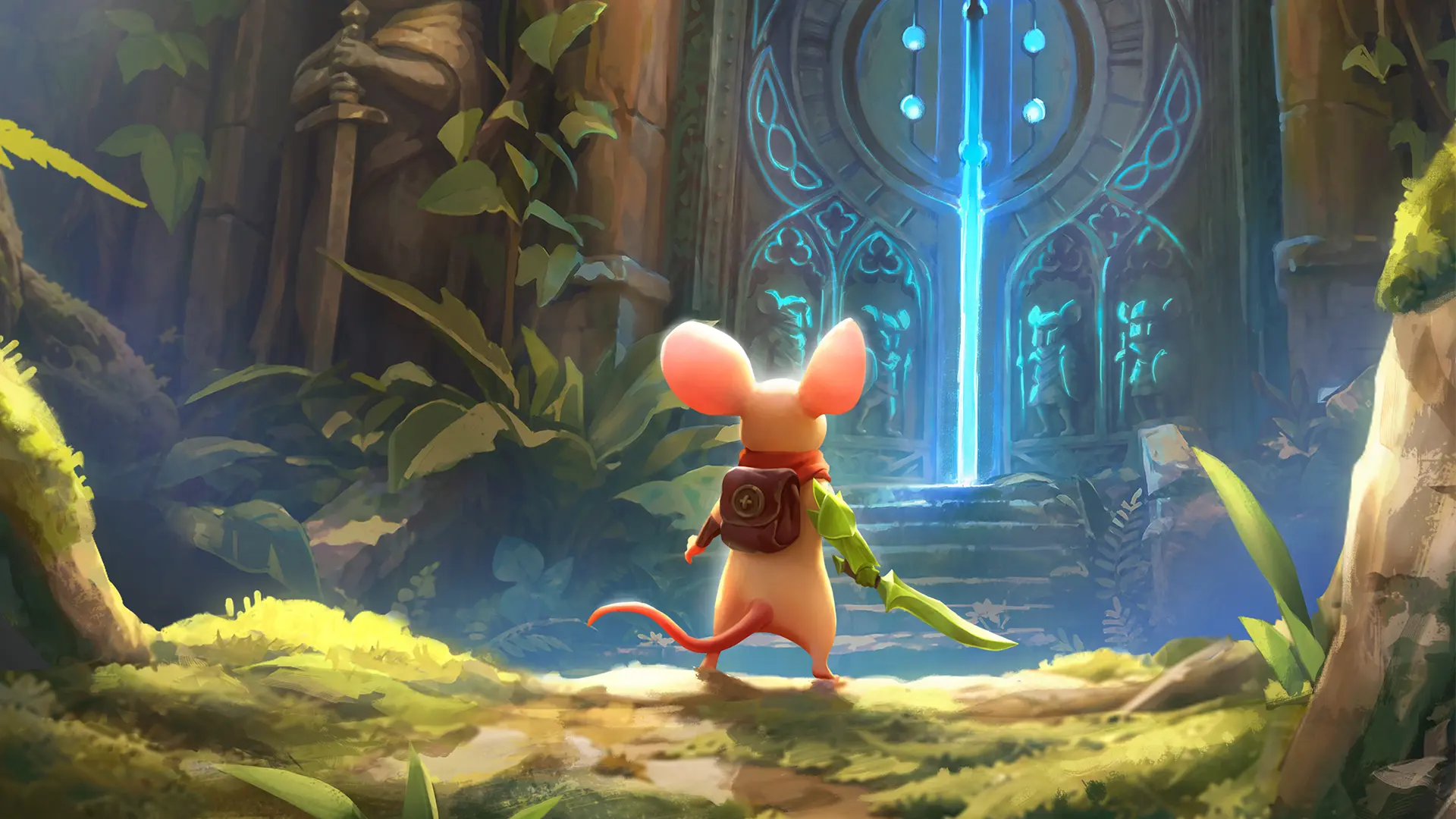
If I’m ever asked for recommendations for great VR games, which sadly happen less and less lately, it’s never long before the Moss games are brought up. Starting life on the PlayStation VR but quickly spreading to other platforms along with a sequel, Moss’s dioramic world, expressive protagonist and unique split between first and third-hand control make it a wonderful example of what VR can uniquely do for video games.
So what happens if you take the VR part out? Developer Polyarc has not just asked the question, but followed through on it, giving us Moss: The Forgotten Relic – an all-encompassing package of both games and DLC that has been repurposed for “flat” gaming. The result is a very decent little adventure that undoubtedly loses some core parts of its charm in the transition but is still well worth checking out for those who haven’t been able to so far.
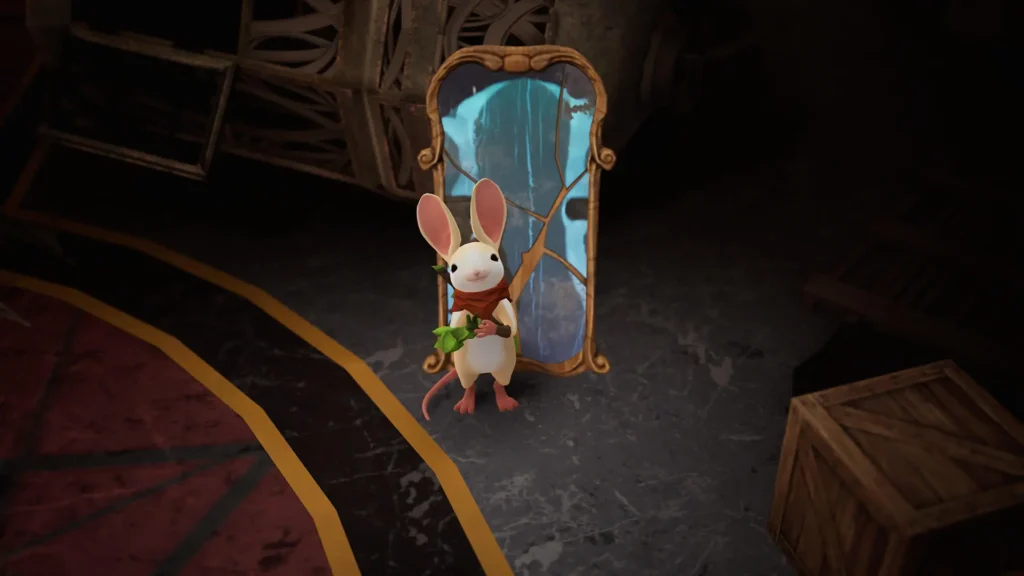
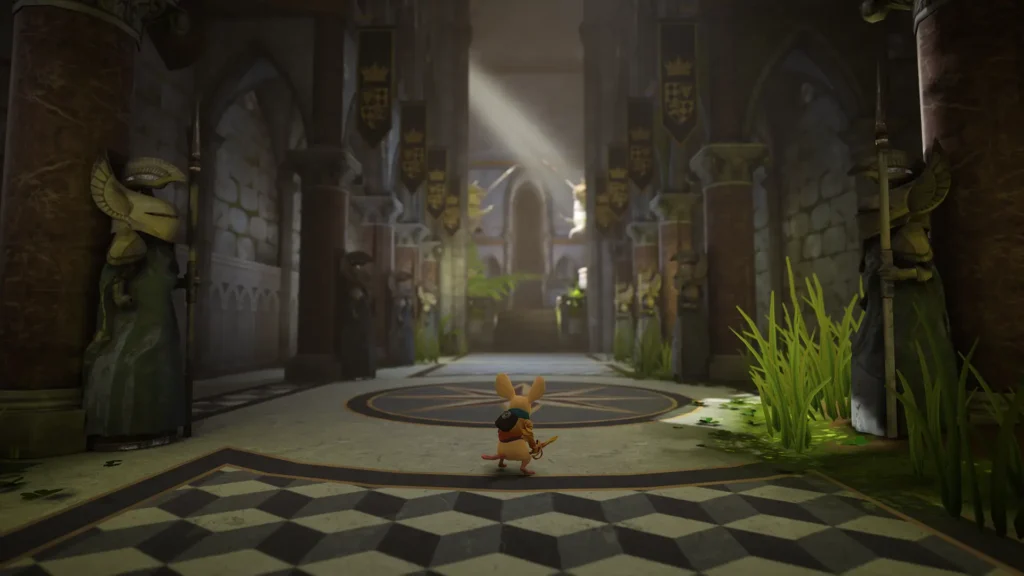
Let’s get this out of the way nice and early – Moss: The Forgotten Relic doesn’t add anything new to Moss: Book I or Moss: Book II outside of a reworked camera and controls. The actual content, visuals, puzzles, all of that is exactly how you might remember it. Only the way you interface with and experience these games has changed. That might be disappointing if you’ve played through them before, but the silver lining is that what’s here is still good. And importantly, losing the ability to freely look around the world in VR or reach out and interact with it hasn’t outright broken anything. Polyarc has done well to keep everything in and use pre-directed camera setups to point you in the right direction at all times.
Which isn’t to say the alternative is not missed. Moss’s core idea – that it casts the player as a mysterious entity known as a Reader who peered into its pint-sized fantasy world by way of a magical book – makes far less sense when you’re not “physically” present, looking down into each environment like a gorgeous series of dioramas. Where once you’d reach your arm out to give little Quill an adorable high-five after besting a particularly challenging section, the two of you are now separated by the bounds of a traditional screen, still engaging the act but in a less personal and effective way.
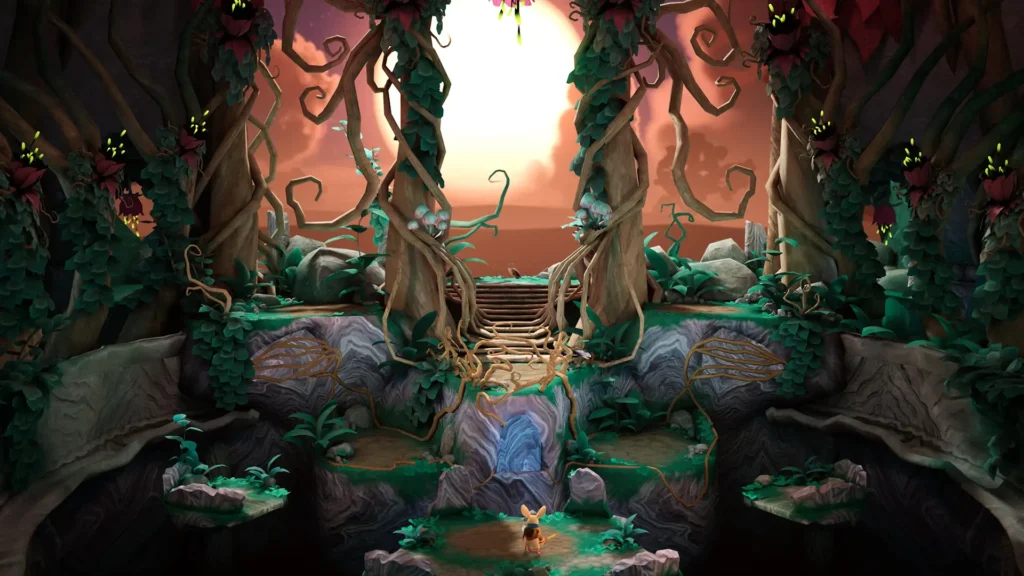
But these are things I mourn because I once experienced them, I suppose. There’s still a fair amount of magic left on-screen, with Quill’s animation work and the lush, fairytale environments providing plenty of visual splendour. Fans of rodent-based media like The Secret of NIMH or Redwall, or really anything sprite-sized (big Ferngully enjoyer, myself) will no doubt find a lot to love here.
Polyarc has done well to introduce newer and more cinematic camera angles where needed, which in some cases does drastically enhance the sense of wonder on-screen and show off some of the beautifully-crafted sets with a more authored lens. I was surprised to note that the game’s scattered collectibles – previously often requiring a physical peer into the depths of a scene to spot – seem to be mostly in the same places, but usually teased just enough with camera angles and environmental clues to still be discoverable.
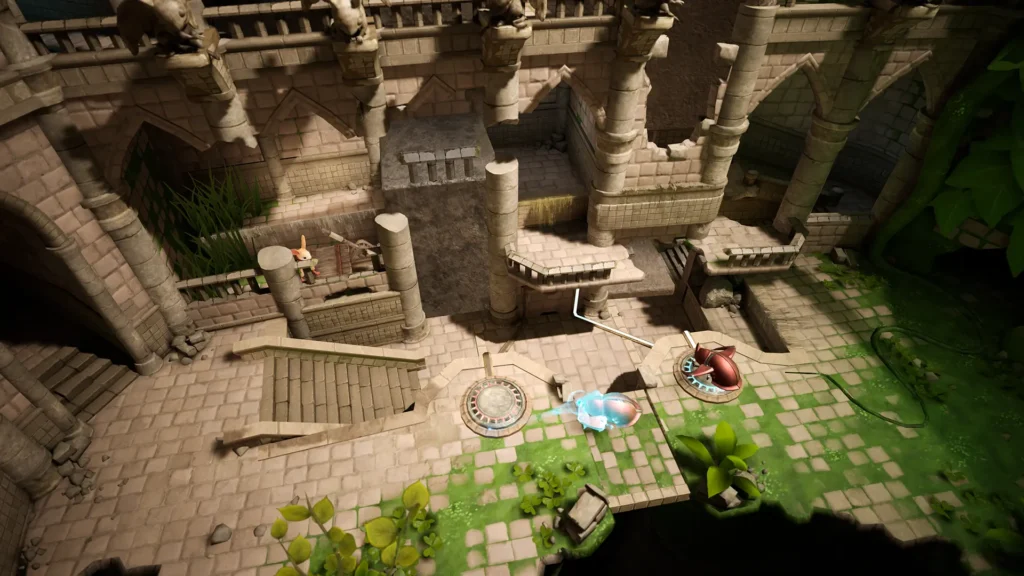
The game’s solution to the motion-based controls of old is pretty straightforward, your divine interactions with the world controlled via the right control stick and right trigger (or whatever equivalent you’re working with). An ethereal orb guides your hand, and snaps neatly to the things you’ll be keen to grab, turn, pull, open or – in the case of enemies – take possession of to solve puzzles and give Quill a helping hand in fights.
Removed from the realm of VR, some of Moss’s existing shortfalls do show through. Combat is achingly basic, for example, and often outstays its welcome. Some of the platforming was already a little tricky from the top-down perspective, and the sore spots are almost worse now with a more fixed field of view, though thankfully there’s little punishment for failure outside of a notorious couple of PlayStation Trophies remaining in effect for this version.
The Moss games were a shining example of how VR could bring a new dimension to a well-worn genre, but there are enough puzzle platformer fans out there that weren’t or aren’t into VR that makes pulling these two titles across to the “flat” world a bit of a no-brainer move. While returning fans might lament the lack of anything strictly new here, the work done to retrofit this delightful pair of adventures is mostly successful. And at AUD $30 it’s a bit of a steal. Perhaps we can get a purpose-built, non-VR Moss sequel out of this? Polyarc, please?
Reviewed on PS5 Pro | Review copy supplied by publisher


Born into the world of video games through SEGA, and in particular Sonic the Hedgehog, Kieron’s gaming tastes now consist of the latest, shiny AAA thing, an indie darling or two, and an embarrassing number of hours of Balatro.