
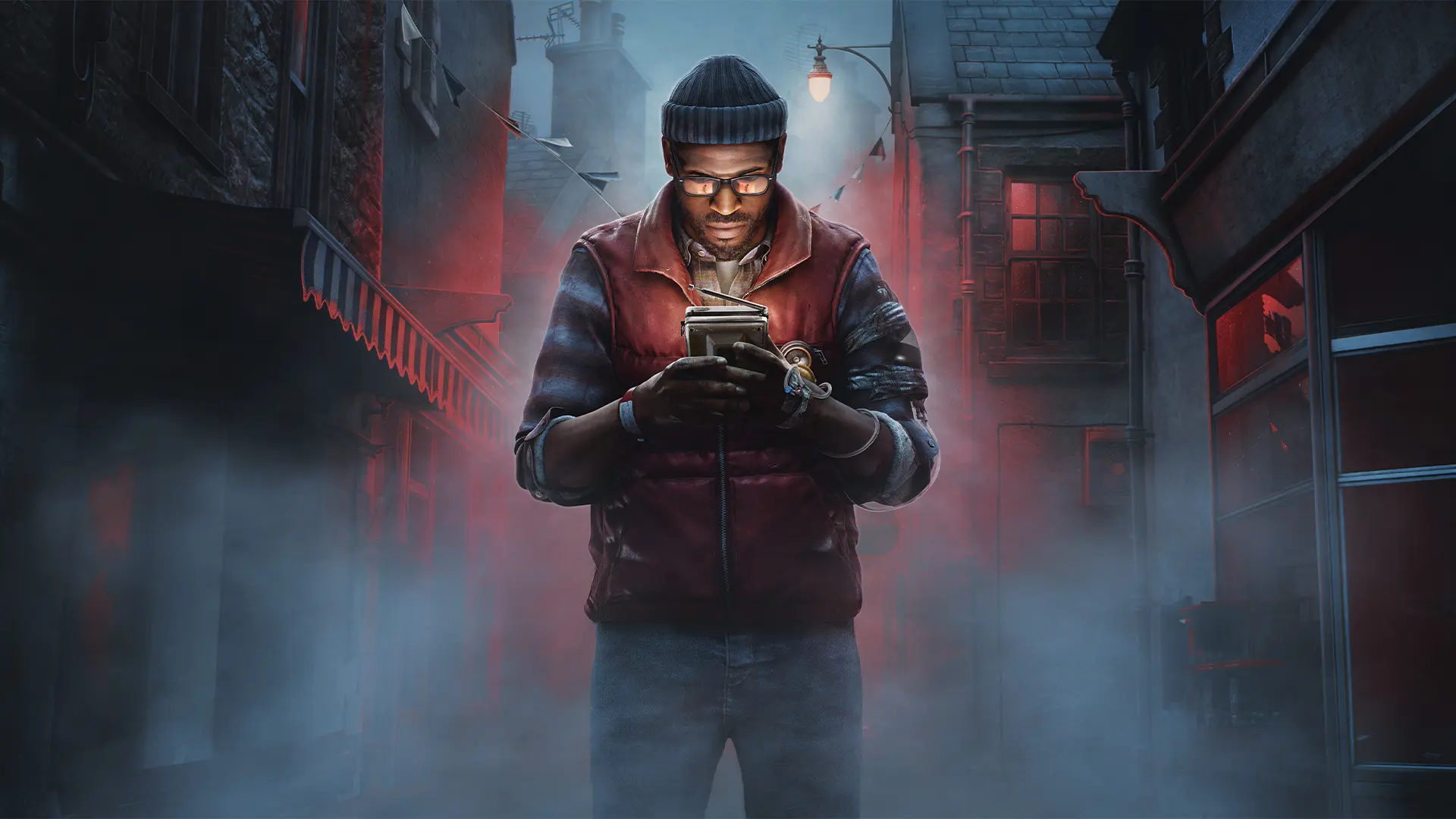
Do not adjust your set
Although I still mourn the loss of P.T., it’s been heartening to see the Silent Hill series make such a triumphant comeback in recent years. Between Bloober’s excellent Silent Hill 2 remake, the fresh and Japan-inspired Silent Hill f, and now Silent Hill: Townfall under the stewardship of Scotland’s Screen Burn Interactive and Annapurna Interactive, Konami has done well to entrust a wider gamut of artists with the series’ legacy. But I’d also argue that one of the defining factors in Silent Hill’s recent success is technology – our ability to render these entries in an arresting level of detail has elevated a lot of the series’ core principles, which isn’t a universal phenomenon in modern video games.
The former people of St. Amelia, a Scottish fishing town now bereft of its population and hiding some mysterious and disturbing secrets, probably aren’t as enamoured with technology. When Simon quite literally washes up there, aware of a purpose but missing any real context – and also hooked up to an IV – it quickly becomes apparent that this sleepy coastal burg suffered greatly under the thumb of a corporate interest that promised progress and abundance while inevitably bringing great tragedy to the town. It’s a perfect setup for a Silent Hill game, one that invites the player to explore and understand the grief made manifest in a physical space while subtext and imagery slowly reveal the circumstances of its protagonist/s presence.
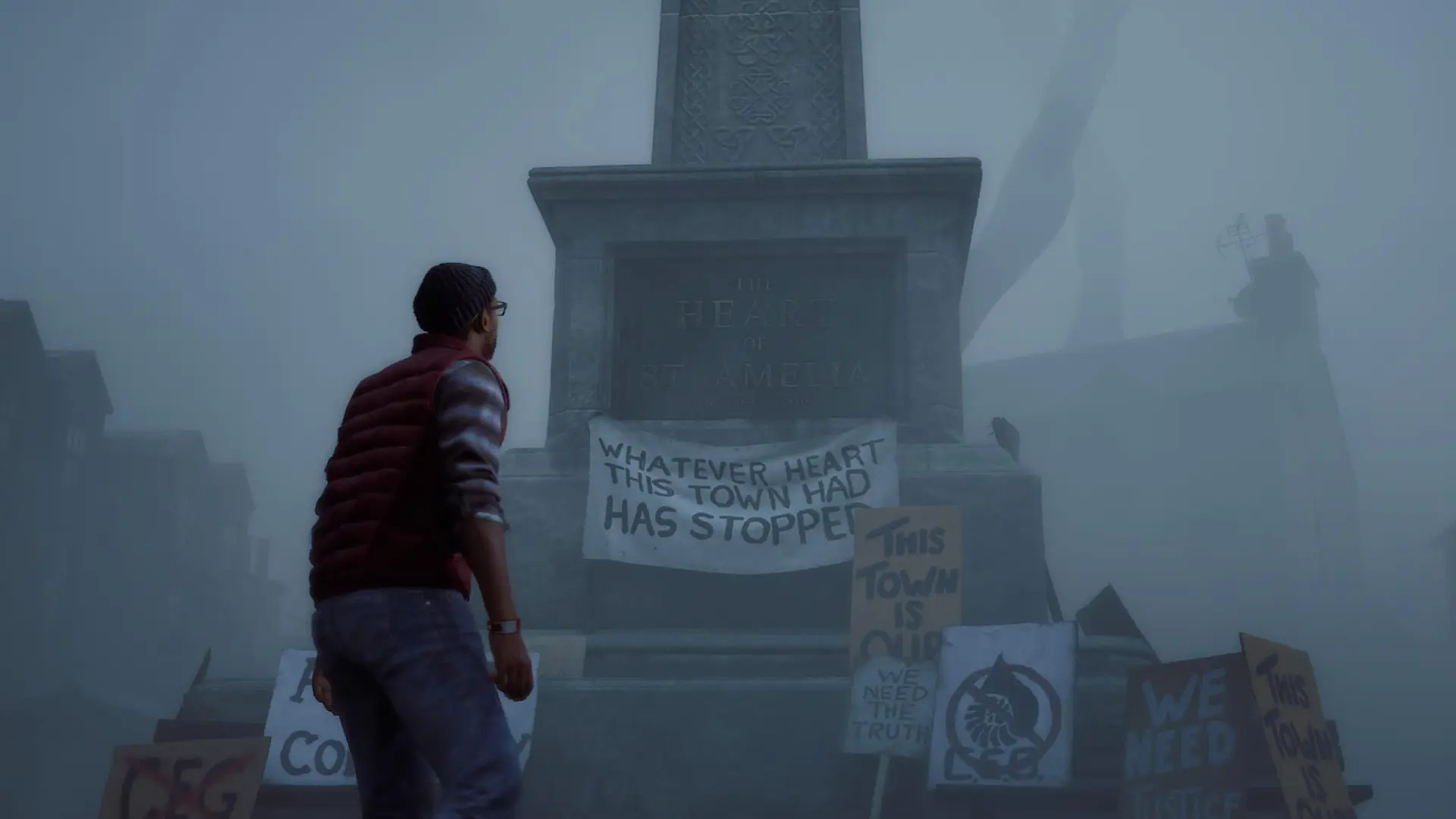
St. Amelia is a hell of a setting for a Silent Hill game, making liberal use of its girtness-by-sea and frigid climate to draw convincingly on the series’ iconic fog. The story lends some really helpful context to the town’s eerie quietude and desertion, and Screen Burn has done a fantastic job of crafting every inch of every boarded-up shop, hastily-abandoned dwelling and derelict road. The switch to a first-person perspective is bold, but incredibly effective in evoking a constant sense of dread and an intimate connection with what’s happening in front of you (and often to you). It’s also just a terrific-looking and sounding game, in the same photorealistic first-person flavour that made the likes of P.T. so unnerving.
Aside from the point-of-view, the most significant departure from what we know about most Silent Hill games is that Townfall puts a large emphasis on stealth over direct combat with the abominations stalking the streets of St. Amelia. It’s something that proved to be an adjustment for me, to the point that my first hour or two was spent frustratingly lacking in healing items or anything to defend myself with after I instinctively tried to defeat everything in my path. Townfall doesn’t want you to do that. Instead it wants you to scurry around street corners, duck behind parked cars and fences, hide inside doorways and create distractions – only resorting to smacking creeps with planks of wood or firing guns if you’re left with no other choice.
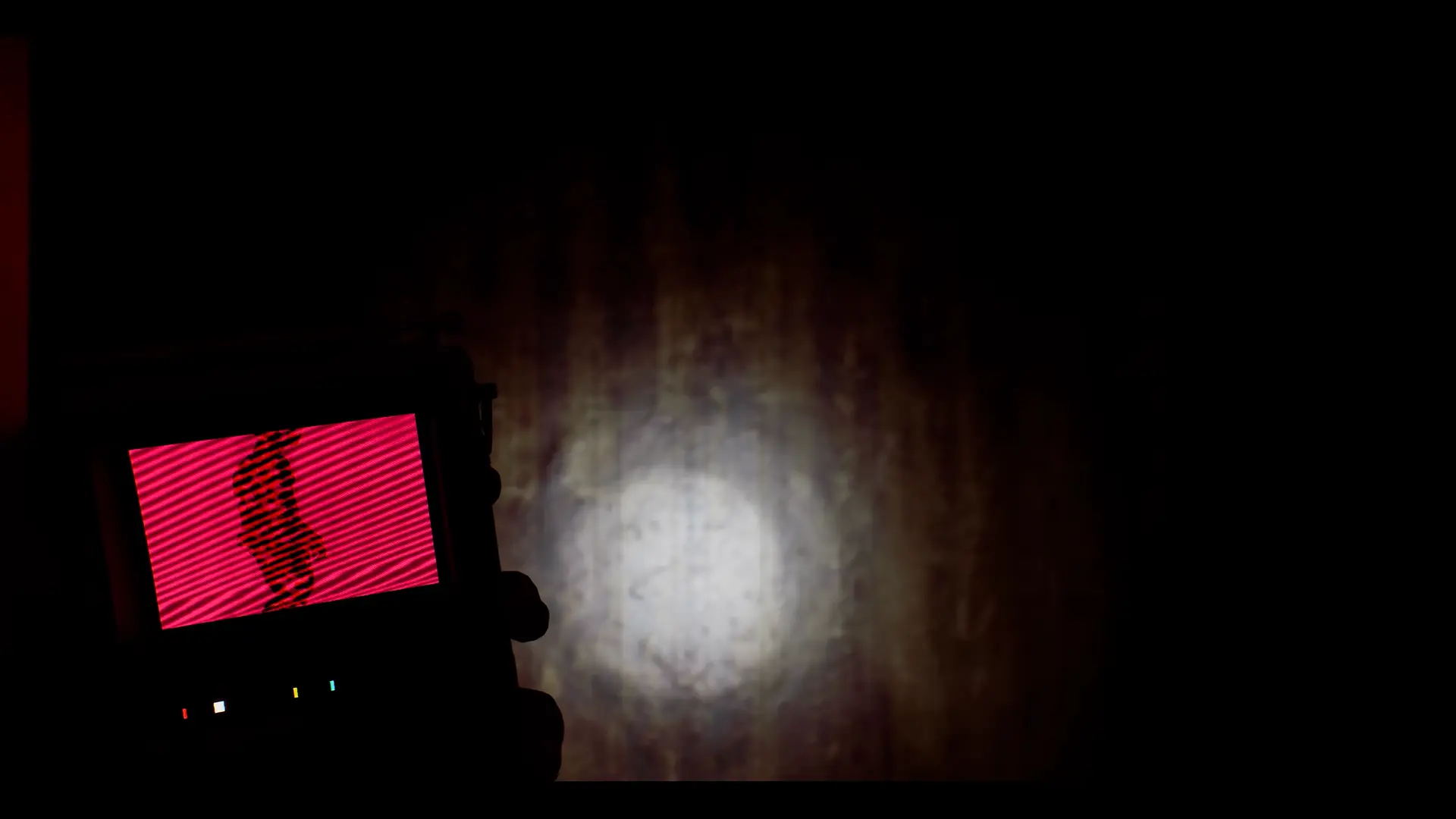
To help you out with that, you’ll have a very period-appropriate portable CRTV on hand. Aside from playing into the game’s storytelling and puzzles, this little gadget can also “tune in” to enemy signals and allow you to spot them from a reasonable distance and without a line-of-sight. With a bit of space between you, you’ll simply see an icon indicating their general direction, but get close enough and you’ll see a whole outline of them so you’re able to watch their movements through whatever you’re cowering behind. It’s a really neat, diegetic way of making the stealth stuff more workable while always keeping you present in the world.
The same CRTV is used to explore and understand things around the town, often playing into some of the most interesting and satisfying puzzles the series has seen. An early example sees you trying to figure out the combination to a locker, eventually tuning into a mysterious signal that flashes up a series of images on the CRTV’s screen. Comparing those images to objects around the building you’re inside leads you to find the associated numbers, and getting the code. That’s a very basic solve in comparison to what you’ll come up against over time, of course, but I wouldn’t want to spoil any of those.
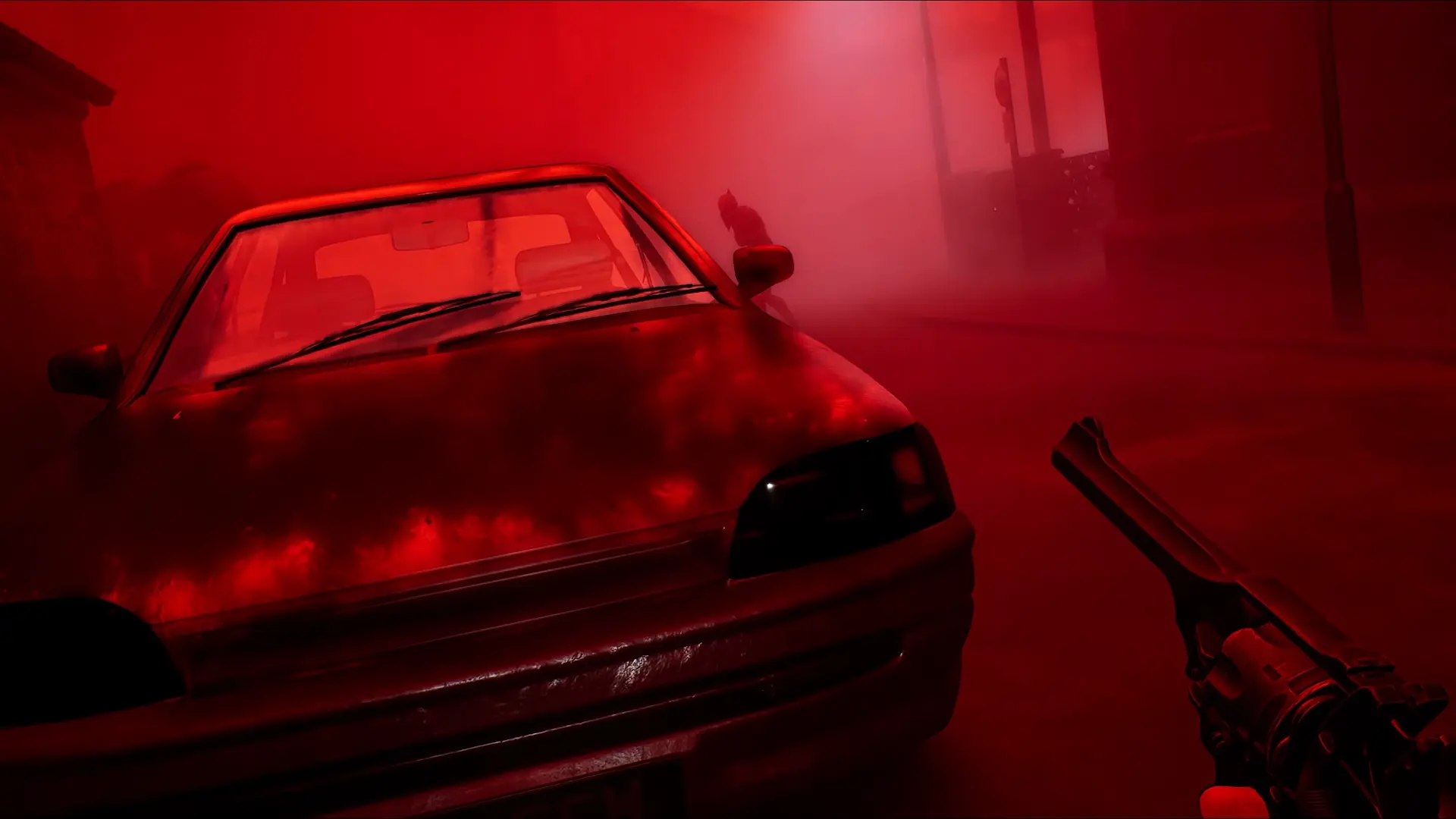
My disagreements with Silent Hill: Townfall are few and far between, and mostly come down to the present dangers. While what’s here is effective and evocative, there are only a handful of different enemy designs, and only a few show up with any regularity, which is a touch disappointing. It’s also very easy to feel woefully under-resourced and with very thin margins for error in getting from one location to the next unseen, which made for a couple of frustrating spots where I failed and repeated the same few minutes of gameplay more times than I’m willing to admit.
But what makes Townfall a success at the end of it all is that the new ideas it has aren’t so additive or transformative that they fundamentally overwrite the spirit of Silent Hill, but in concert they add up to an experience that still feels entirely its own. St. Amelia might be 5000km away from Maine, and its history and geography mean that the town and its people are affected and changed in different ways, but the human elements are unmistakable, as are the lingering air of oppression and violence that clouds your every step as an all-too-familiar fog.
Reviewed on PS5 | Review copy supplied by publisher


Born into the world of video games through SEGA, and in particular Sonic the Hedgehog, Kieron’s gaming tastes now consist of the latest, shiny AAA thing, an indie darling or two, and an embarrassing number of hours of Balatro.