
I am 38 years old, which means that I was precisely positioned for The Phantom Menace and Episode 1: Racer to land as fairly monumental capstones of a sort to my childhood before I transitioned into my teens.
27 years later I still have an extraordinary degree of affection for both, and so I’m kind of both the perfect mark for Star Wars: Galactic Racer and also someone who would invariably hold it to some degree against perfect childhood memories.
Fortunately, I found Galactic Racer to be extremely good, thank God.

Set a short time after the fall of the Empire, Galactic Racer has you play as an always-helmeted but player-created human named Shade. They enter the newly formed speeder racing league on a vengeance quest against its ace, Kestar Bool. Shade has the support of Besalisk league founder Darius Pax and an Ardennian-but-Liverpudlian mechanic named Hibi who will upgrade and improve their vehicle along the journey to the top.
Here’s the thing that may surprise folk though, that journey? It’s a roguelike!
Yep, fail enough events during a run and your ride is scrapped and you start over, at least start over from the top of whichever of Galactic Racer’s three acts you’ve managed to reach anyway.
Fail you will, too. The racing is *tough*, especially on your first few go-arounds on each act.
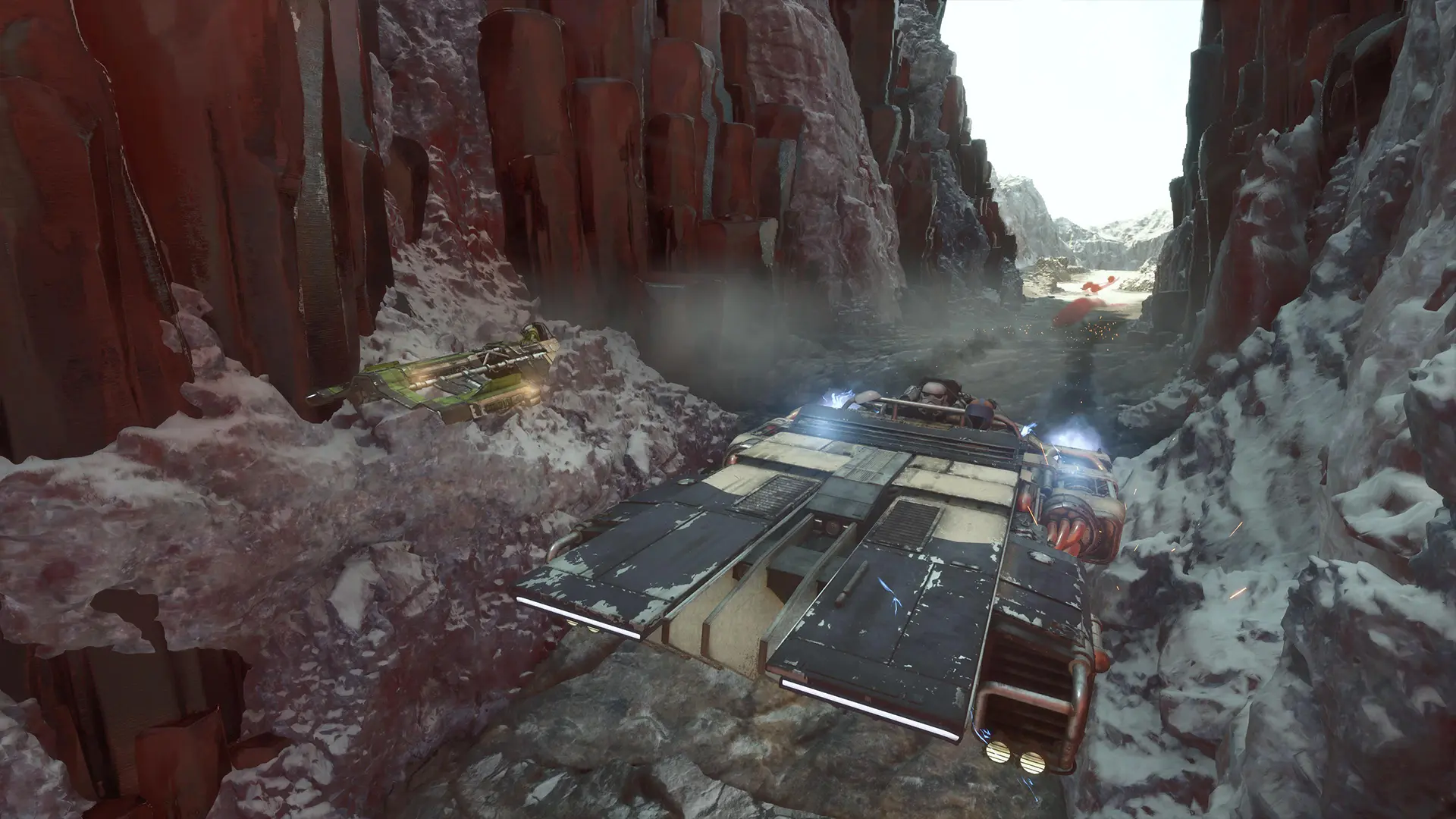
At the start of a run you’ll choose from either a car-like speeder, a speeder bike, or skim speeder, which is kind of halfway between a standard speeder and a podracer. You can heavily customize their appearances by mixing and matching parts and paint jobs in a way that’s extremely satisfying. Each handles quite differently out on the track, and are further customizable by which unlocked abilities and passive perk ‘favors’ are equipped, all of which can be levelled up and improved with use or currency spend, along with the base stats of each vehicle itself.
No matter the vehicle you choose, racing has a phenomenal feel to it. The sound design is impeccable, but each ride also banks and maneuvers exactly how you think they should given their visual design and weight.
The key to victory is found in strategic use of both your standard afterburner boost meter as well as your ‘ramjet’, a turbo-speed meter that steadily increases your engine’s heat while being used. Push it too hard and your vehicle will explode. Explode too many times and you’ll fail out of the race entirely.
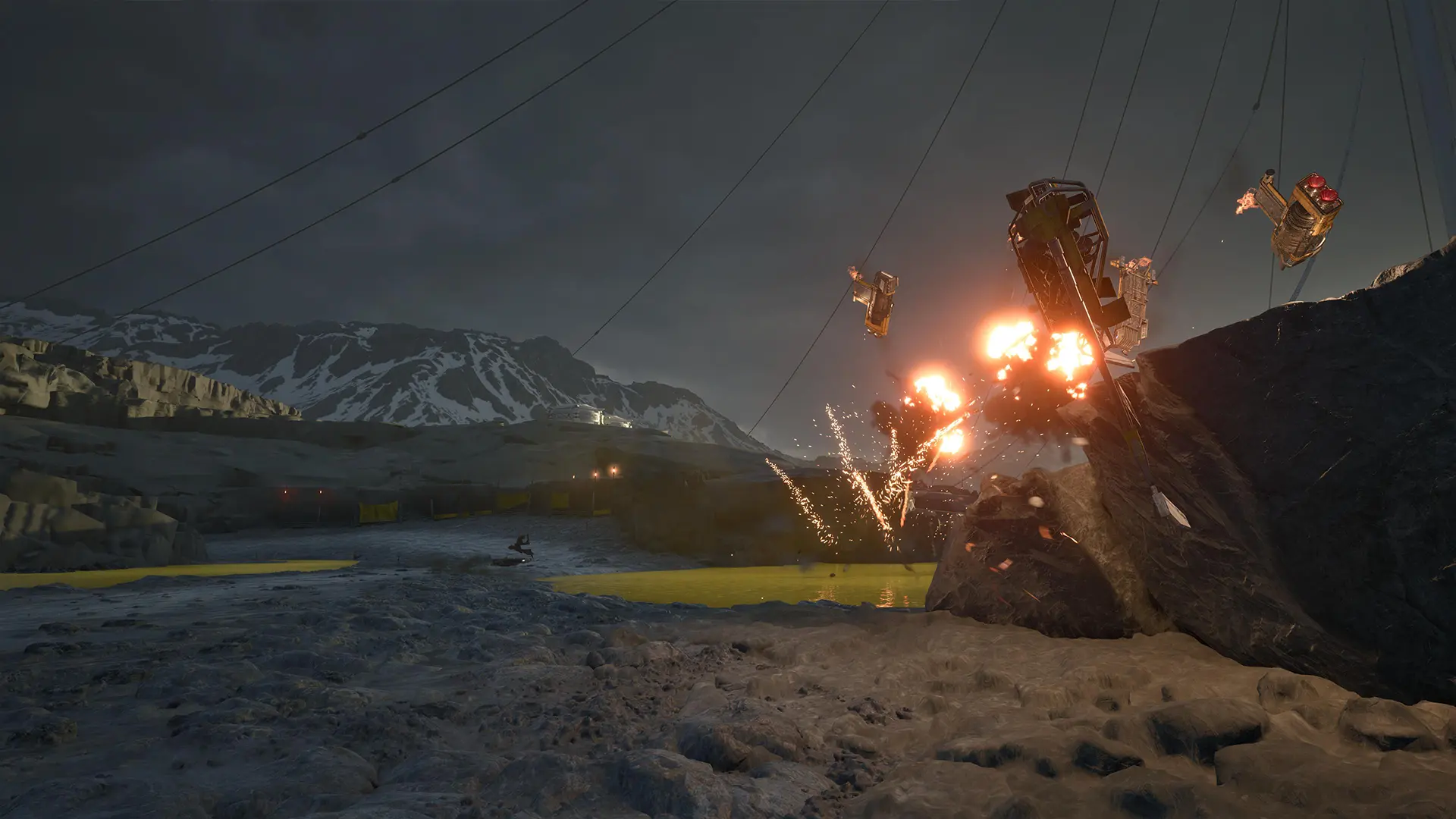
Pushing the afterburner down to its end by holding down the X/A button, then clicking the right stick in to switch into ramjet mode and slamming the button down again to burn that meter as your speed builds past 500 kilometers/miles/whatever per hour is the most satisfying mechanical interaction I’ve felt from a game in a long time.
The environment has a big impact upon heat management too. The frozen tundras of Ando Prime will keep your engines naturally cooler for a long longer, whereas flying across the lava pools of Lantaana will spike it massively.
The racing circuit itself comprises four to six planets, each with four events that must be completed to progress to the next world. As you arrive on a planet, you’ll be free to walk around the race staging area and interact with your rival drivers or overhear them talking about you. You can also upgrade your ship at Hibi’s workshop, repair broken parts, or maybe take a nostalgia ride with a certain Phantom Menace cameoing racer.
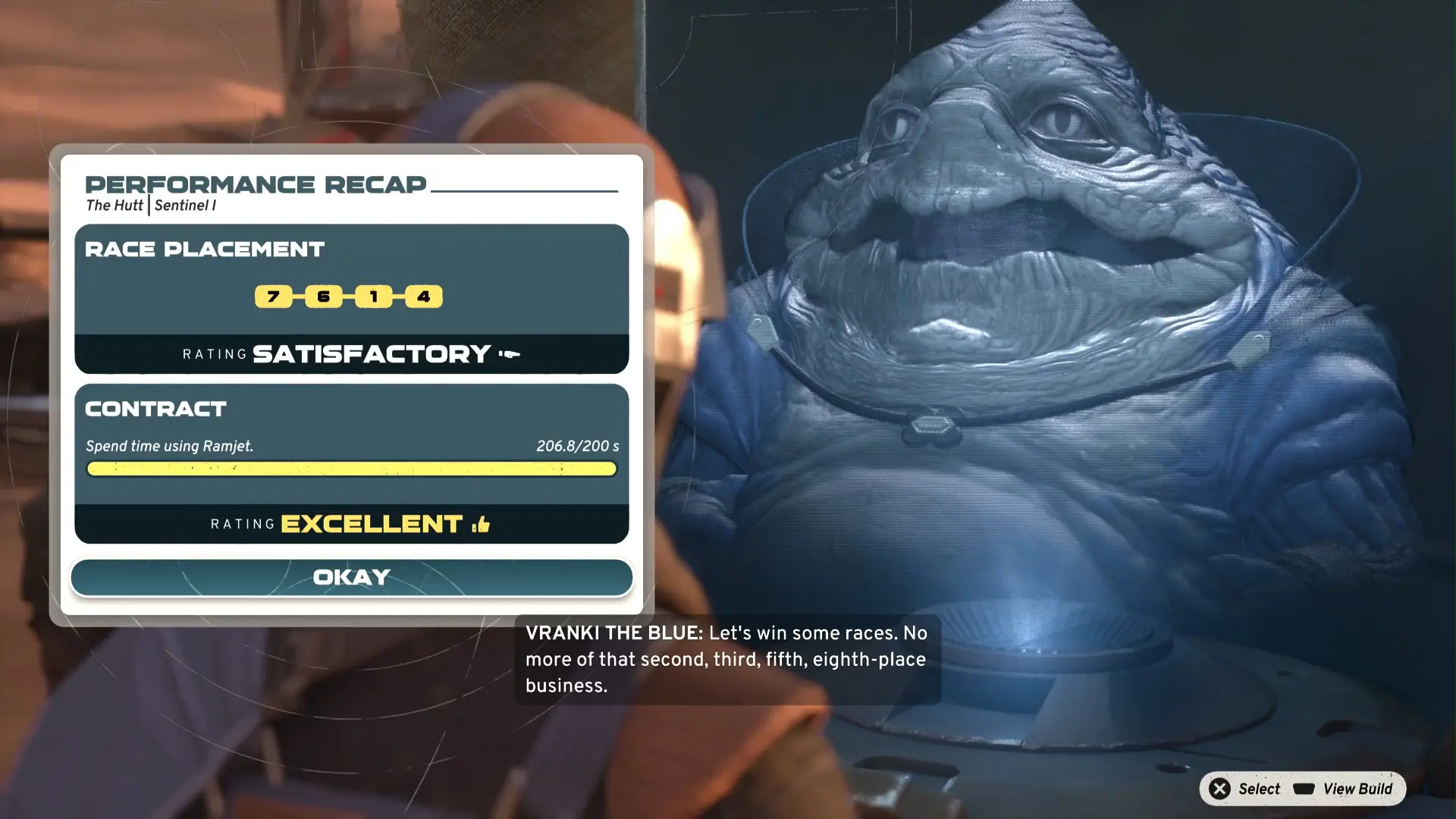
The tour of each planet operates on a branching node pathway that consists mostly of a mix of standard and elimination races. Standard races are just that, and will see you walk away with some amount of credits no matter where you place. Elimination races give much better prizes and see the bottom-placing racers disqualified every 45 seconds or so until the remaining 3 are left to compete for first place.
Amongst them though are also field tests and mystery encounters. Field tests put you on the track alone to trial an experimental vehicle. You may be tasked with getting a certain amount of distance track while ramjetting, smashing a set number of unmanned vehicles off the road, or completing a simple time trial. Mystery encounters entail a confrontation with somebody in the staging area. Sometimes a rival will offer to sell you defective epic upgrades cheaply or will want to give you a suspiciously generous gift out of the blue. Sometimes they’ll want to set up a credit-betting side hustle pool with you or against you. Sometimes the brilliant, snootily-pathetic Kestar Bool will simply throw a tantrum claiming that you scratched his speeder and demanding compensation. It’s all delightfully charming stuff that really deepens the personality of your fellow racers.
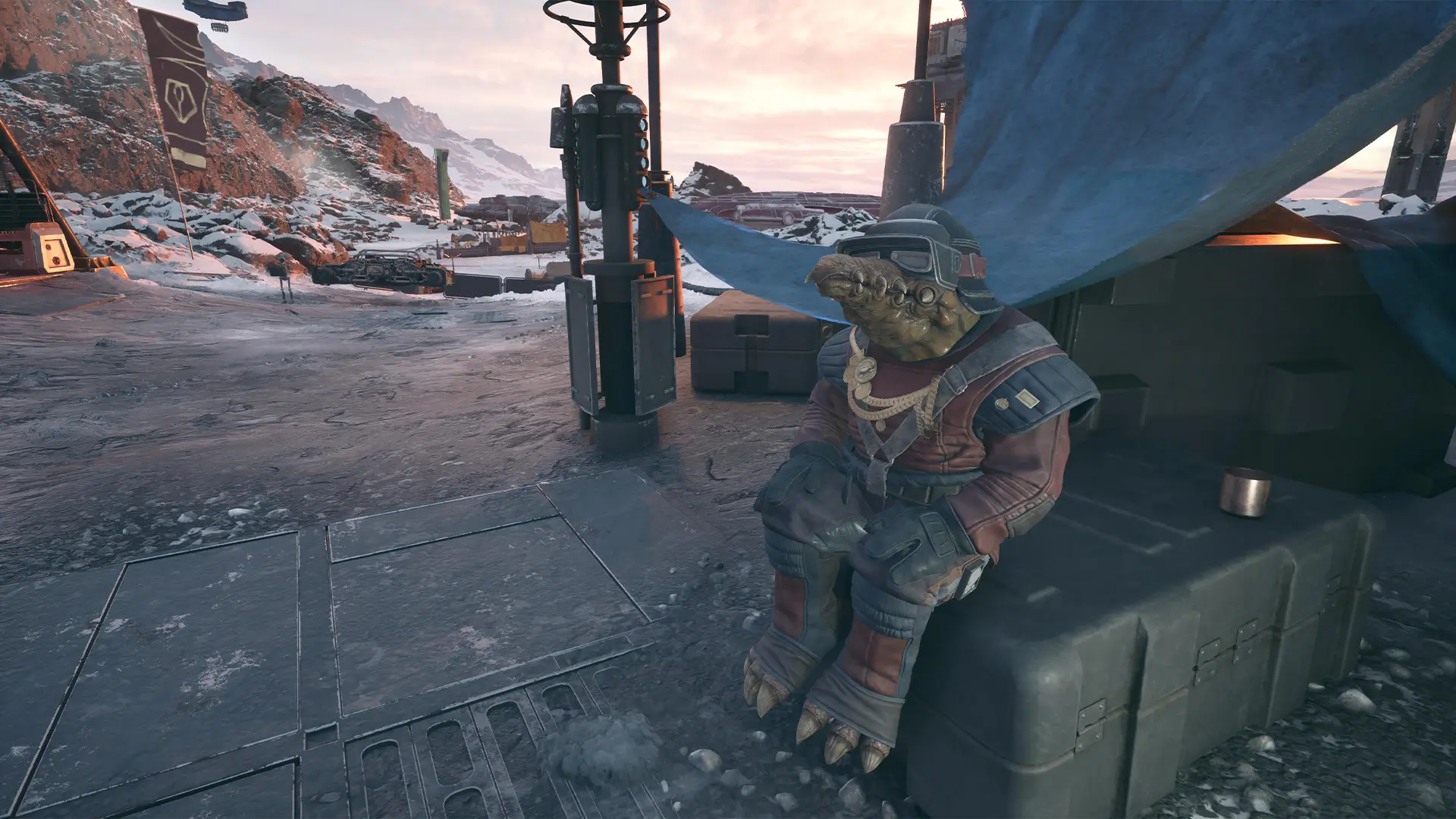
Those fellow racers are a wonderful bunch too, so getting to know them better is a joy, even when they’re jerks. (The Crocin racer Biddy Blas is an absolute piece of crap and is easily now one of my favourite characters in all of Star Wars.)
On top of simply trying to stay in first place and fend off your opponents, (often with actual weaponry too), you’ll also have to try to appease your chosen underworld backer by meeting whatever targets they set for you on a given planet, such as making a certain amount of jumps, wrecking a certain number of opponents, maintaining ramjet for certain amount of time, etc. Of course, if you take a path with a mystery encounter node or two then you’ll be racing less, which makes meeting those challenges all the harder, and you are penalized for failure!
You’re probably wondering about the podracing though.
It is here. It is a feature. To a fair extent though, it does feel like an inclusion made because the team behind the game knew they’d be crucified if they didn’t include it.
Podracers feel every bit as great as the three core speeder types do and are just as fun as they were in Episode 1: Racer, but they also feel a bit shoehorned in, which is a little disappointing.
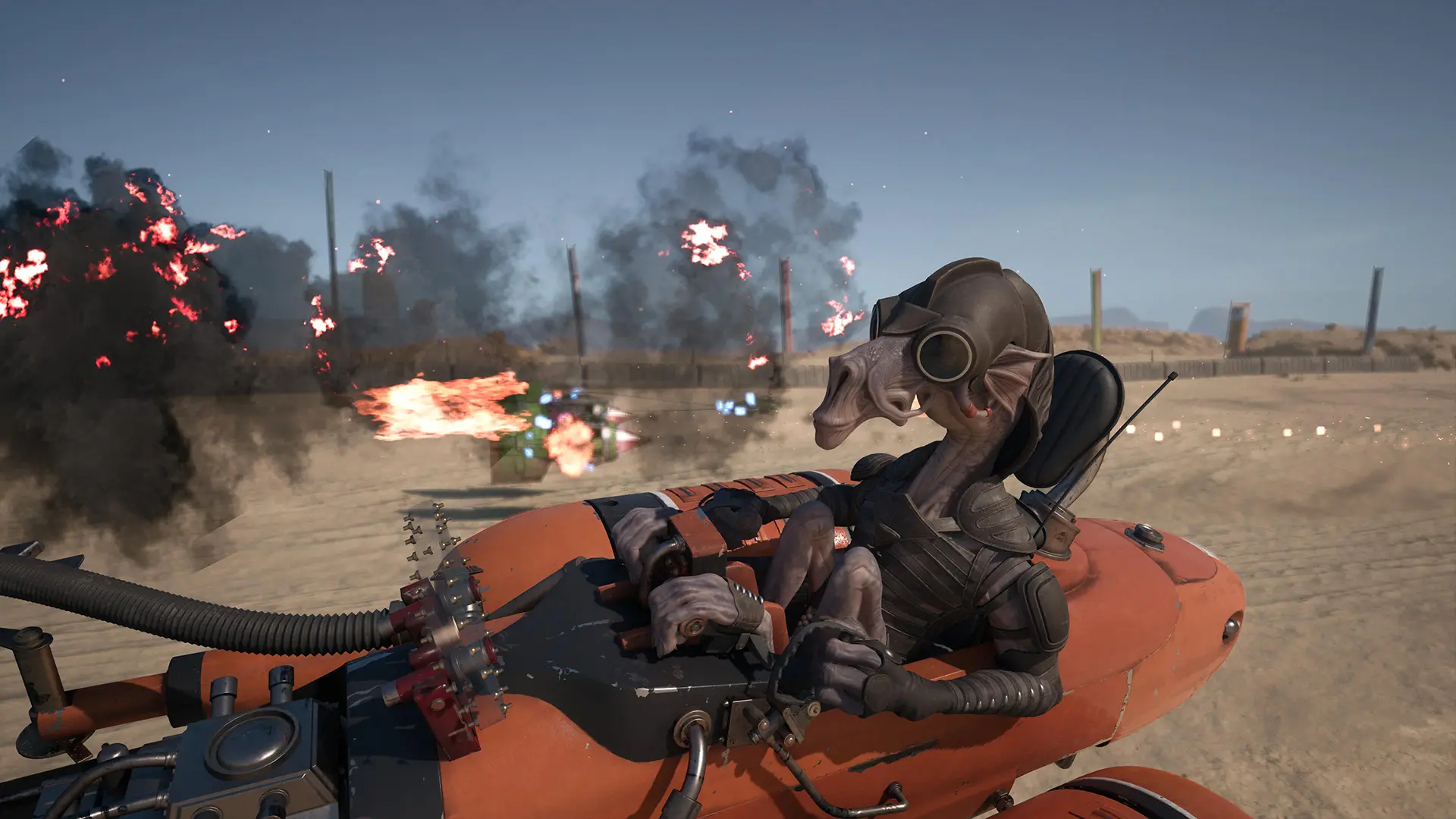
I was further disappointed too that none of the vehicles feature a cockpit view as I’m a sucker for that in any driving game. In fact, rather oddly, there are no camera adjustment settings of any kind that can be made.
I had issues too with the readability of a number of the tracks. There’s no minimap, and sharp turns can be really hard to see until it’s too late and you’re committed to hurtling straight into a wall. In a lot of instances there are indicator lights placed within the world that guide you, but they’re invariably placed within the environment so organically that they can often be more challenging to read at a lightning speed glance than is really useful also.
It’s a bummer that you’re forced to play as a human, but at least there’s a decent bit of customization to the voice and outfits on offer.
There’s a whole pile of standalone time trials, character-centric challenge modes, and a multiplayer suite too. The first two are fine but nothing to write home about, and unfortunately I didn’t have the opportunity to test multiplayer during the review period. I’m much more of a solo gamer anyway though.
Reviewed on PS5 | Review copy supplied by publisher