
I spoke about this a little in my early preview, but Splatoon as a series has never grabbed me beyond some of the more robust single-player activities sprinkled in more liberally as sequels rolled in. I have a ton of respect for how deftly Nintendo put its spin on the concept of a team-based online shooter in a way that doesn’t sacrifice depth or potential for skilled play, proving you don’t need gun guns to have a compelling competitive multiplayer experience in this vein. But I’m a solo player at heart, only ever flirting with the other side when the worlds of PvE looter shooters like Destiny and Borderlands absolutely sunk their hooks into me.
Which is all to say that Splatoon Raiders may as well have been concocted in a top-secret lab where the sign on the door is just a picture of me smiling. There might not be a game so far this year that has felt more made for me.
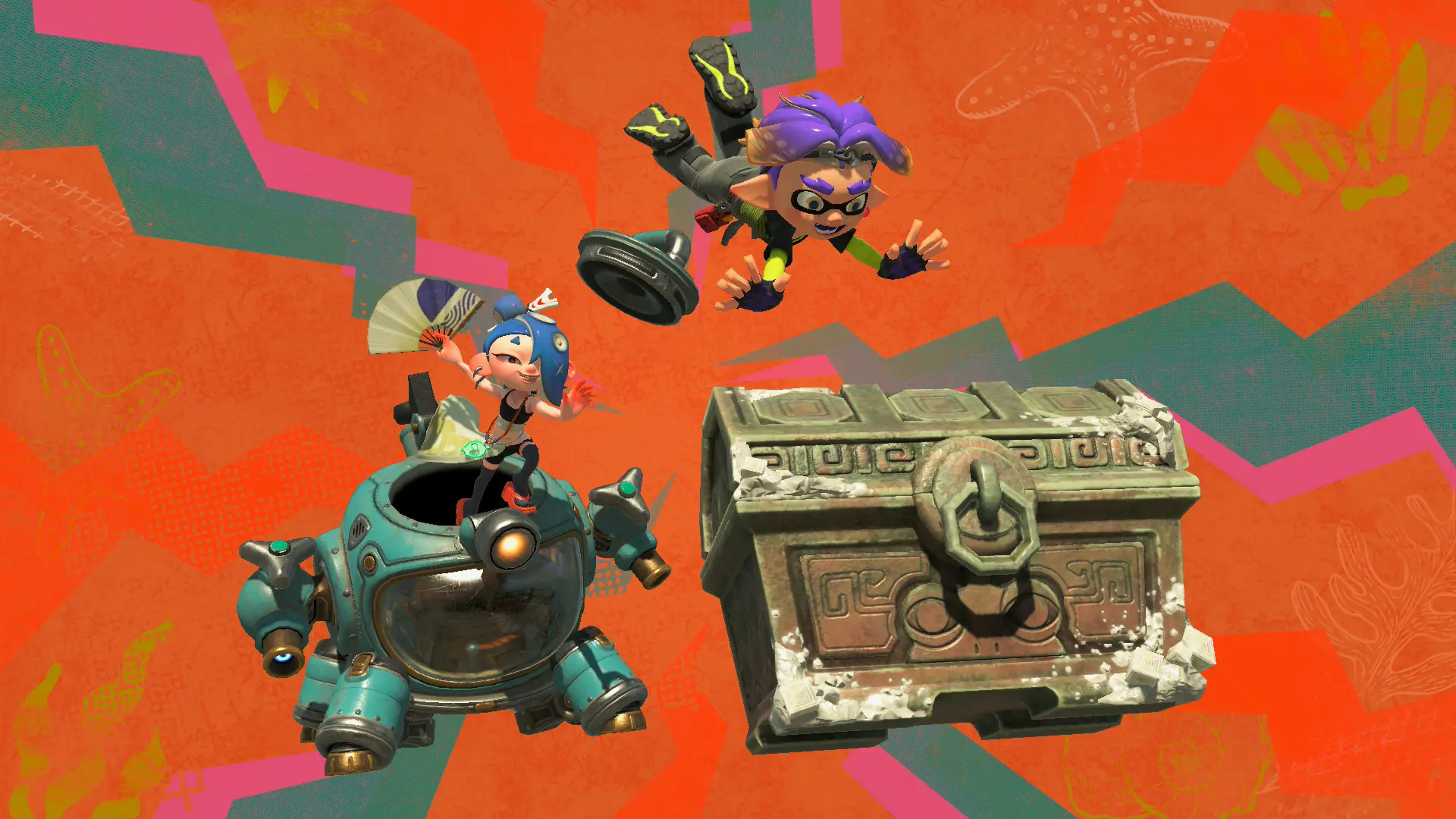
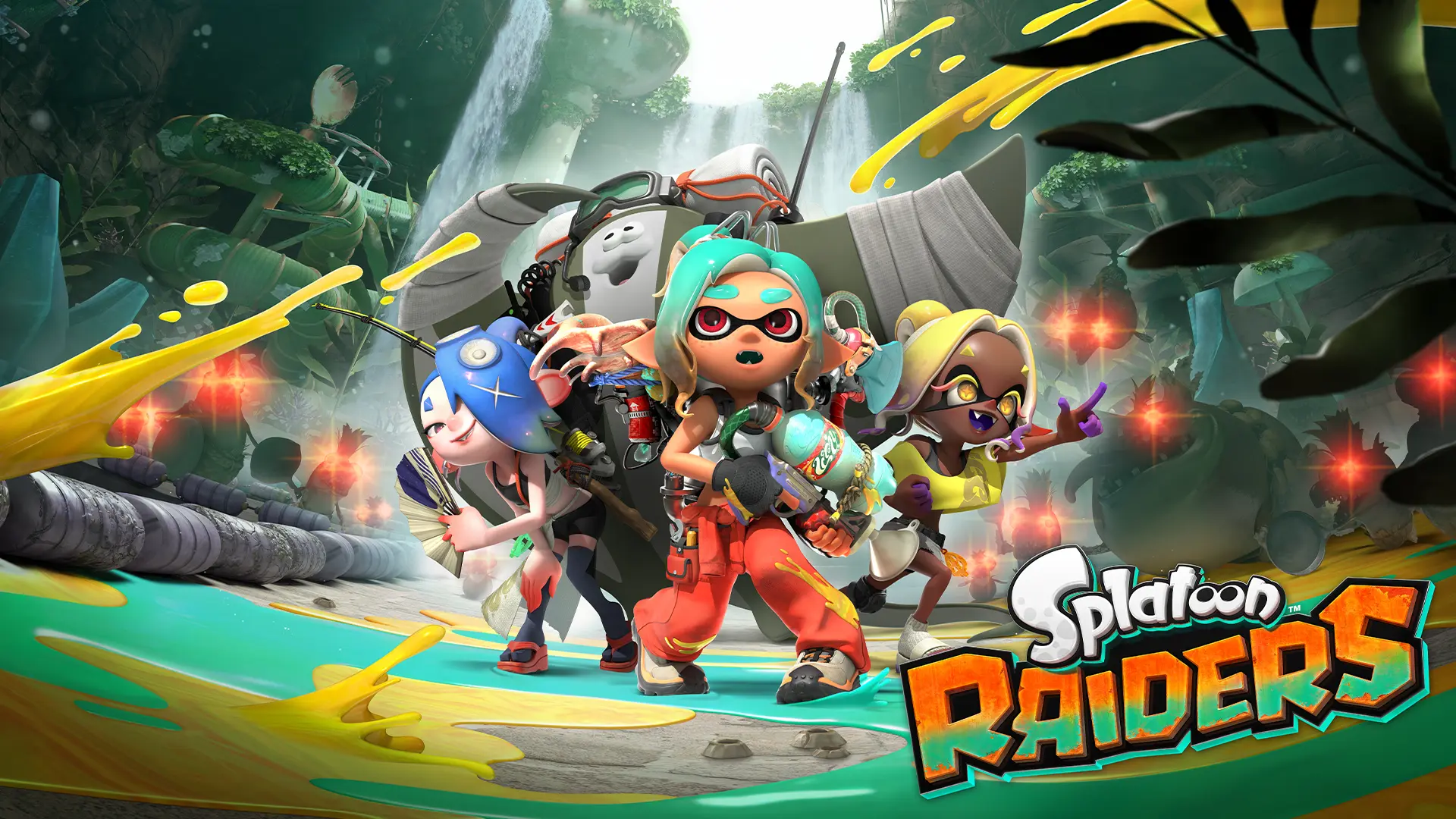
And, yes, Splatoon Raiders is inarguably a looter shooter. A nameless Inkling or Octoling known simply as The Mechanic, the game sees you stranded on a mysterious archipelago along with the members of Splatoon 3‘s idol trio, Deep Cut, and coming to the conclusion that the best way to get home and get rich is to scour the place for its hidden treasures. This is where the “raiding” part comes in, the entire structure of the campaign revolving around dropping into relatively compact maps to ink hordes of Salmonids and collect valuable junk.
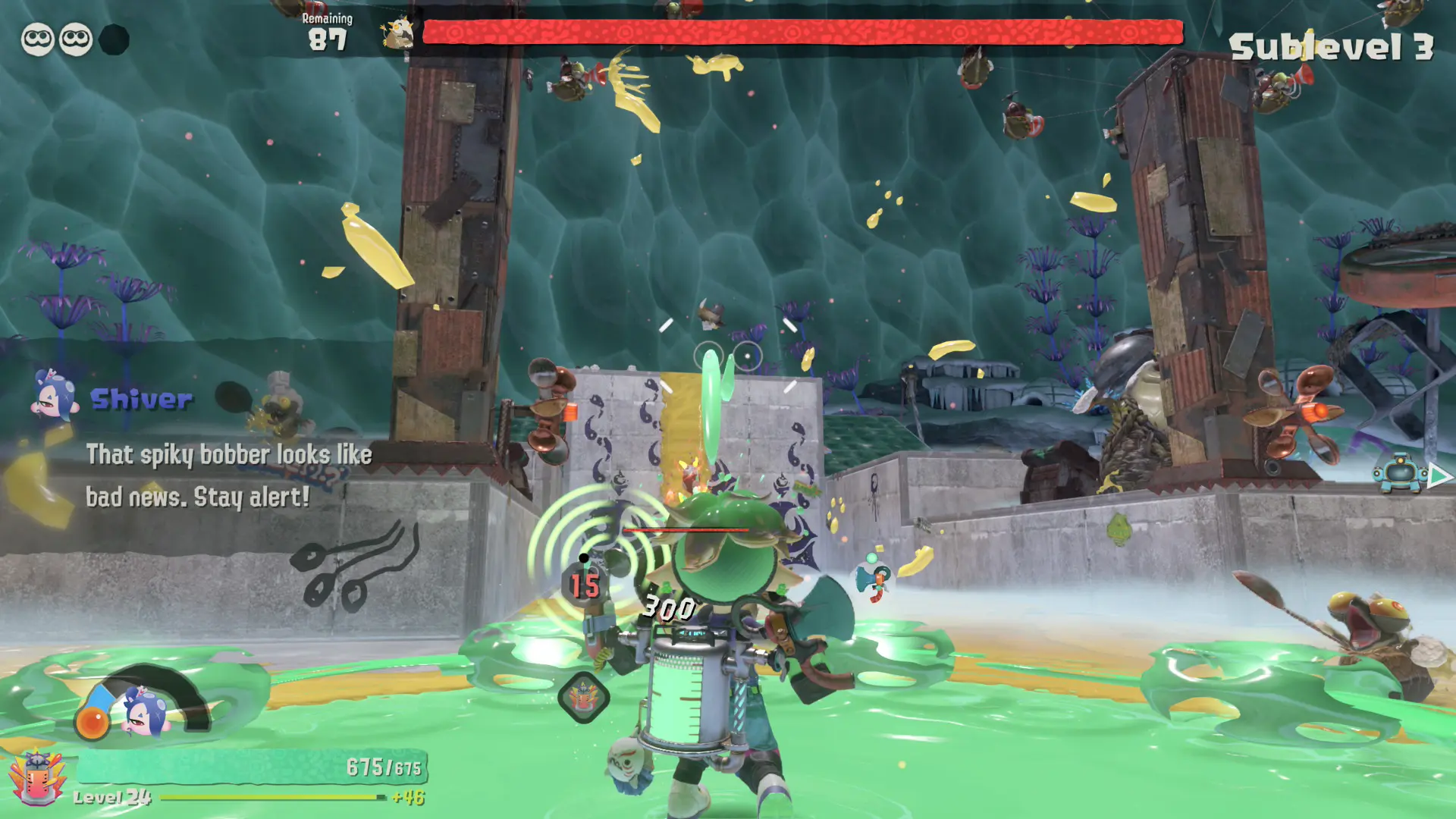
Retrofitting the ink-based movement and gunplay Splatooners are already familiar with, Raiders sits somewhere between the last two games’ single-player modes, DLC expansions and wave-based Salmon Run offerings. There are a few different raid types, some focused on traversal and exploration, others more close-quarters and under time pressure, some bespoke puzzles that impart advanced tactics and the occasional cool as hell boss fight. But universally, your goal is to shoot litres and litres of ink at the hordes of enemies sitting between you and piles of Power Eggs, Spirhalite Shards, weapons, gadgets and artifacts.
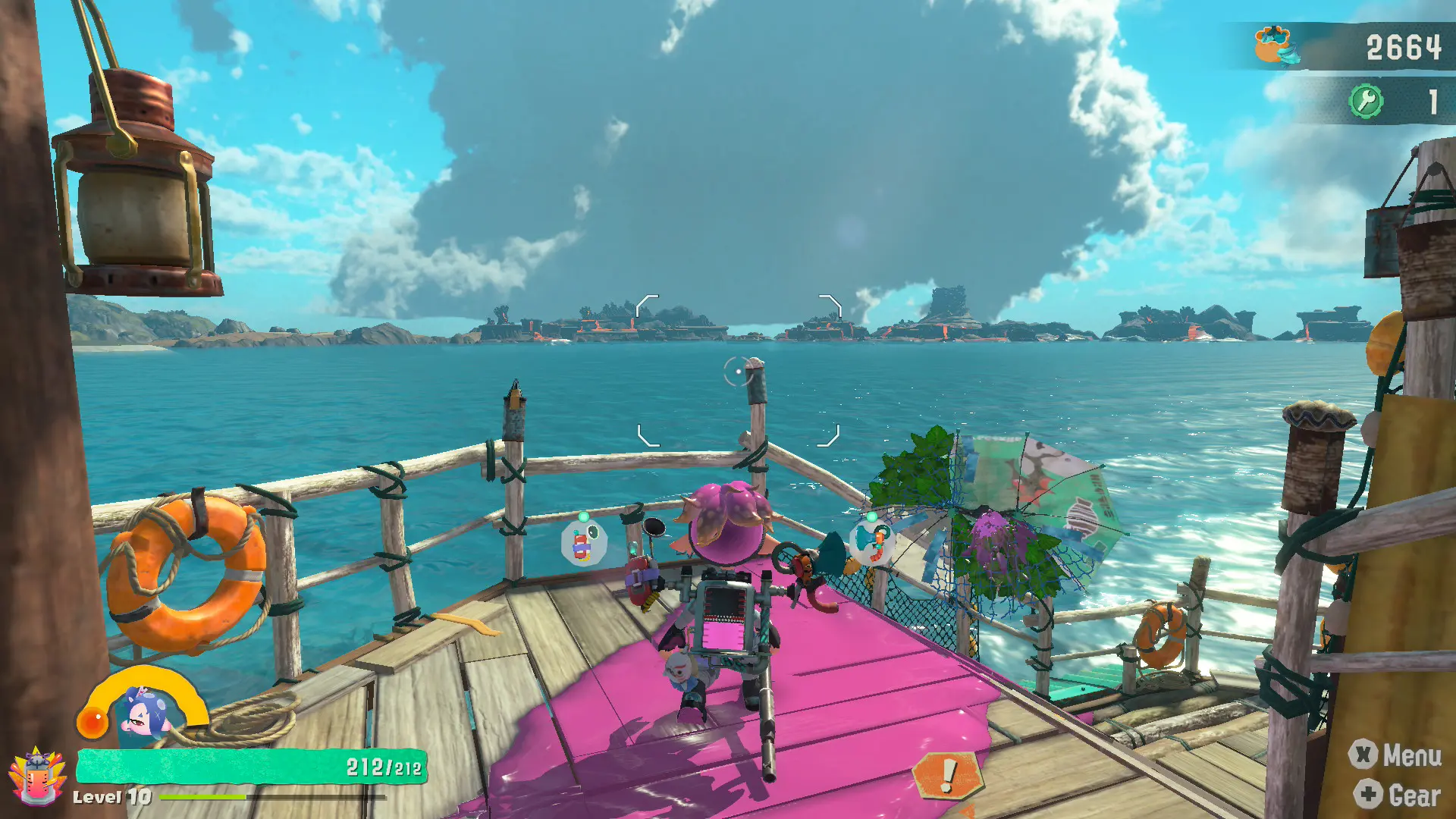
I could chew your ear off about the finer intricacies of the level designs, loot experience and power climb, but the simple version is that Splatoon Raiders taps into all the right lizard parts of my brain to keep me coming back for more. As the difficulty ramps up, I’m encouraged to spend time on the Hideout Ship and tinkering with my loadout, realising I need more of something and diving back in for more punishment – mercifully holding onto any loot I’ve found should I be met with failure again. Splatoon has already mastered game feel, and the supporting looter shooter framework only serves to make it even more moreish.
Splatoon Raiders also understands and exudes craft. And, in the face of trends in the “AAA” space, the value of looking at stuff. There are so, so many things to look at in this world, and often the biggest reward for a raid well-raided is the opportunity to look at even more things. Like a rare weapon drop that’s pretending to be the same Splattershot or Roller you’ve seen in Splatoons past, but is actually a few select pieces of ocean trash MacGyvered into roughly the correct shape. It’s no coincidence that your player character is handed the moniker of Mechanic.
Other things to look at are high-value treasures, intel and even a few interactive artifacts hidden away in the various maps or earned as rewards. These are just as potent compensation as any gear you pick up, rich in artistry, worldbuilding, humour and mystery. It’s refreshing to play a looter shooter-adjacent joint where the joy of finding or earning new loot is more substantial than the chance to make a number go up by a minimal factor or command cosmetic bragging rights – your reward for engaging with this world is a deeper understanding of it. And some seriously fishy pun work.
But mostly, your downtime is spent poring over every last bit of loot you’ve hoovered up along your path to victory. Weapons and gadget parts come with rarities and power ratings, possess different levels of effectiveness and unique traits, and as you build out your Hideout Ship the facilities to craft, upgrade, dismantle and otherwise fiddle with your gear appear. All the usual Splatoon ordnance is here, and the raid designs do a decent enough job of encouraging you to play with different weapon and gadget combinations, although some returning weapons like Rollers and Splatana don’t quite make sense in the vast majoity of situations.
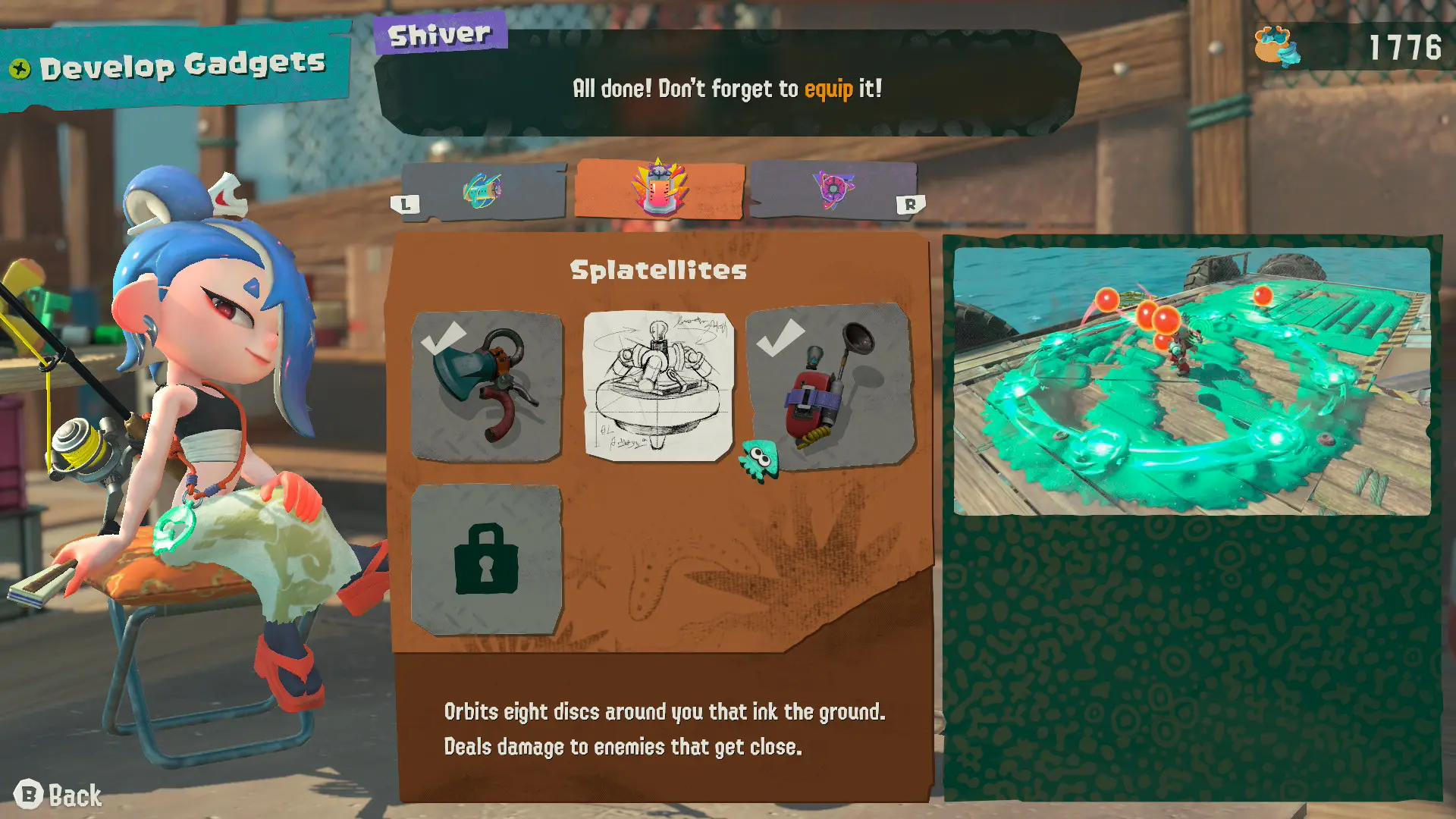
Tank types and their corresponding gadgets are the biggest change-up in combat, giving you multiple tactical options with which to augment your particular playstyle. Different tanks drive different advantages and disadvantages, and determine which gadgets you can equip, but you’re also encouraged to mix it up with some clever cross-upgrade systems. Honing your gadgets with dropped, crafted and refined parts to make them truly yours is an endeavour all its own, turning favourites into unstoppable extensions of yourself and potentially even blessing your least favourites with unexpected utility.
Like most Nintendo-owned games worth their (tasty) salt, Splatoon Raiders hits its peak after the credits roll. It’s in this endgame phase, which presents players with an entirely new layer of difficulty on top of everything they’ve already conquered, where the kid gloves come off and you’re allowed to get a little freaky with it. Your scope for buildcrafting suddenly balloons as new opportunities are presented to tweak and tinker, and you’ll need every advantage you can get as the enemy types and counts in raids benefit from the same disregard for restraint. It’s a terrifyingly beautiful crescendo as what starts out a ballet of ink and seafood becomes more akin to a mukbang in a moshpit.
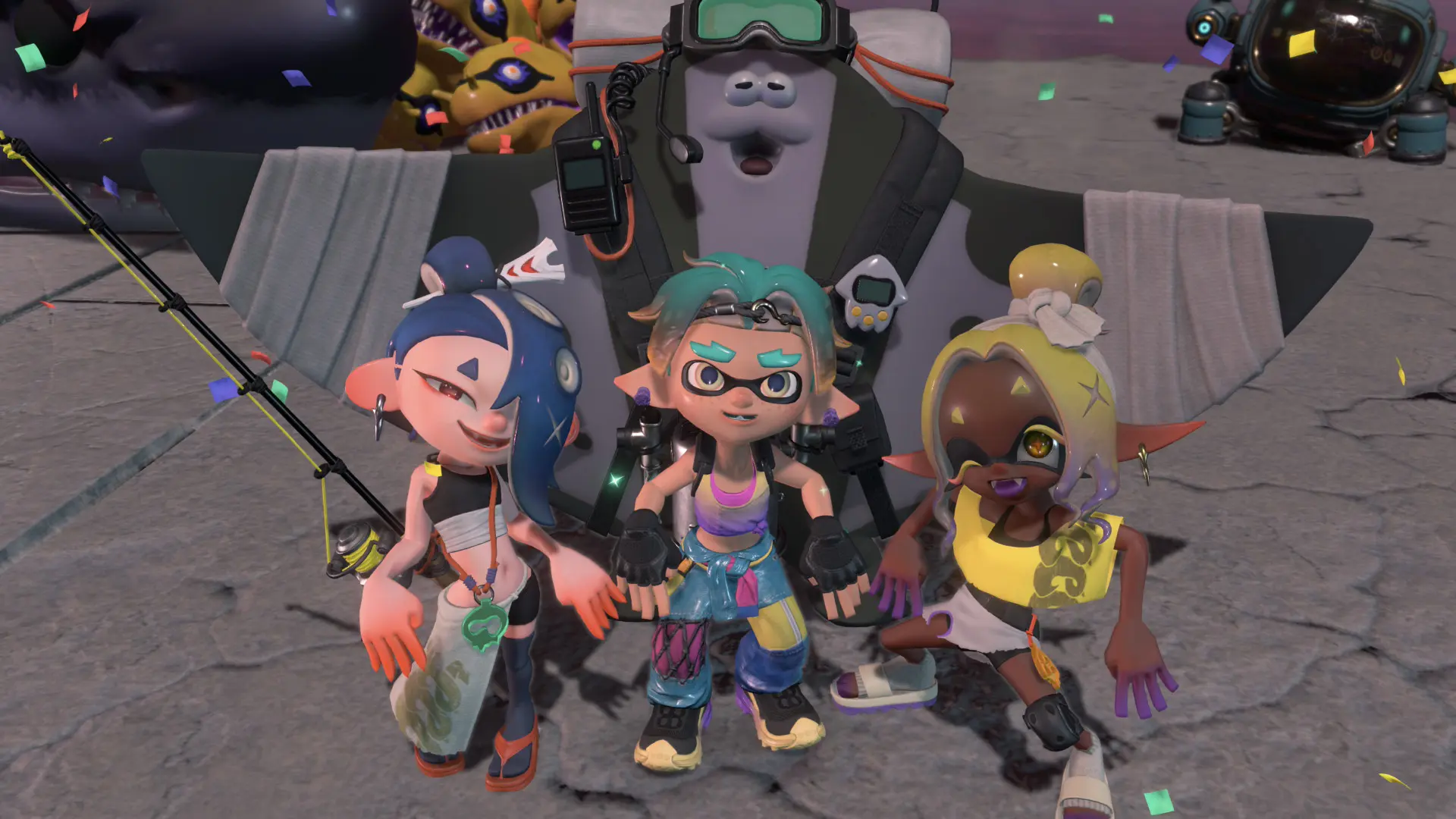
Should things get too much, you’re also welcome to bring along help. Raiders supports co-op multiplayer for up to four players online, which is great. But even cooler is the ability to summon help from a stranger online (very Souls), giving you added backup in a raid that you’re struggling with and rewarding them in turn with handy gear. It feels decidedly Nintendo in its implementation, and it adds a nice bit of connection in an otherwise-lonely world while maintaining some degree of separation for online participants, to keep it safe and kid-friendly.
But by far the most heartening thing about Splatoon Raiders is that, eventually, I was done with it. After seeing the endgame content through, I’m content in saying I’ve completed it. There’s no drip-feed of new content, no battle pass, no looming major DLC promising deeper exploration of Splatoon lore (though I’m sure some kind of expansion is on the cards), no insidious attempts at keeping me “engaged” beyond the core fun of the thing. I will no doubt play Splatoon Raiders again in the future, but that’s because it rules – not because it rules me.
Reviewed on Nintendo Switch 2 | Review copy supplied by Nintendo


Born into the world of video games through SEGA, and in particular Sonic the Hedgehog, Kieron’s gaming tastes now consist of the latest, shiny AAA thing, an indie darling or two, and an embarrassing number of hours of Balatro.