
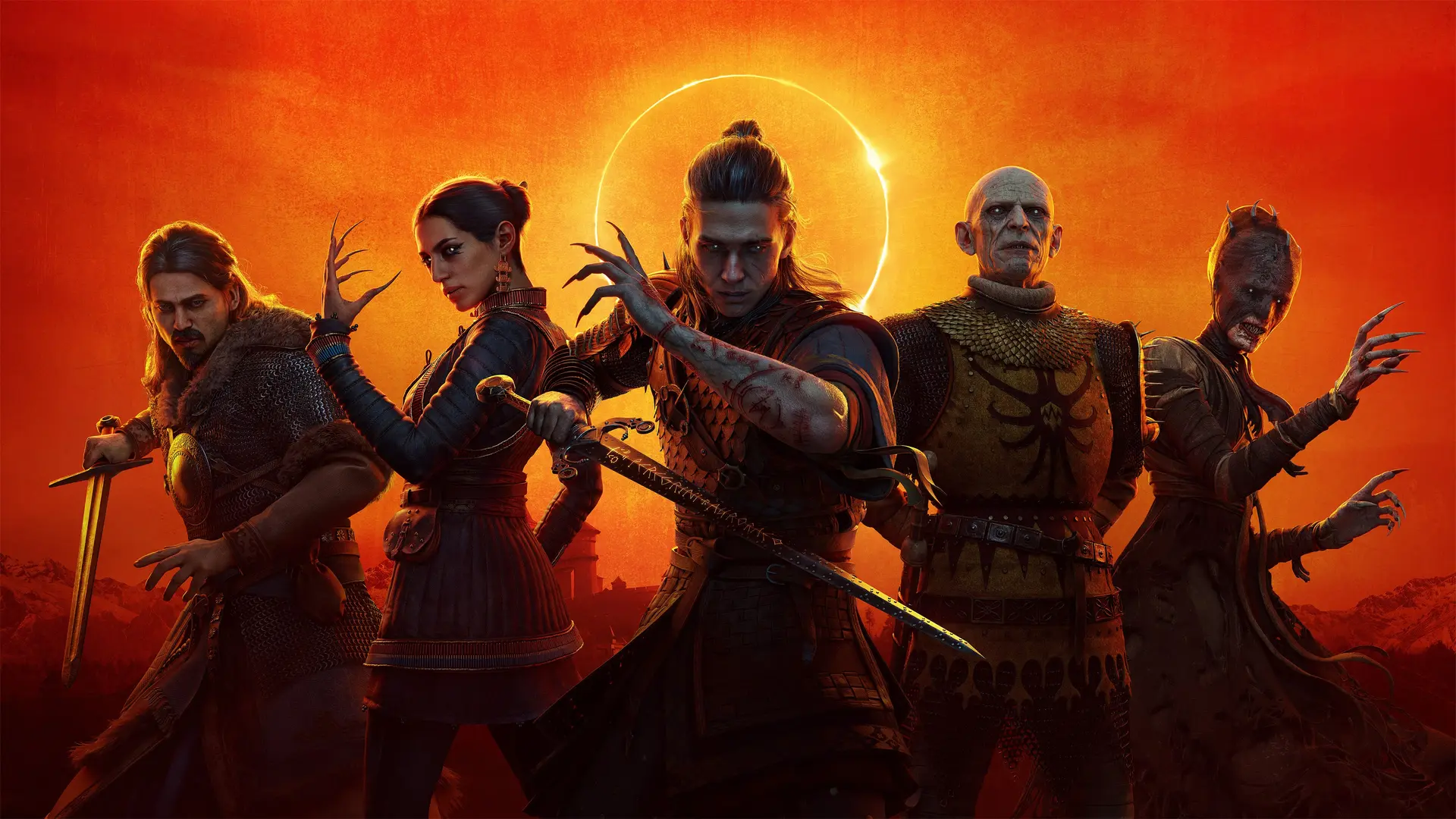
30 days. That’s how long The Blood of Dawnwalker gives you to save Coen’s family from the dungeons of Vale Sangora’s vampiric overlord, Brencis. And my rescue mission had an absolutely terrible start. In just the prologue, forgetting to read one note resulted in a botched potion and Coen’s mother in ill-timed hysterics during the weekly blood mass ritual, causing bloodshed and the tragic death of a family member before he’d even imbibed the vampiric powers that made him the titular Dawnwalker.
In his new incarnation, by day Coen must rely on his sword and whichever witchcraft and stat-boosting concoctions he can acquire. By night he assumes a clawed vrakhiri form, capable of wall-climbing, teleportation and restoring his health by drinking deep from the blood of the living.
It’s an auspicious end to my tutorial in Coen’s home village of Laslea that establishes Dawnwalker’s unshakable commitment to consequences. The 30-day time-limit and freeform exploration adds a meaningful sense of real pressure and consequence. You are forced to weigh the temporal cost of game actions versus the benefits. Once let loose on the world, will you spare an hour to chop firewood for your father’s blind and neglected comrade-in-arms? Spend the night in vigil with a companion whose crimes have them resigned to suicide? Or just pay them no heed and instead pursue single-minded vengeance?
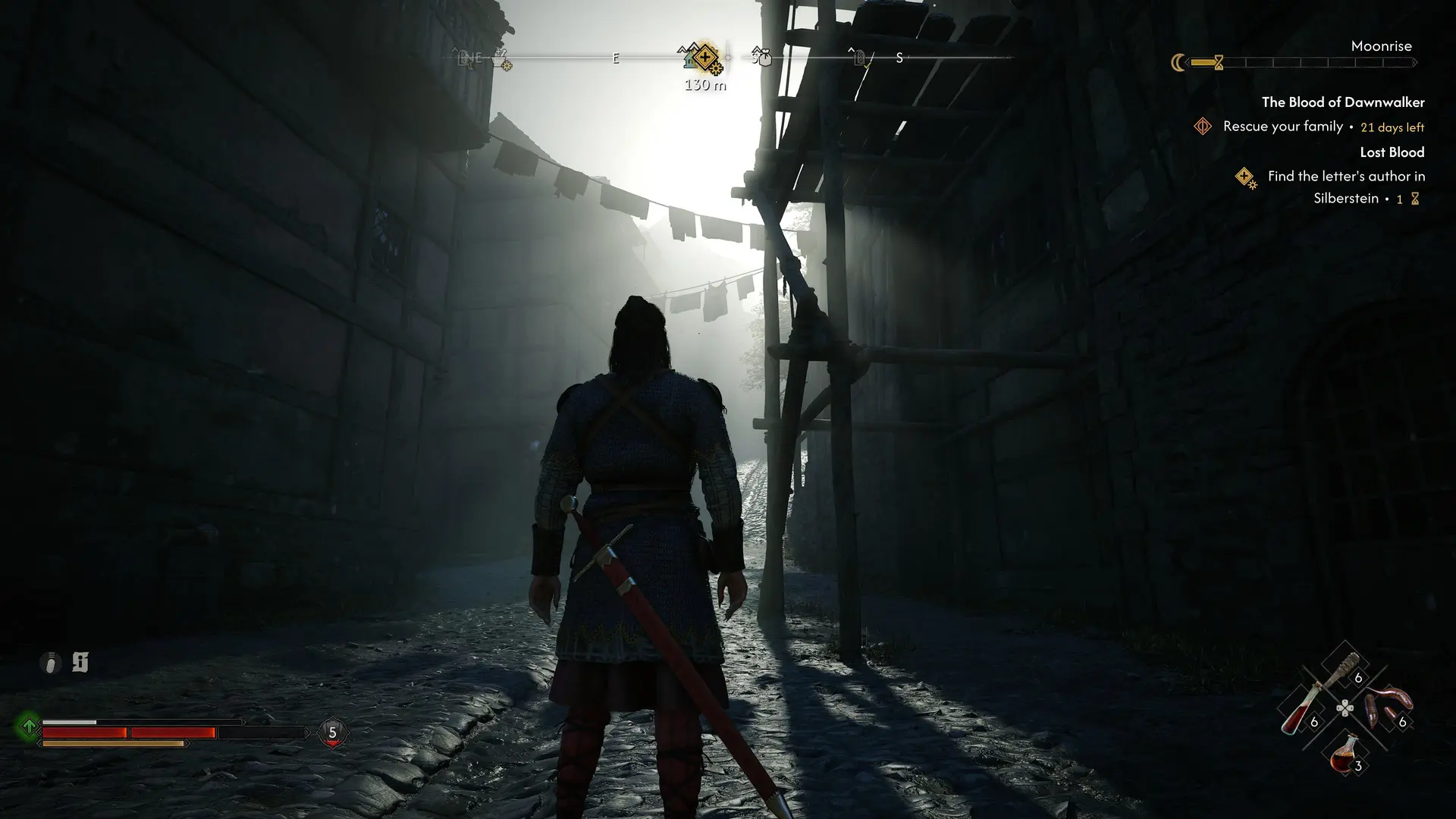
I don’t recommend the latter option, not just because an underlevelled attempt would promptly send Coen back to the grave that he so recently arose from. While the countdown may encourage haste, the richness of the world and its characters demands taking the time to explore this isolated realm within the Carpathian Mountains.
The vampiric overlords have supplanted Christianity with the cult of the vrakhiri, who protect their wards from plague with a blood mass ritual, in return demanding total control and participation in a blood-tithing industrial complex that operates across the valley. Brencis and his three boyar lieutenants have relegated nobles to peasants and jesters and turned neighbours against each other through fear and favours and hagiographic propaganda. The repercussions are explored in depth, with a refreshing emphasis on the peasant underclass that resists the temptation for Coen to forget his roots. No landed gentry to play the saviour here: a sellsword’s son is Vale Sangora’s only hope.
I played Coen as a conflicted idealist in a fallen world, and saw him grow from a clumsy peasant to a capable warrior who draws his sword with a mesmerising twirl. At their best, the stories and quest design he uncovers along the way touch the heights of the most memorable of those found in The Witcher series. The twisted, bitter lengths that these conspiratorial priests, dauntless (if feckless) rebels, scorned vrakiri and downtrodden former nobles are willing to go to shall live long in my memory. Unfortunately I can’t say the same for the romance options, which were fun in the moment but showed little narrative payoff. And after 35 hours, the final act’s pivot to set up a franchise lost some storytelling momentum at a crucial time.
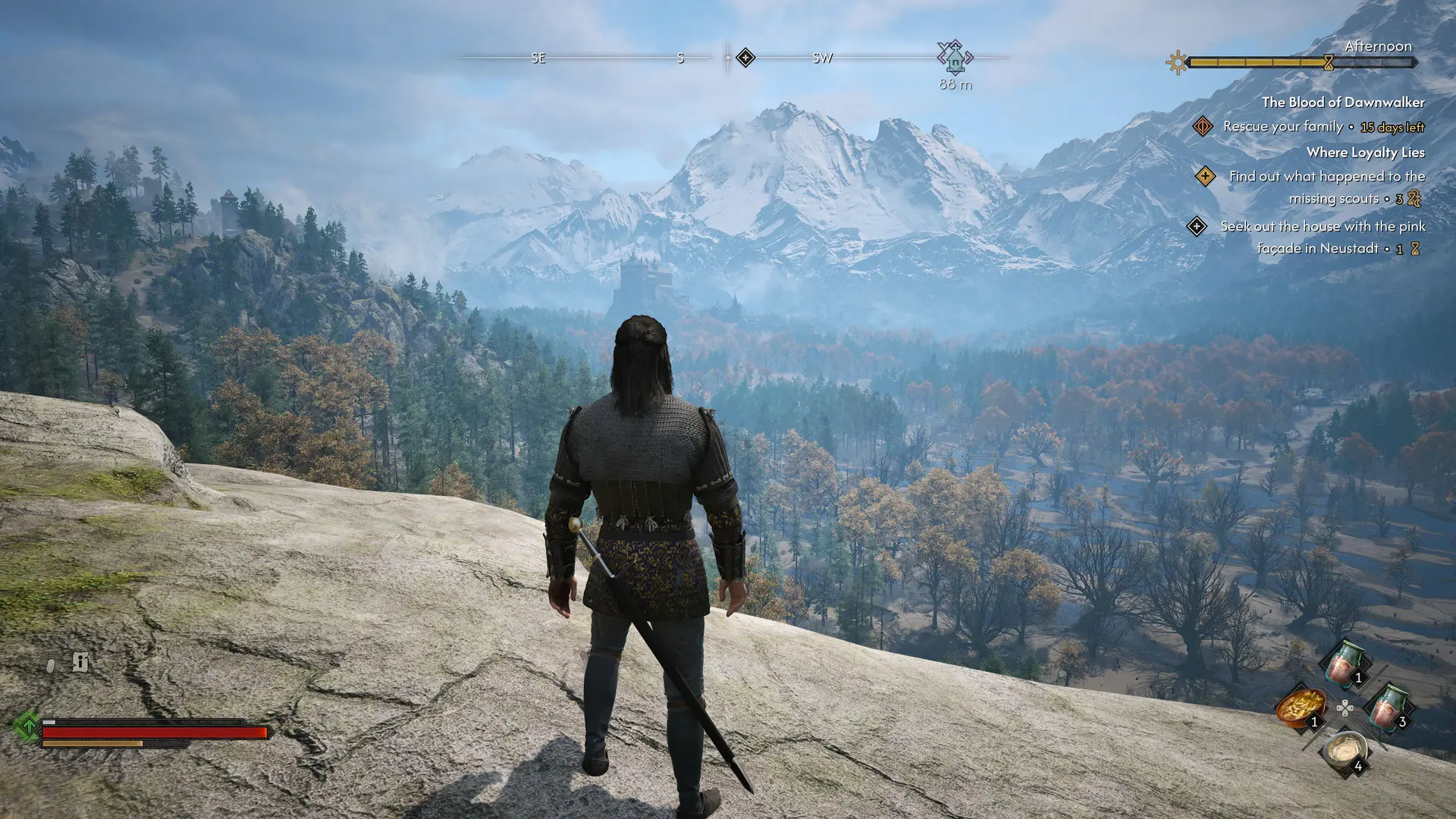
The dynamism and reactivity of quests particularly impressed me; I could approach one entirely backwards, stumbling into a crime scene and then reverse engineering my way back to the quest-giver. Even working through relatively humdrum checklists of base-clearances could unfold into fascinating conspiracies, although the less narrative quests like the density of peasants in dire straits and Christian shrines in need of restoration eventually felt like they were padding for an overlarge open world.
A global reputation system tracks every major action you take against Brencis’ regime, increasing the challenge of traversing the world. By the time I triggered the final quest, the city’s gates were closed and highly trained troops attacked me on sight. This reputation works alongside a Court system which monitors each Boyar’s separate industries, such as Ambrus’ leech farms, Xanthe’s maiden trafficking and Bakir’s distillery network. Your efforts to meddle with the vampire feudal system weakens Brencis and angers his wards, triggering various questlines with options to deal with them separately without storming their well-guarded forts.
The capital Svartrau is where many of these threads intertwine. The city is the game’s standout location, boasting the grand cathedral, the crime-ridden Middens, and best of all the rooftops of the pleasingly undulating cityscape night; blinking from one building to another in pursuit of a vrakhiri companion is one of the game’s great joys. You only ever see a narrow slice of Eastern Europe, separated from the pestilent outside world by Brencis’s troops, but it’s so finely realised that I hardly minded being trapped between the mountains.
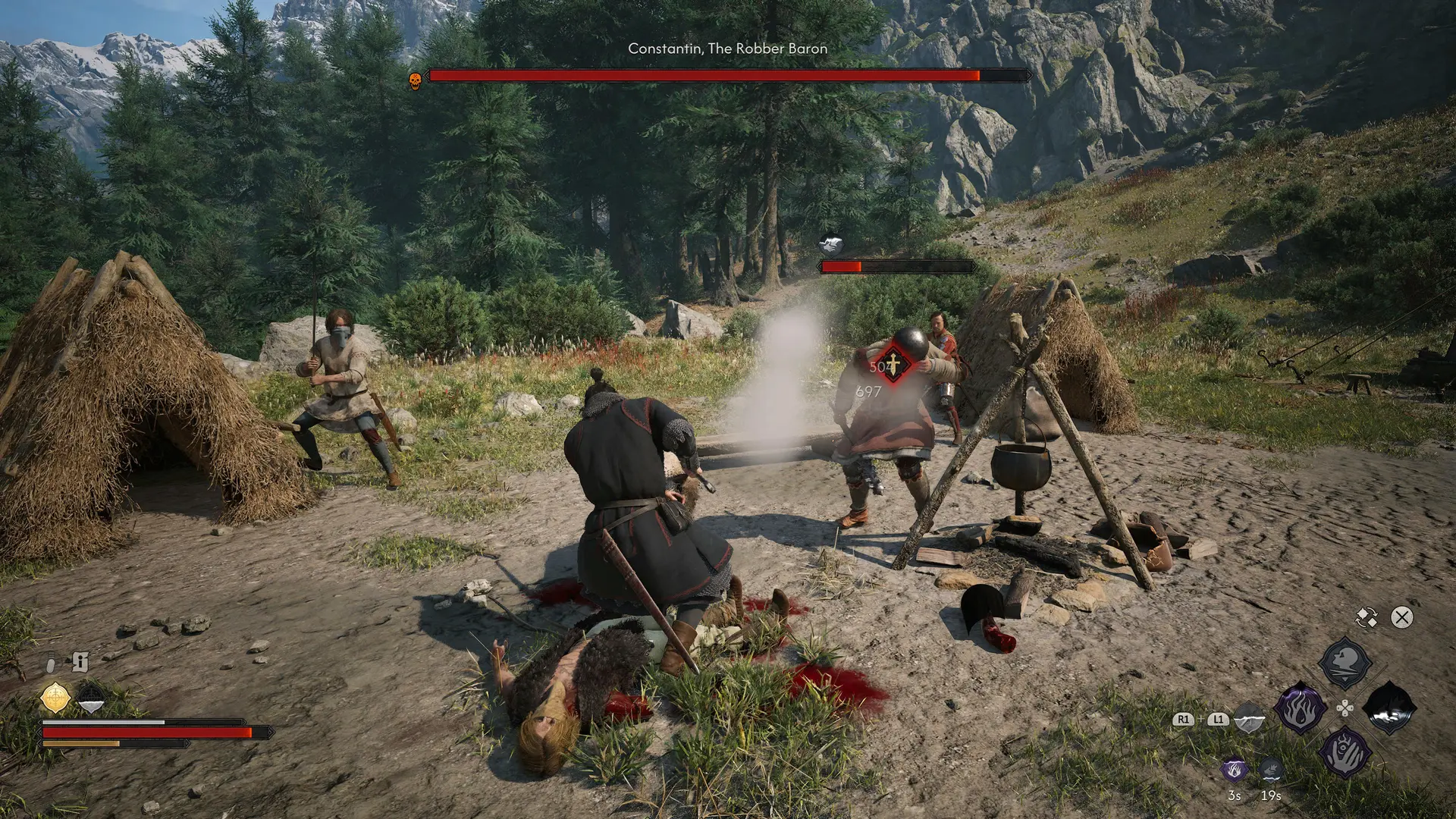
My time with the combat was a journey, and one that started almost as poorly as the prologue. For almost the first ten hours, the combat system and its DDR-style directional parries conspired to give my dawnwalking arse a relentless kicking. Just three of Brencis’ soldiers were more than my match; the best I could do was lure them apart, hack them down one by one, and wonder if I was in for a repeat of Kingdom Come Deliverance’s gruelling difficulty.
Then it clicked. I unlocked skills (learned organically from manuals), offensive witchcraft spells, and built up my survivability so I could practice my parries and directing cuts past enemies’ guards. By the end, though I never achieved mastery to the point I could turn off UI indicators, I became a true believer: Dawnwalker’s core combat system is a marvel. I was flurrying between uppercuts, side slashes and headstrikes before cancelling into directional parries, interweaving blocks into counterthrusts just like the best on-screen duels. Teleporting bloodsucking abilities or summoning a horde of crows to stun foes was just a delicious garnish. I saw The Witcher’s combat as little more than a chore, so I’m amazed this team delivered some of the best swordplay since Sekiro.
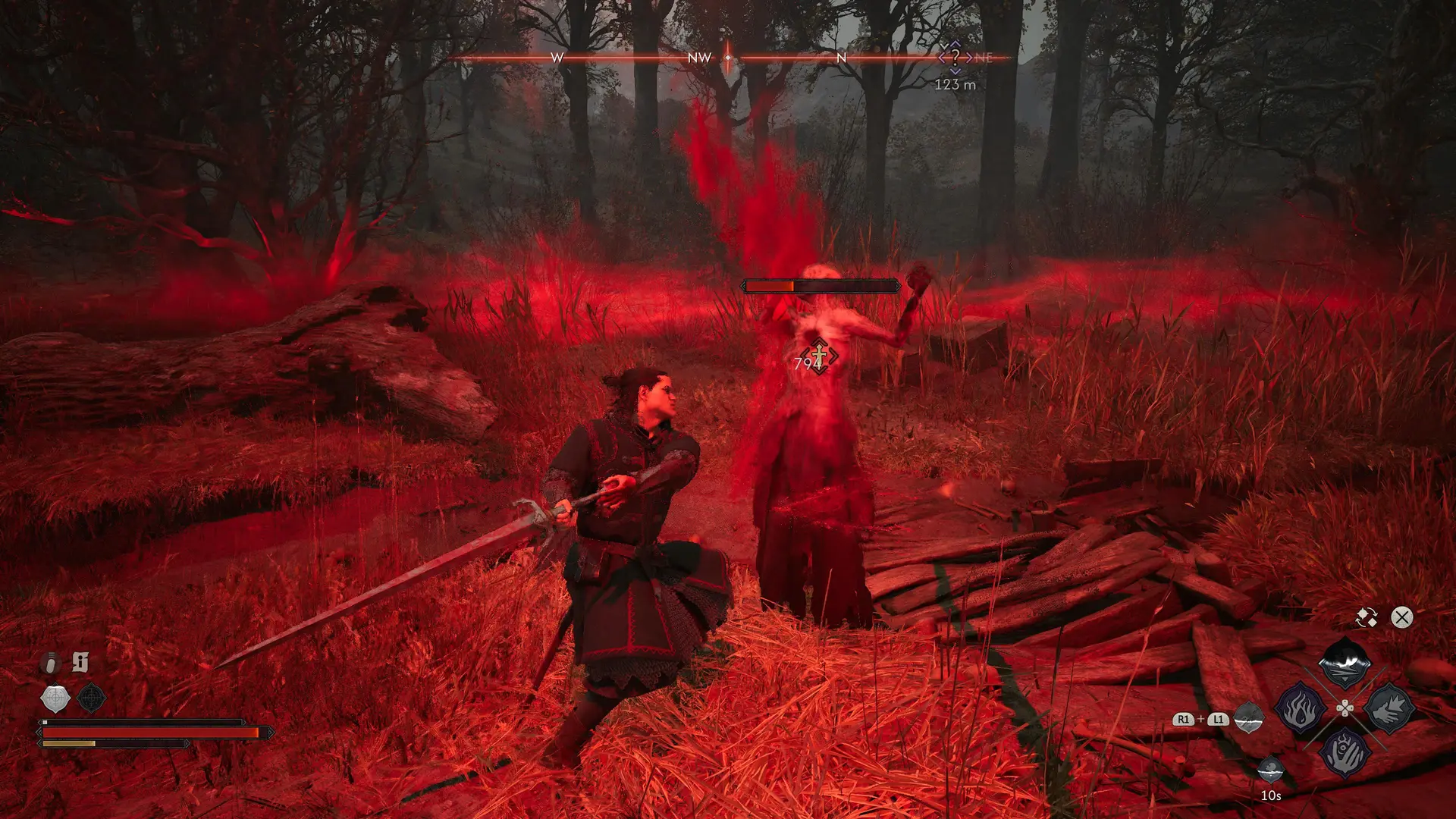
Their success in this area means it’s a real shame Rebel Wolves soon ran out of ideas for the game’s foes. Shameless enemy repetition blunts its thrills over time. Otherwise intriguing side missions invariably end with a boss battle against one of a small selection of opponents. By the time I rolled credits, I’d tired of taking down failed vrakiri, packs of wolves, wild boars and pirouetting anguished spirits.
This combines with a poorly balanced mid-to-late game, where enemies are increasingly trivialised down to the final boss, even after I’d raised the difficulty to “Challenging”. It’s a fixable problem, although potion crafting particularly feels like a vestigial Witcherism in its current form. At its debut, the game cries out for an extensive post-launch patch, following true CD Projekt tradition.
Rebel Wolves’ leadership made their name at CD Projekt and they also freely copy from their own homework, plundering The Witcher’s open world, music, animations, UI and footprint-tracking investigation mode. Hell, Coen even mimics Geralt’s trademark half-up, half-down ponytail! Yet despite this degree of flagrant self-plagiarism, their debut stands alone as a fresh, bold and ambitious open world RPG.
Reviewed on PS5 | Review copy supplied by publisher