
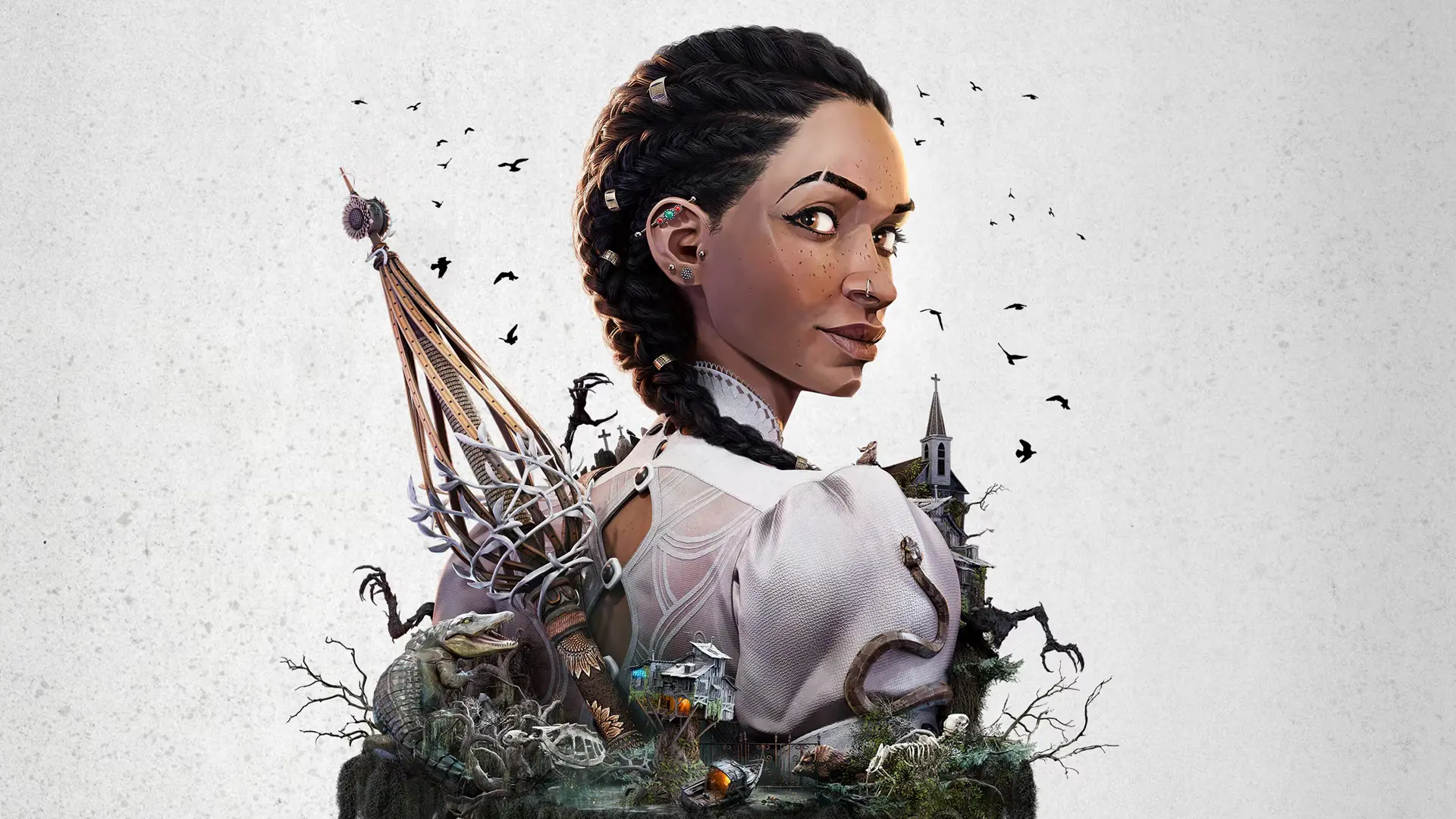
South of Midnight has been on my radar since long before it launched for the first time in April last year, but waiting and hoping for it to appear on the platforms appropriate to me has paid off with the game now launching on PlayStation 5 and Switch 2. Having now finally played though the game on PS5, it’s almost exactly lived up to the expectation set by those who went on this same journey a year ago – a very by-the-numbers action adventure steeped in some truly beautiful art that captures a world we don’t get much of in mainstream video games.
Living in the fictional town of Prospero, in a detached unit with her single mother, Hazel Flood’s entire world is upended when an enormous storm of water washes through her neighbourhood and whisks the entire home away – mum included. Amidst the havoc, a panicked Hazel visits the refuge of a mansion belonging to her wealthy and reclusive grandmother-in-law, only to discover the hidden threads of a spiritual fabric binding the very town and people that make up her small world. Prospero is a place inspired by Southern Gothic folklore and urban myth, a fantastical microcosm of the very real history and trauma of the American Deep South with enough of an unfortunate throughline to struggles still ongoing, that it’s painfully easy to relate from well outside.
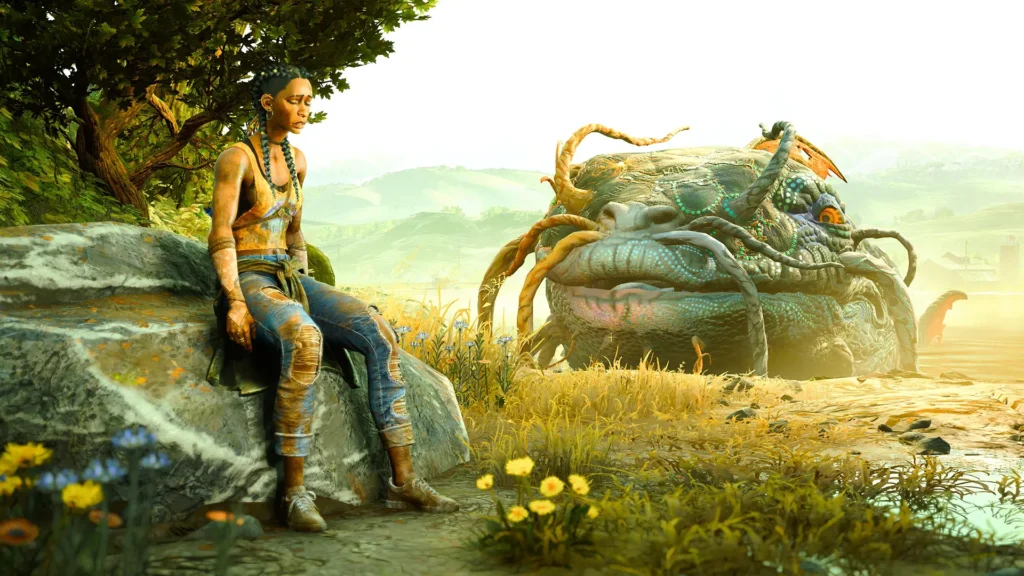
As she befriends a giant, talking catfish named Catfish, Hazel’s quest to find her mother takes her through this flooded and dilapidated borough, learning along the way of the deep-rooted pain that lingers from bleak pasts. It takes her on a series of contained tales of various Prospero residents, taking the forms of spirits and creatures both melancholic and malevolent, offering the opportunity to grow into her unexpected role as a wielder of metaphysical threads known as a Weaver.
South of Midnight’s penchant for dark and tragic fables reminds me a lot of the likes of American McGee’s Alice or Double Fine’s Psychonauts, although it tends to follow the former’s ethos of captivating aesthetics over context-appropriate game design. As you explore all of these distinct stories, Hazel’s directive remains largely the same each time – traipse around a lightly-explorable environment to find Stigma-covered combat arenas, defeat the Haints within, repeat until you clear them all and move on. Sometimes there’ll be a simple chase sequence at the end, sometimes a boss battle, but that’s the basic rhythm throughout.
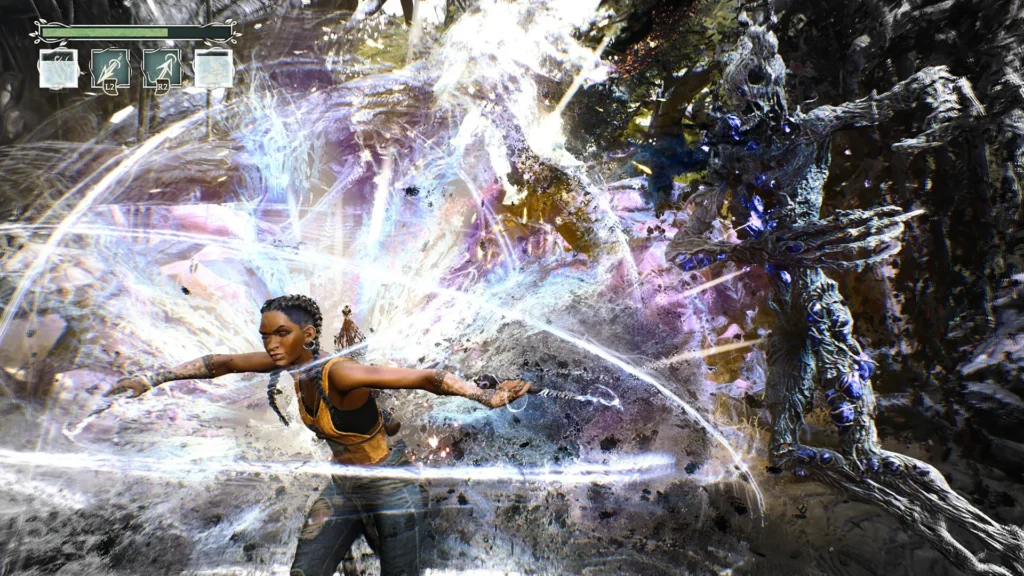
And it’s not that any of it is bad. The combat is simple but serviceable enough to get you through the roughly 10-hour runtime, and I don’t mind a bit of semi-linear exploration with optional curio hunting. But it’s all just kind of…there. I don’t necessarily believe that Hazel’s story demands regular fight scenes, and in fact the Haints really don’t have much of an impact on anything other than to act as fodder in a system that feels like it was included almost solely out of expectation.
Without outright spoiling anything, there is importance in Hazel taking to her obstacles with anger that forms part of the game’s messaging and informs her journey as a weaver. But to riff on Hideo Kojima riffing on Kobo Abe, restoring the threads of the Grand Tapestry is a function of the rope, so it can be jarring that the game is so adamant to hand you the stick.
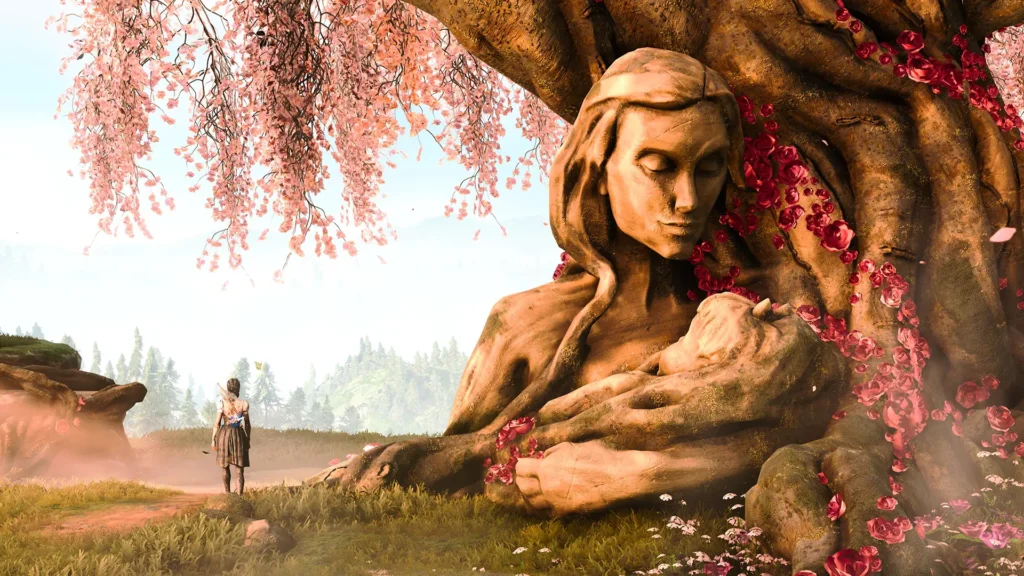
Accepting the creative decision to package South of Midnight in the context of a pretty bog-standard action adventure though, everything else about it is lovely. There’s a heap of charm and soul baked into this Southern Gothic tale, most of it emanating from the mesmerising artistry on display.
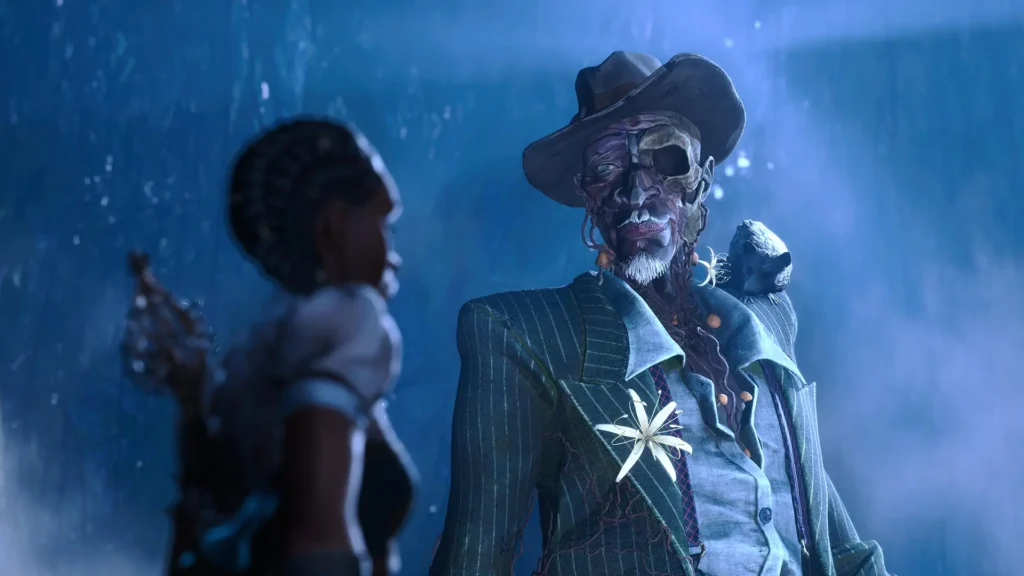
Crafted to resemble lavishly detailed stop-motion characters, Hazel and the various humans and creatures she meets are brought to life with some stunning designs that not only look incredible but fully represent their unique stories. There’s a lot of fun had with scale here that I absolutely love, and the sense of place achieved in Prospero’s rich environments almost makes me pine for a place I can say I’ve never been.
I could watch the game’s gorgeous cutscenes for days, and listen to the always-talented Olivier Derivière’s enchanting score forever. There’s something wonderfully stirring about the way South of Midnight’s choir-backed hymnal seems to move along with you, dropping into clumsily-written but equally affecting solo pieces that back some of the biggest moments. The entire voice cast is great, too, especially Adriyan Rae’s Hazel.
As far as the PlayStation version of this game goes, I unfortunately don’t have much to compare it to from experience, this being my first time playing through it. I switch between a regular PS5 and a Pro depending on where I am at the time, the latter of which the game apparently supports with enhanced performance, but I got pretty much the same positive experience either way. There aren’t any major visual toggles to play with in terms of resolution or framerate choices, you just get the one reasonably sharp and fluid (stop-motion flourishes aside) standard that I expect is similar to the original console iteration.
Reviewed on PS5 Pro | Review copy supplied by publisher
This review was also published at WellPlayed


Born into the world of video games through SEGA, and in particular Sonic the Hedgehog, Kieron’s gaming tastes now consist of the latest, shiny AAA thing, an indie darling or two, and an embarrassing number of hours of Balatro.