
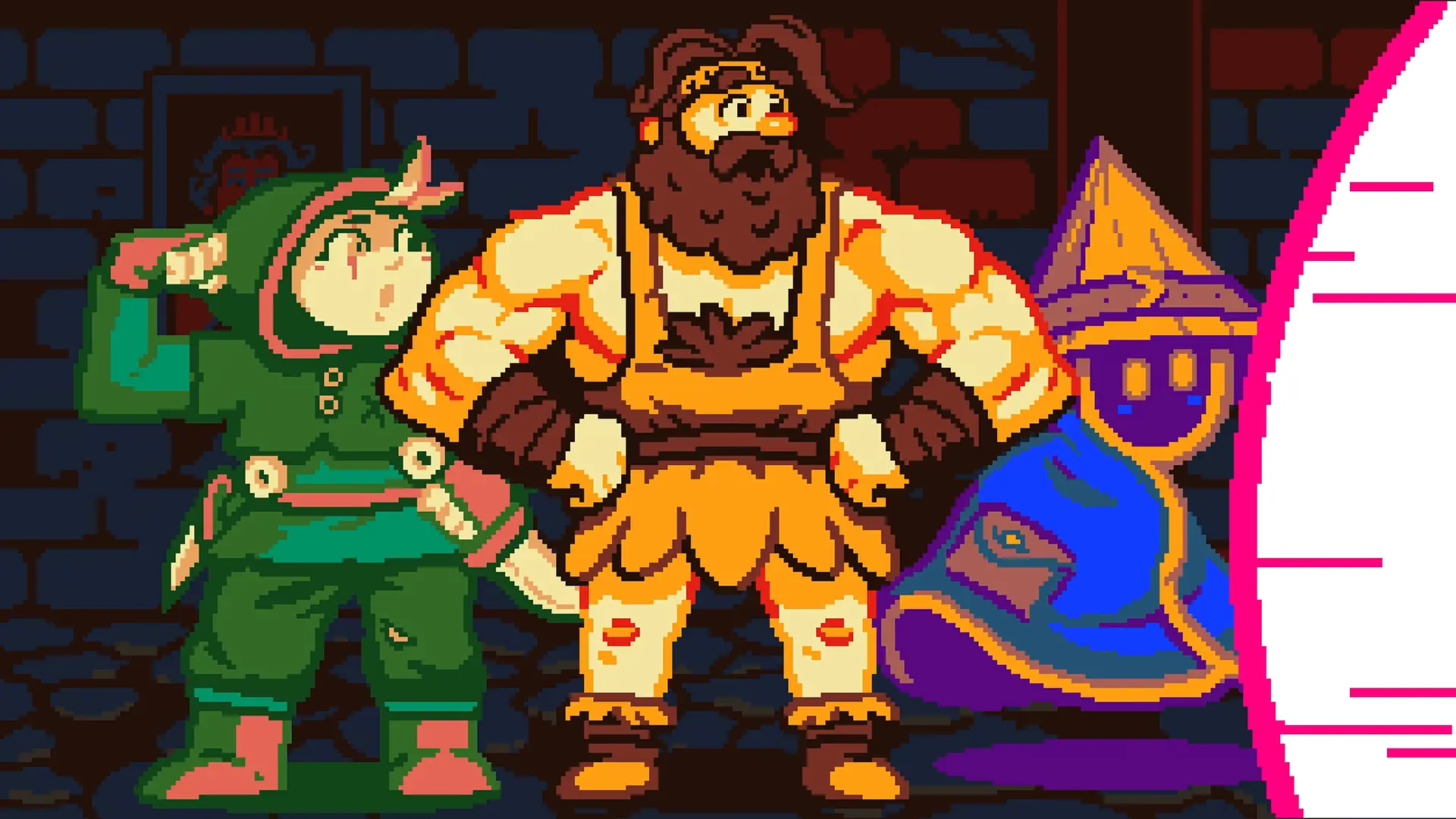
Developer doinksoft has made something of a habit of crafting highly reminiscent games that, upon further inspection, reveal themselves to be sparkling with personality and hinged on just one or two potent quirks. With Gato Roboto it was mixing vehicular action with precision platforming in a cat-driven mech suit, while Gunbrella had the courage to ask, “What if a gun was also an umbrella?”
Dark Scrolls valiantly continues this effort by mashing up tough-as-nails run and gun platformers of yore, like Ghouls ‘n Ghosts, with on-rails “shmups” and a very light sprinkling of modern rogue-ish tendencies. The result is an auto-scrolling platformer where you’ll be firing a steady stream of projectiles and utilising a wide array of double-jump attacks and special moves in an effort to conquer a fairly challenging campaign – and hopefully alongside a friend in either shared-screen or online co-op.
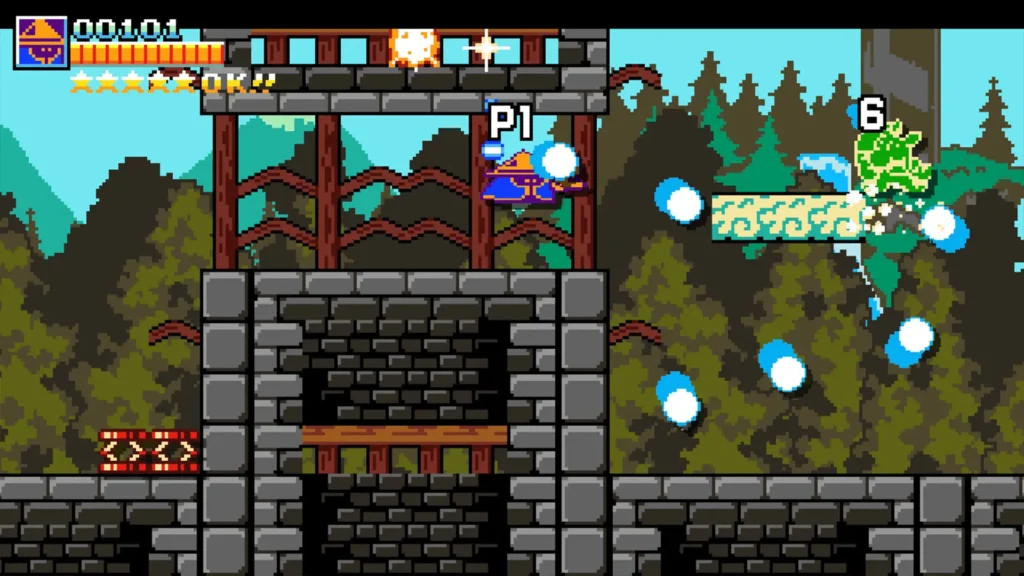
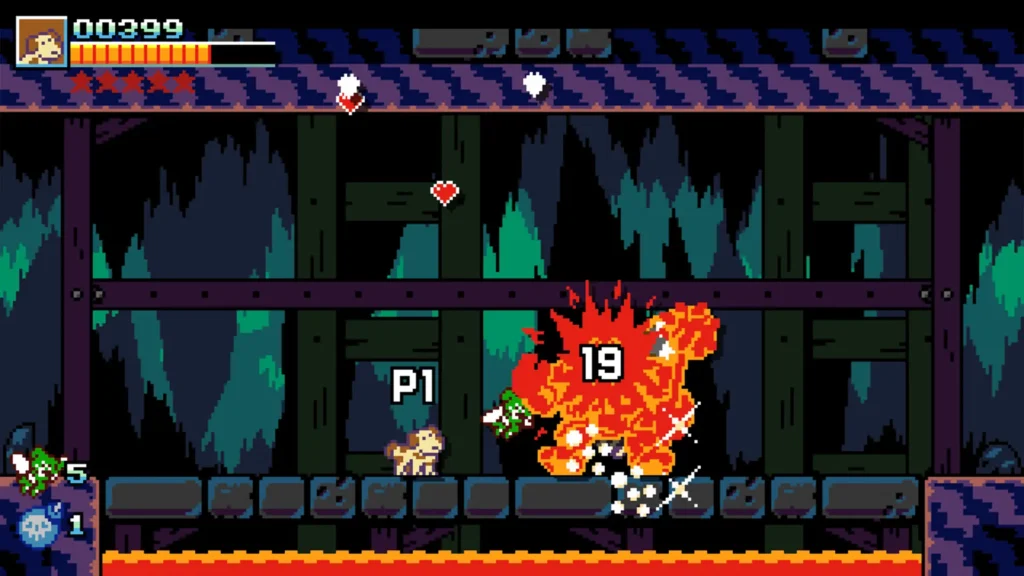
The bright spot in Dark Scrolls is its roster of mechanically diverse characters, each with their own projectile attack, unique twist on a double-jump, and powerful Special. With just three of the nine unlocked at the beginning, the rest of the playable roster is filled out by means that are either obvious or nicely hidden among the campaign’s branching paths. The one that you’ll more than likely unlock first, a pup named Biscuit, remained a stand-out favourite even after I managed to recruit a steak-tossing chef, arrow-slinging angel and saxophone-playing rat, among others. Biscuit’s ability to freeze a whole screen of enemies in place with the aptly-named Scary Bark move before destructively pinball-ing around the screen in a Sonic the Hedgehog-style spin dash is simply too satisfying, and the majority of bosses feel trivial once you learn to effectively bounce on their respective noggins.
I get the sense that designing all of these heroes was a lot of fun for the folks at Doinksoft. The way that the semi-procedural level designs seem to lean toward your chosen character/s (in helpful and not-so-helpful ways) suggests that coming up with a new character, and their inherent abilities, meant lots of experimenting with the boundaries of the game and then deliberating on how much of that should be broken. And, again, I don’t think I can properly emphasise just how different some of these playable friends are in practice. Not without spoiling some gloriously silly concepts, at least.
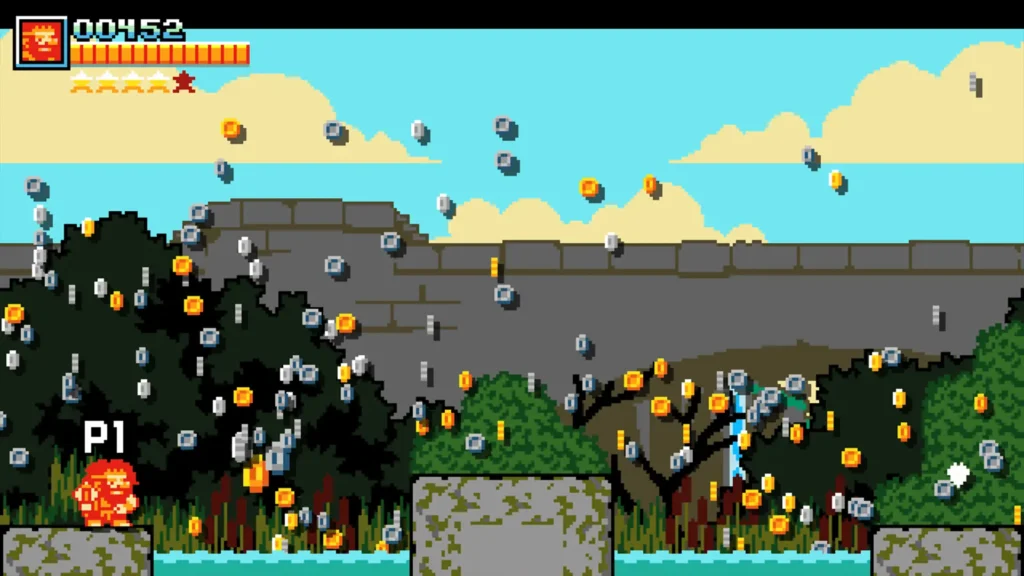
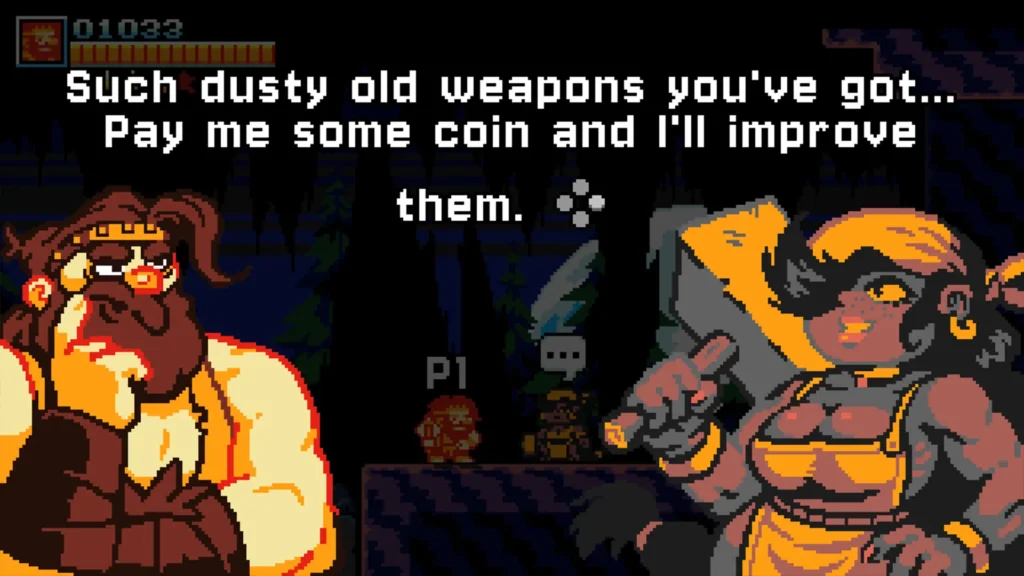
No matter who you pick, this is a challenging little romp. A single run is just four levels, though there are multiple potential routes that you’ll feel out after a few attempts and some gained insight, and each attempt starts your character (mostly) back at square one. There aren’t too many opportunities for growth in that short time, but a novel inclusion is a gradually-increasing selection of perks that you’re able to purchase from a goose-shaped merchant. These apply benefits like health drops, explosive jumps and even a group of sentient carrots that know karate, but the twist is they’re assigned to various stages of a five-step Special gauge that fills as you deal damage.
Assign the healing fairy to stage two for example, and you’ll temporarily gain her power once your gauge hits that point, or set it to stage “zero” and the same will happen after you cast your Special and deplete the gauge. It’s an interesting system that, once you grow accustomed to it, can make for some fun and unique builds, along with encouraging players to make constant use of their Special moves so that they’re regularly cycling said gauge and firing off those extra boons along the way. You’ll be putting in a hefty number of runs before you can add the whole list of potential perks to the mid-level shop’s pool but they can be, and usually are, the difference between success or an early demise.
That’s the kicker with Dark Scrolls, you’ll get out what you put in, meaning that if you’re not interested in running the same handfuls of levels with the sole intent of unlocking and mastering each of these characters and discovering how the game shapes around them, there’s not a whole lot else to gain from it. The whole thing harks back to a time where the simple satisfaction of seeing the credits roll was enough for us to play through a brisk couple hours of game, multiple times a weekend, for months on end. And despite the small amount of “rogue-ish” meta progression, you’re only ever going to get as far as your practiced skills can take you.
The combination of difficulty and simplicity is definitely a double-edged sword though, with the first couple of stages well-and-truly seared into my brain by the time I was reaching the end game – enough that I grew quite tired of them even with a full line-up to rotate through. There are some characters that are especially prone to screen crush, for one reason or another in their move sets, which can be a frustrating way to go. That’s partially alleviated by bringing a second person along, and overall the game is mad significantly more enjoyable (and more chaotic) with a second player, to the point that I’d recommend giving it a pass if you’re strictly into solo experiences.
Like doinksoft’s other joints, Dark Scrolls doesn’t exactly move the needle in any real direction, not does it need to. It’s a sharp little romp, borne from a handful of neat ideas mashed together into a smooth number. A quirky but otherwise straightforward, nicely challenging romp that’s best played with a friend, and best experienced assuming the folks who made it had just as much fun putting it together as you are playing it.
Reviewed on Nintendo Switch 2 | Review copy supplied by publisher