
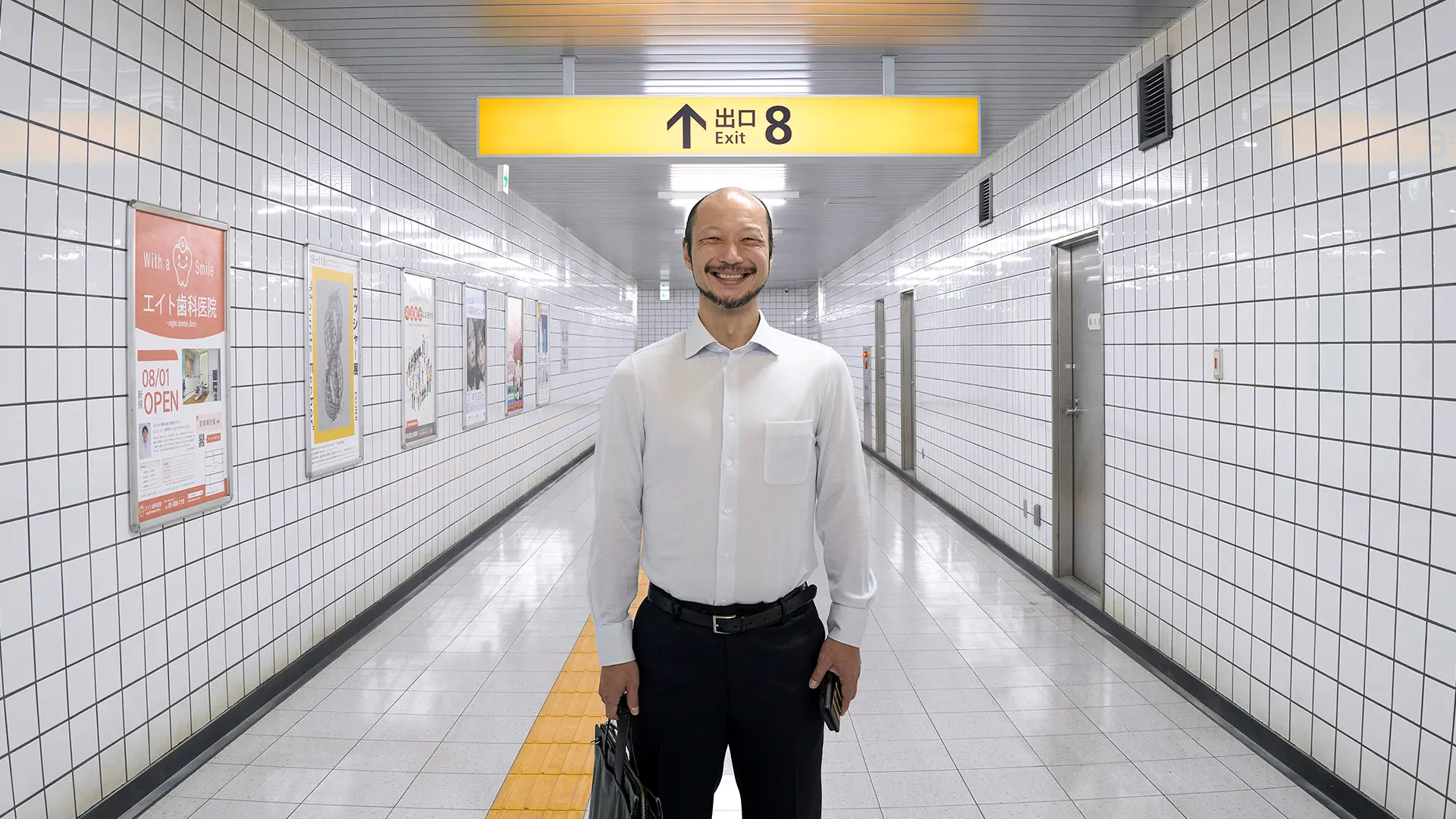
Some minor spoilers from early in Exit 8 follow.
In the world of popular video games turned into films, there are some broad categories that projects tend to fall into. For properties already rich in story and lore, or with a beloved existing plot, it’s often a case of taking those ideas and squishing them down into something flashy that you can watch in a packed cinema. For others, where a game’s ideas are more abstract or threadbare, it can be a more loose interpretation that tries to bring the familiar themes or motifs into an original story.
For the movie adaptation of Exit 8, a very simple video game with essentially zero plot and all but 30 minutes of actual gameplay, director Genki Kawamura has done the unthinkable and straightforwardly replicated what we know about the game across a 95-minute script. And against all odds, it really works.

Okay, so potentially a little disingenuous of me to say that there’s nothing different about the Exit 8 film versus the game. This has characters, after all, and these characters come in with their own stories, worldview, goals. These are things that the game does not need because it has you, the player, and your goal is rigid and obvious – get to Exit 8 and win the game. And so what Kawamura decides needs to be done to make this work on-screen, isn’t to look more deeply at Exit 8’s cursed metro passageway, to find or manufacture some fandom-worthy lore. It’s simply to accept that video games and movies are working within different parameters, and go from there.
Take the “anomalies,” the events that players must look out for as they attempt to walk the cyclical station to freedom, turning back if they deduce that something is different to their first pass through the loop. In the context of the video game, these might offer a small sense of dread, or a jump scare, but the maximum effect they can possibly have is to set you back to the beginning. In the parameters of a film, where characters are written as real people, it’s less binary.
I can’t talk about too much of what we see of The Lost Man, the film’s otherwise-unnamed protagonist played by Kazunari Ninomiya, without giving the good stuff away, but in one level of the loop a baby can be heard, trapped inside a coin locker and screaming. If this were a game, easy, call it an anomaly and turn around. But for this man, whose transit into this entire situation begins with a blind eye to a struggling mother on a rush-hour train, followed by a phone call from an ex-partner revealing an unplanned pregnancy, there’s a wholly different dimension to consider.
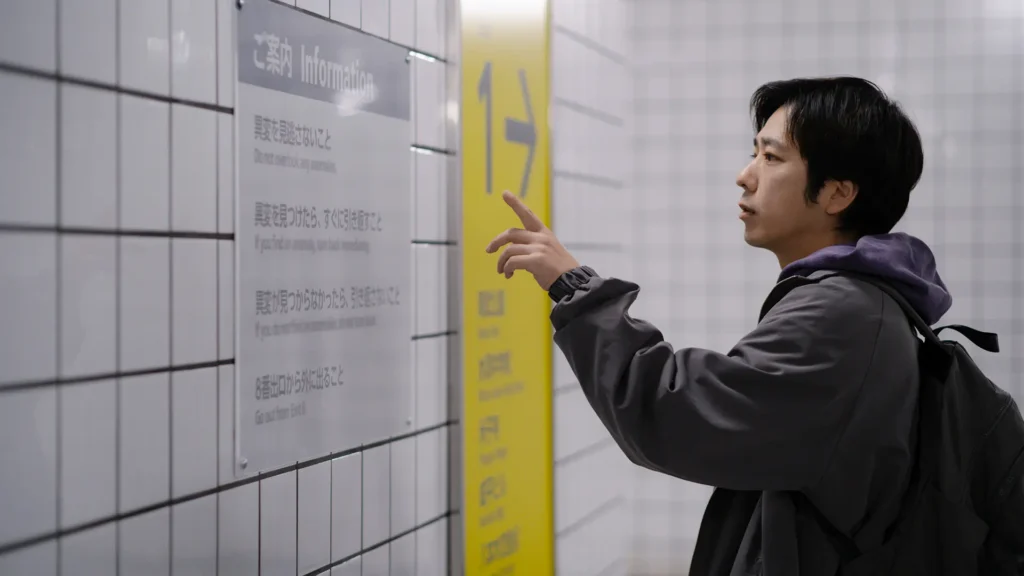
And it’s this conundrum that the film posits throughout, serving as the driving force for its cast. At what point do we let fear and anxiety rule over empathy? When the result is guaranteed to be self-detrimental, how much can we ignore before making a hard choice? Exit 8 understands that empathy is the missing axes to pull this whole thing across into another medium, and it sets the audience on that path from its opening scene shot in first-person POV to the chapter title cards throughout that signal a brief change in subject.
Despite a mostly-stationary position within the familiar corridor, Kawamura masters perspective to create tension and encourage engagement throughout. Shots linger on Ninomiya each time he turns the all-important corner, settling on an ambiguous widening of the eyes or blocking the scene such that we’re kept out of shot from what we’re desperate to know – has the exit number on the sign ticked up?
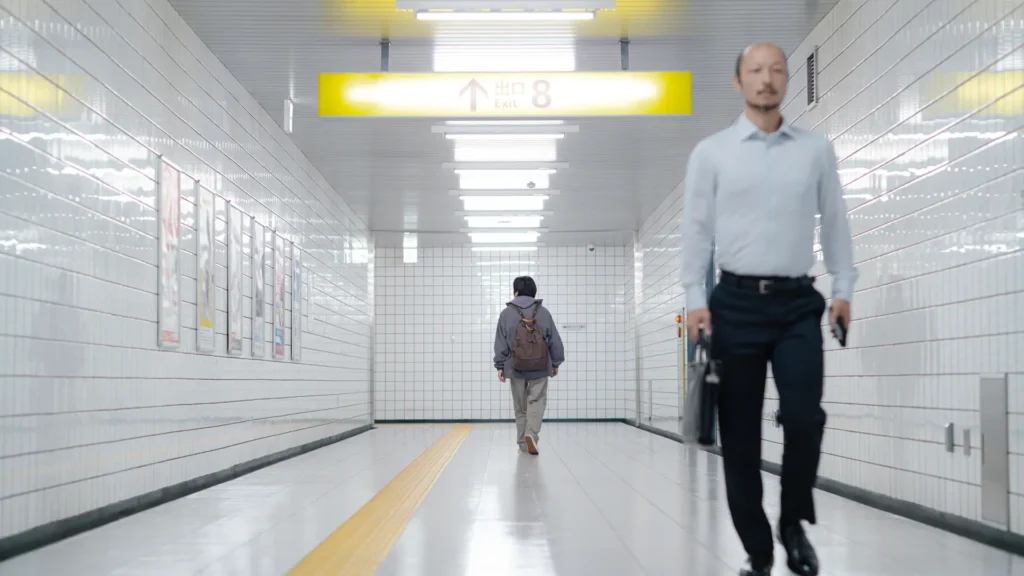
The director knows who he’s speaking to, knows that the audience wants nothing more than to spin that camera around with the flick of a wrist or the tilt of a stick, to reach into the screen and point out the subtle change on that poster that means something is wrong. He even offers a proxy to this exact phenomenon in the form of a new player in this twisted game, again a secret best left to a first-hand viewing, creating new stakes and pulling at new versions of the same threads. Exit 8 has always been about second-guessing what’s in front of you, and the filmic iteration takes full advantage of its exacting dominion over what that is.
In Exit 8 the video game, there is a version of the world that is right, and then there is everything else. And you become the warden of that world state, checking and marking each time until the work is complete. In reality, that’s not the case. In our lives, we either accept what’s put in front of us, or we take the time to stop and investigate, to interrogate and to understand. And with empathy, or without, we determine how to move forward.
That’s a lot of juice to squeeze from a game that costs a quarter of the movie ticket.
A film screener was provided by Umbrella Entertainment. Exit 8 comes to Australian cinemas on April 23.

Born into the world of video games through SEGA, and in particular Sonic the Hedgehog, Kieron’s gaming tastes now consist of the latest, shiny AAA thing, an indie darling or two, and an embarrassing number of hours of Balatro.