
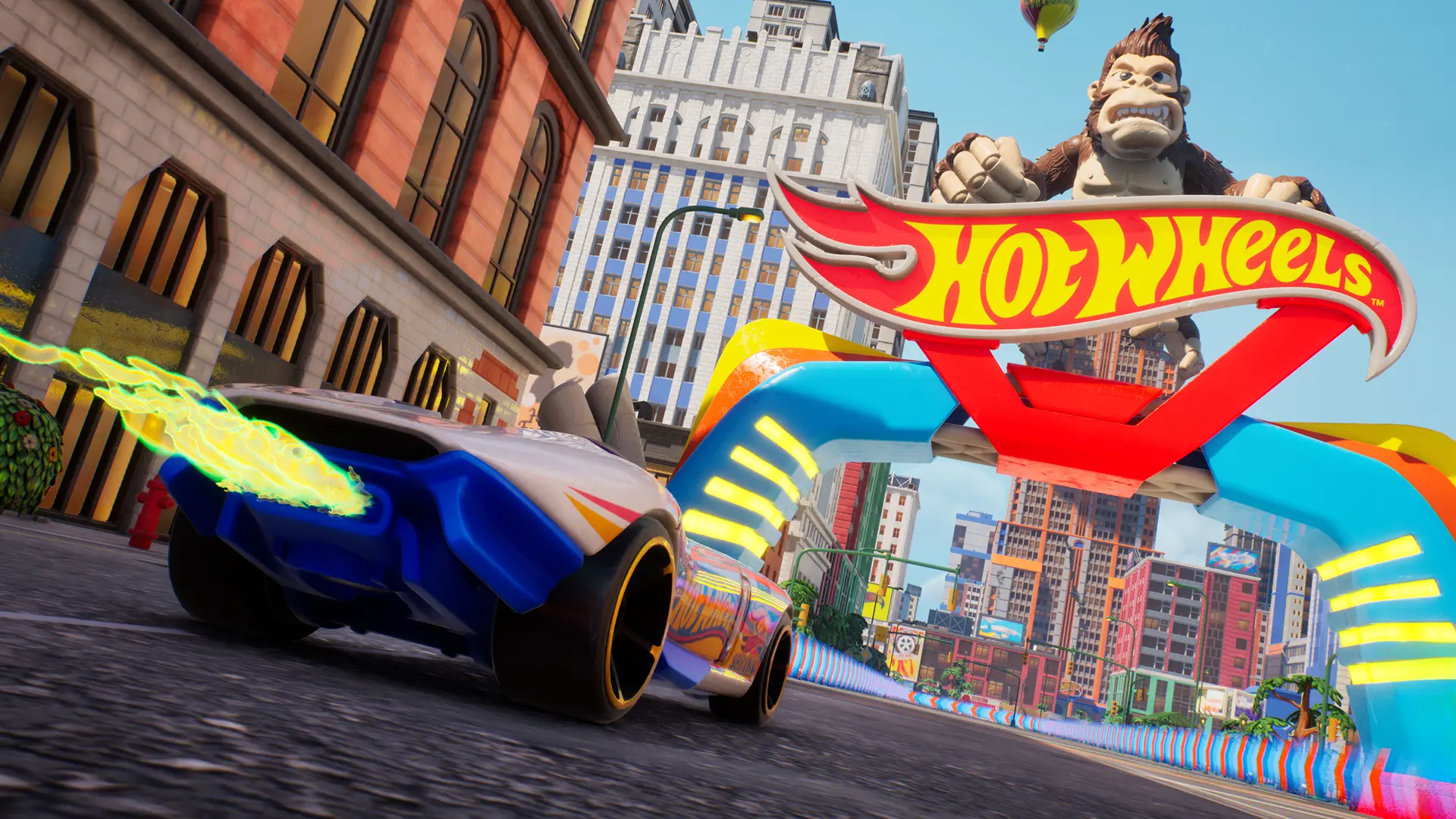
Hot Wheels Unleashed and its sequel, Hot Wheels Unleashed 2: Turbocharged, are a pair of games that play straight into my fields of interest – action-packed arcade racers and games played at a micro scale. I blame a glut of both on the PS1 for bringing me here.
So the announcement of Hot Wheels Infinite Rush brought as much joy as trepidation – after all the idea of an open-world Hot Wheels driving game is wonderful, but the trade-off here is a move away from the idea of racing the iconic toy cars around “real world” scale environments. Instead, serving developer Milestone is going the opposite route and transporting players into a plastic, Hot Wheels-sized world, in what is essentially a series of enormous play sets. Kind of like being beamed into one of those town road map rugs we seemingly all had.
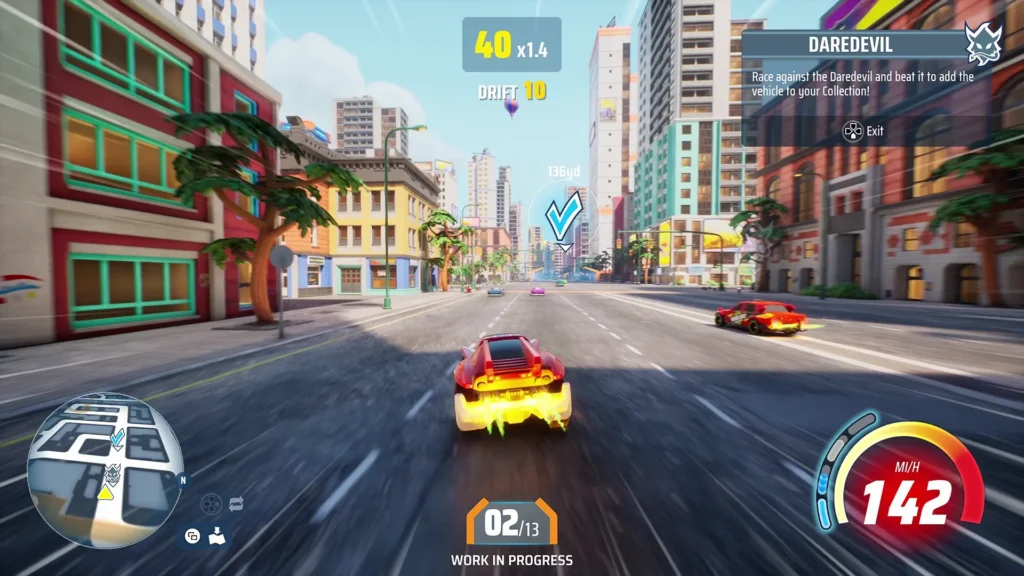
And so, unsure of exactly what to expect, I walked into a behind-closed-doors demo session with the Milestone team at this year’s Summer Game Fest Play Days, able to try out the game for myself and get a read on where the new direction is going. With two of the final four themed open maps to explore, and every event type unlocked and available, I had free reign for a good chunk of time to simply zip around and get acquainted with what’s on offer. By the time my session had come to an end, I could barely be made to leave.
Kicking off in Wheelswood, Infinite Rush’s standard sort of metropolitan city area, I got my bearings in some of the game’s Speeder-type cars – there are four distinct classes of Hot Wheels vehicle to drive here, with their own performance profiles and suitability for different activities. Speeder is your baseline racing car built for going fast, Drifter is for those who love to show off, Versatile is a jack of all trades and Titan vehicles are big, bulky and ready to brawl.
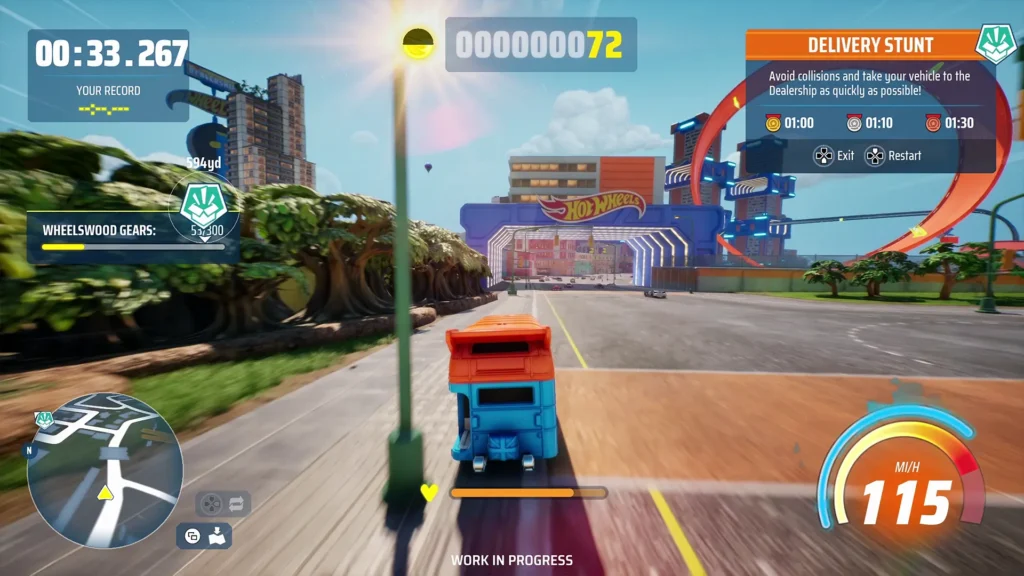
Roaming around the map, the immediate descriptor for Infinite Rush that comes to mind is “My First Forza Horizon,” the streets dotted liberally with markers to start driving events from, checklist items and collectibles to find, and rival racers to challenge for their vehicles. I tracked down a regular race event which, as with all of them in the game, takes place on a track built right within the open world map.
If I came into this demo with any real concern, it was that much of my experience with the Unleashed games has been marked by a surprisingly high level of challenge. And while a preview build of an in-development game isn’t the best measure to take, right away I got the impression that the enemy AI has been toned down somewhat here – even on the higher-level versions of the races I was picking. I asked the Milestone team on-site and got the confirmation that they’re been well aware of the feedback around difficulty and are balancing Infinite Rush to feel much more fair at its baseline. Phew.
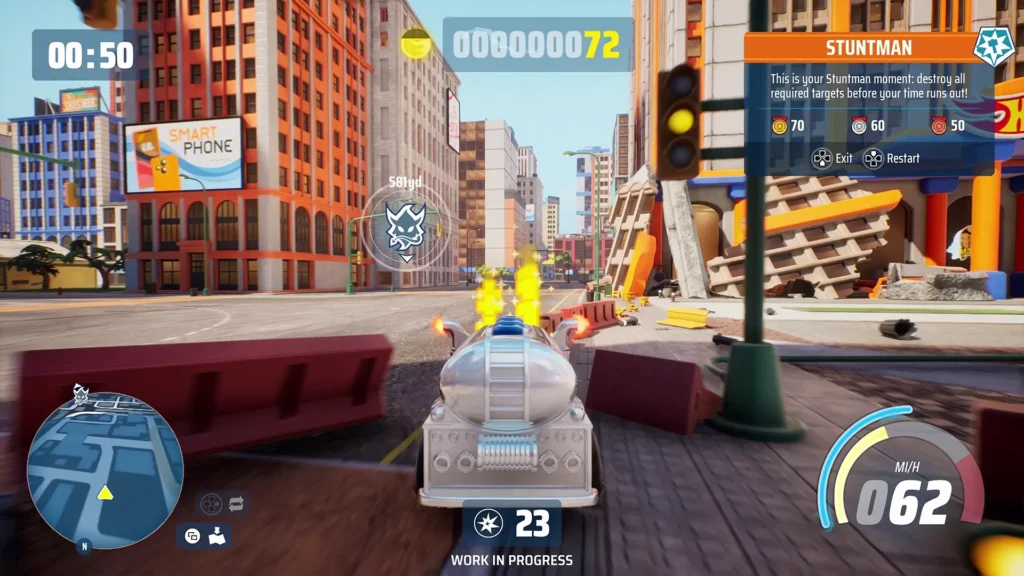
It’s tough to make a direct comparison without playing them side-by-side, but Infinite Rush’s toy cars handle much the same as I remember of the Unleashed games, if maybe a little grippier and more forgiving through turns. That could also be as a result of the track designs themselves, which are often more “traditional” than the plastic Hot Wheels tracks of old with their death-defying twists and loops – though those do still appear, thankfully. The team tells me that playing more into the conditions of the “real world” for this game has certainly resulted in new approaches and courses that offer a different feel to what’s come before.
I love a good photo mode in a game, so on moving across to the second available map in this preview, Gearville, I floored it straight to a nearby Tourist event marker. In these challenges you’re tasked to take a photo within a defined area, and typically with certain subjects in the shot. In my case, I had to take a photo that included both a huge rock formation and a specific vehicle type. I wasn’t using the correct vehicle at the time, but thankfully you can swap them out from a menu at any point, though not during an ongoing event. Once I’d sorted my ride and gone back in, the resulting photo wound up looking great – the toy-like world is a lot of fun to try to capture.
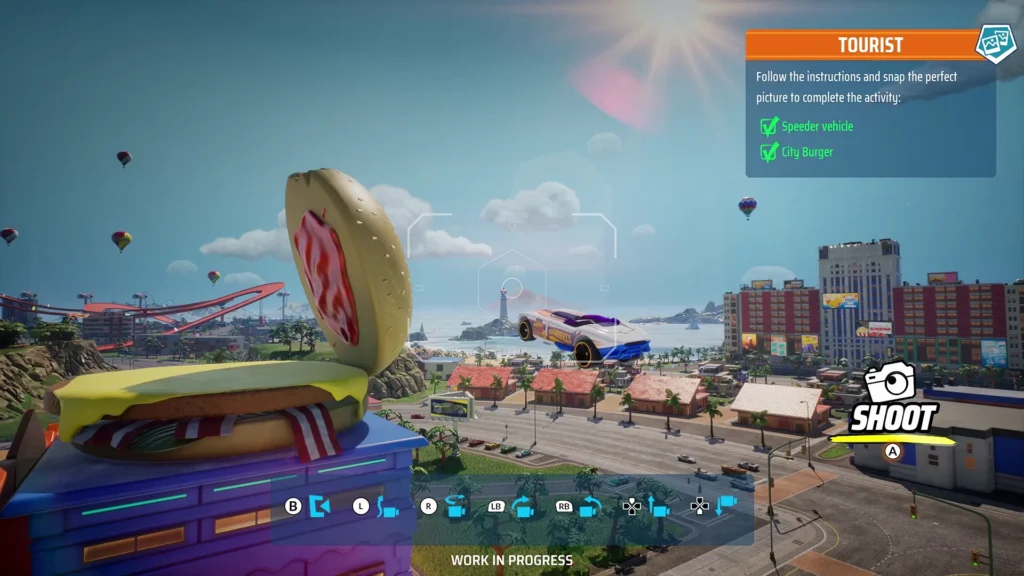
With that done, I spent whatever time I had left just zooming around this second area, taking in the sights and enjoying the destructibility of just about every non-foundational object in sight. But my leisure time was interrupted by the sighting of a Daredevil. These are highly special vehicles that roam the four maps and goad players into challenging them, with the ultimate prize of adding that car to your collection. Unfortunately, I was still rocking the Titan vehicle I had used for the photo challenge, so I was ill-prepared for a street race and the Daredevil managed to slip away. Gutted, too, as it was the “QUICK EATS” version of the iconic Time Attaxi. I’ll get you next time!
Once again, the true joy in the vehicle selection here is admiring all of the authentic Hot Wheels detail, right down to the scratches, scuffs and plastic seams. There’s still plenty of opportunity for visual customisation, with liveries and even sound and particle effects, as well as performance tweaks through different perks that offer boons but also potential trade-offs. A track editor also returns, this time around with the option for full-on terrain deformation, which sounds very exciting – though I wasn’t able to check it out for myself in this session.
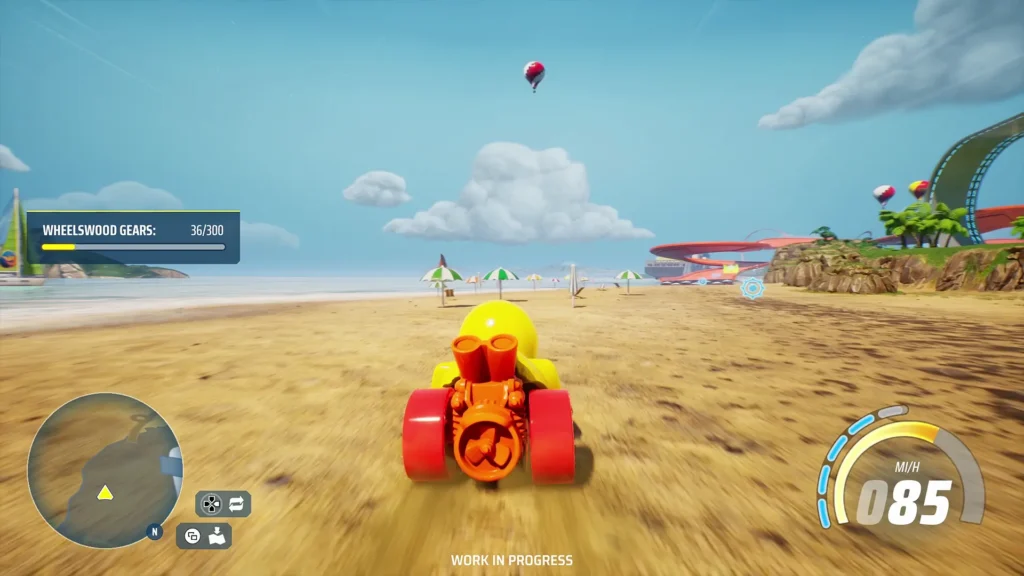
A game like this is tough to truly analyze from one, short preview session, given the sheer enormity of places to race and things to do, but I had so much fun even in that small amount of time that I’m absolutely rearing to play more. Out of everything I checked out during Summer Game Fest Play Days, this is the one I’m most anxious to get back into as soon as I can.

Born into the world of video games through SEGA, and in particular Sonic the Hedgehog, Kieron’s gaming tastes now consist of the latest, shiny AAA thing, an indie darling or two, and an embarrassing number of hours of Balatro.