
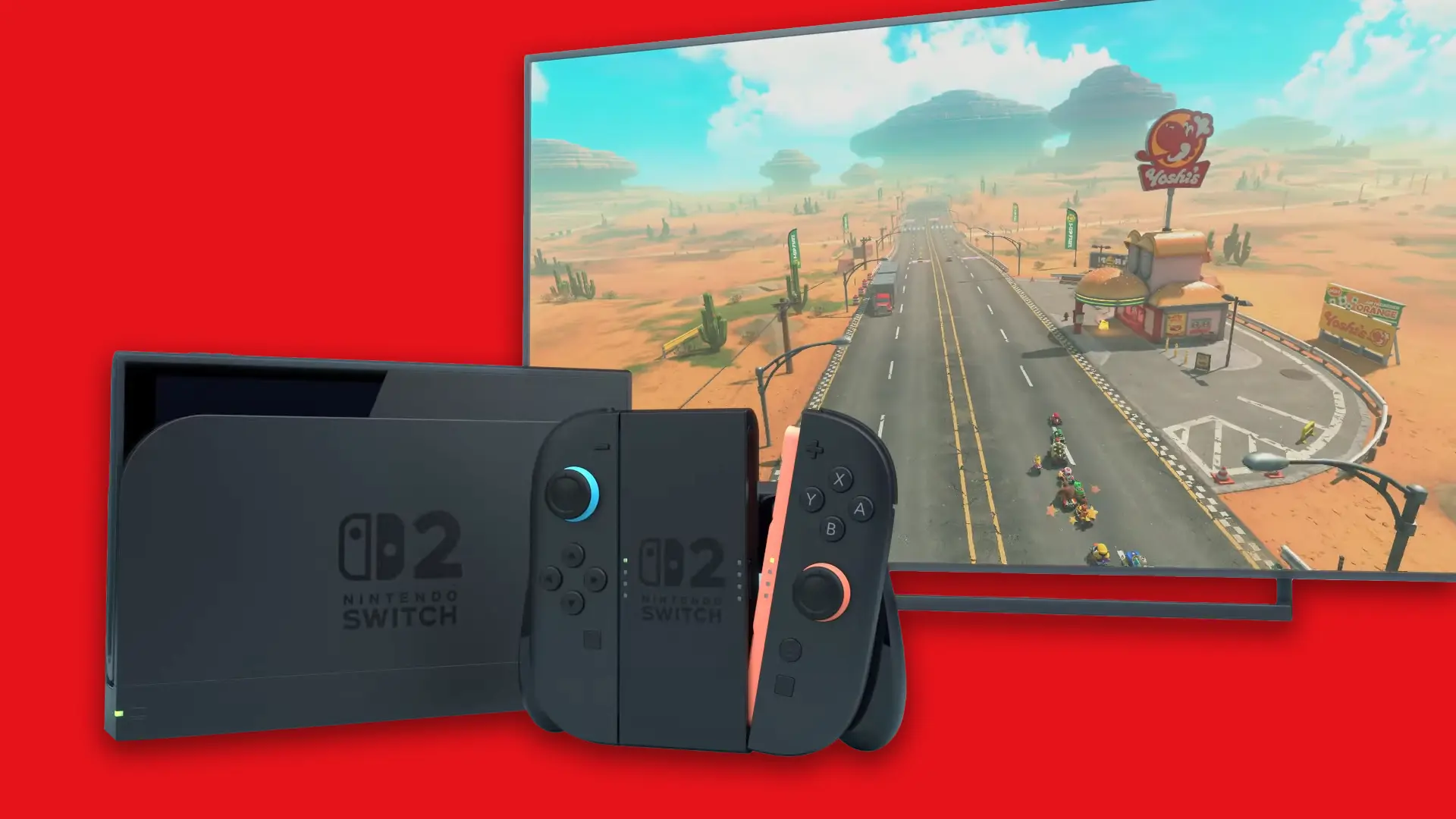
As if this week needed any more major gaming news, Nintendo has just dropped a substantial system update for the Nintendo Switch 2 that adds, among many things, one of the most asked-for features since the console launched last year – support for VRR in docked mode.
VRR (or variable refresh rate), which matches game frame rates and display refresh rates in real-time to provide a smoother image when either fluctuates, was previously only available when using the Switch 2’s own handheld display, but now it’s been brought in line with other home consoles in offering VRR when plugged into an external screen that supports the technology.
To enable this feature, both the new Version 23.0.0 system software and a Nintendo Switch 2 dock update are required.
Elsewhere in this stacked update, Nintendo has added new functionality to GameChat, made Mii sharing easier via QR code, made some handy system interface tweaks, and even added the ability to play music while making or editing Miis – among other things.
Take a look at the entire patch notes for Nintendo Switch 2 Update Version 23.0.0 below:
Nintendo Switch 2 Update Version 23.0.0 (Released 10 September, 2026)
- The following updates have been made to GameChat:
- The list of chats you can join now shows chats you have previously joined.
- When starting a new chat, you can now enter without inviting any friends.
- Added an option to the menu that appears when you press the C Button during a chat that lets you change the screen size.
- Added a settings option to Virtual Game Cards on the HOME Menu.
- Here you can review and edit which of your consoles can use virtual game cards, among other options.
- Added support for VRR (variable refresh rate) in TV mode.
- If supported by both the software and your TV, the refresh rate output will be adjusted based on the software’s performance.
- A Nintendo Switch 2 dock update is required to enable this feature.
- Added the ability to perform a system transfer from a Nintendo Switch 2 console to another Nintendo Switch 2 console.
- The following updates have been made under Accessibility in System Settings:
- Added Portuguese (Brazil) to the available text to speech languages.
- Added Portuguese (Brazil) to the GameChat “Display Speech as Text” languages.
- The following updates have been made under Audio in System Settings:
- Added the option to save settings separately for each connected TV.
- The following updates have been made under Display in System Settings:
- Renamed “Dock Output Information” to “Video Output Information”, which now includes details about connected TV outputs.
- Added settings for VRR.
- The following updates have been made under Mii in System Settings:
- Added a feature that lets you create a QR Code for a Mii and share it with other users.
- The following updates have been made under Sleep Mode in System Settings:
- Choosing the volume for Play Console Wake-Up Sound in TV Mode now causes the sound to play immediately so that you can check the volume level.
- Added the ability to enable or disable “Handheld Mode Boost” under Quick Settings.
- System Transfer to Nintendo Switch 2 has been added under System Settings > System.
- When starting software, if a virtual game card cannot be ejected from another console because it is powered off or otherwise not connected to the internet, there will be a prompt to start the software using an online license.
- Only the user who purchased the software can play it using the online license.
- Music can now be played while creating or editing a Mii.
- You can change or stop the music using the Music Settings in the top corner of the screen.
- You can now use other controllers during Handheld Mode Boost while Joy-Con 2 controllers are attached to the console.
- Play activity, found under Profile on your user page, now combines play time for the same software across multiple consoles.
- The combined times will be displayed in order, starting with software played after the update.
- General system stability improvements have been made to enhance the user’s experience.
Like our content on covergeek? Hate dodgy AI summaries? Click here to add us as a Preferred Source on Google and see our posts more often!

Born into the world of video games through SEGA, and in particular Sonic the Hedgehog, Kieron’s gaming tastes now consist of the latest, shiny AAA thing, an indie darling or two, and an embarrassing number of hours of Balatro.