
I’ve been to plenty of dedicated, hands-on game preview events in my career, but there’s always still opportunity for the circumstances to surprise me. When Nintendo invited me to play Rhythm Paradise Groove (which you might know as Rhythm Heaven Groove or Rhythm Heaven: Miracle Stars, based on where you live), I hadn’t anticipated sitting around a big table with a handful of other folks all playing the game in handheld mode with headphones on, like a silent disco for games journalism.
Make sure to use your body for this, the Nintendo representatives on hand told us, suggesting we nod our heads or tap our toes to keep in time with each beat. Good advice, probably, but I also firmly believe they just wanted the added entertainment.
The preview demo was straightforward enough – split up between a small sampling of the game’s assortment of rhythm microgames, a brief run of a brand-new RPG-esque mode and a couple of rounds of local multiplayer.
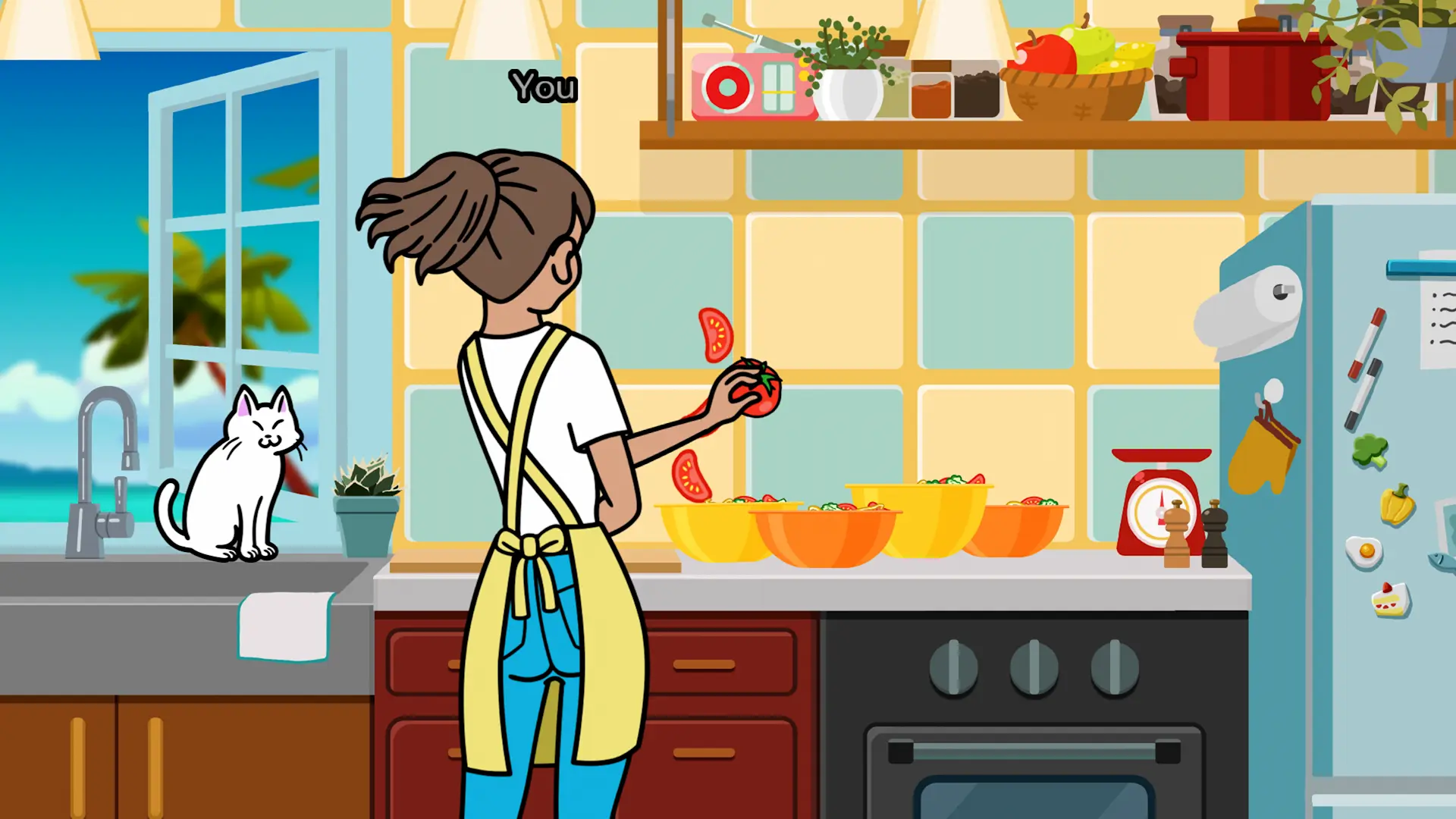
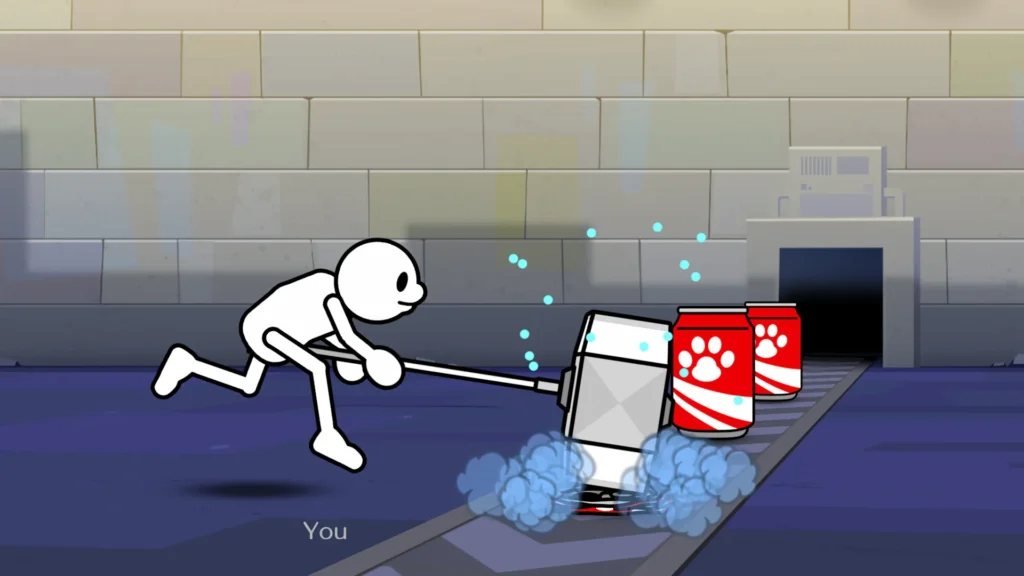
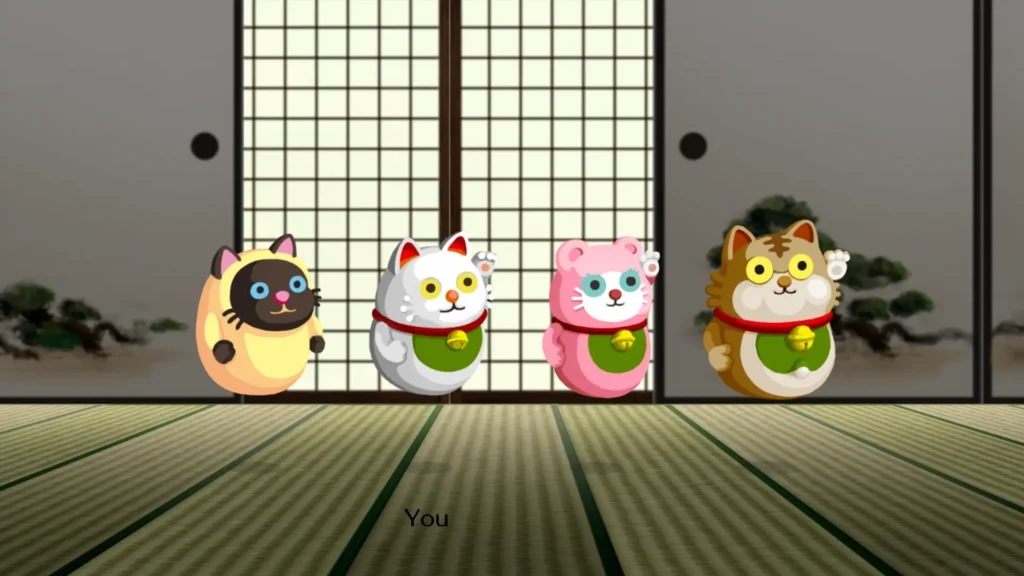
If you’re at all familiar with the series, you’ll have some idea of how this game works. The single-player offering comprises a very respectable 80+ micro games, each of which is playable standalone or as part of the familiar “Remix” stages. We only had access to a handful of the solo games, plus one Remix, but it’s clear that Rhythm Paradise still has the sauce. One of them had me timing the jumps of a row of little guys through a hoop, others saw me copying umbrella movements in a chorus line, helping a dog catch a frisbee or trying to keep my place in a dancing row of maneki-neko.
As ever, the real way to succeed in these games is to rely less on what’s happening on-screen and more on audio cues, especially because it’ll attempt to trip you up by taking away visual markers or obscuring the scene. There’s a real satisfaction in mastering each micro-game and getting into a flow state where you can practically perform with your eyes closed, mercifully only ever needing the input of a button or two.
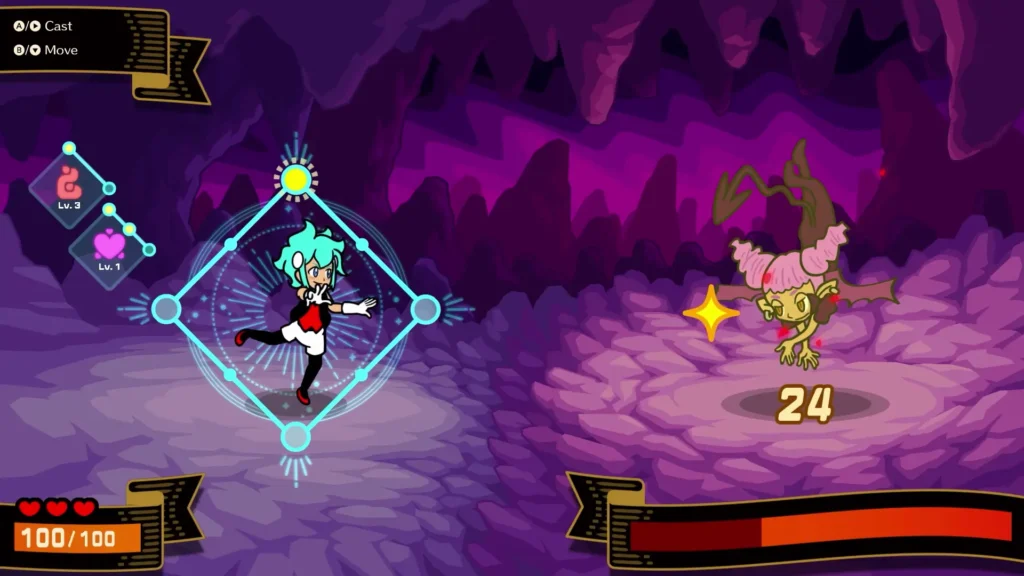
For those craving a little more depth and complexity though, a brand-new mode comes into play, dubbed Beatspell. Seemingly living amongst all of the other single-player games, this is its own multi-stage campaign with RPG influences, tasking players with working their way through a series of areas, defeating monsters and bosses. These 2D fights are presented to resemble turn-based battles, but as you’d expect there’s a bit of a musical twist here, instead.

To attack, cast healing spells or otherwise act, you need to press corresponding buttons in time with the beat, with each ability requiring a specific sequence of buttons. Your basic moves are tied to short, easy-to-remember combinations, but I can imagine these will become longer and trickier as you gain more powerful ones, and your foes won’t wait for you to get them right or settle back into the rhythm if you wind up off-beat. So the strategy comes from choosing your plays in the moment, basing your moves on what button sequences you think your sense of rhythm and dexterity can manage in the midst of a fight, keeping an eye on the enemy and ensuring you’re using recovery magic ahead of big attacks.
It’s something that’s much easier to understand once you’re actually in it, unfortunately, but the short of it is that Beatspell’s mash-up of rhythm game and RPG seems quite neat from the couple of stages I had the chance to play. It’s no doubt been pegged as something of a value-add in the face of Rhythm Paradise Groove’s trim concept and $60 price point, and while I don’t know quite how much content exists in the mode, I think it’ll land nicely with players.
With a chunk of solo bits out of the way, our final look at Groove came by a pair of local multiplayer games. There are over 30 of them in the full game, in both co-operative and competitive flavours, and in this case we tried one of each – the co-operative Ninja Bodyguards and the highly competitive Cake Wait.
The former saw four of us all work together as ninjas deflecting enemy arrows, learning the timing of the shots to hit the deflect button at the right time, ensuring to pay attention to which arrows fly toward who. Teamwork comes from, well, not being the person that eats too many shots and loses the team’s health, but also from doing really well on timing which can restore some of that lost health in turn.
But what’s a good multiplayer experience without a little competition? That’s where Cake Wait comes in, and it’s here that Rhythm Paradise Groove best exemplifies the fun and silliness that has always resonated with fans of the series. The game itself is straightforward enough – the four of us on-screen were sat around a table with a single piece of cake in the centre, and a timer counted down until we could all attempt to snatch the cake for ourselves. The trick is that, after a few seconds, the timer’s sound and visuals disappear, leaving everyone to do their best to count out the rest of it in their heads and then hit the button. Whichever player does so closest to the stroke of the final beat takes the cake.
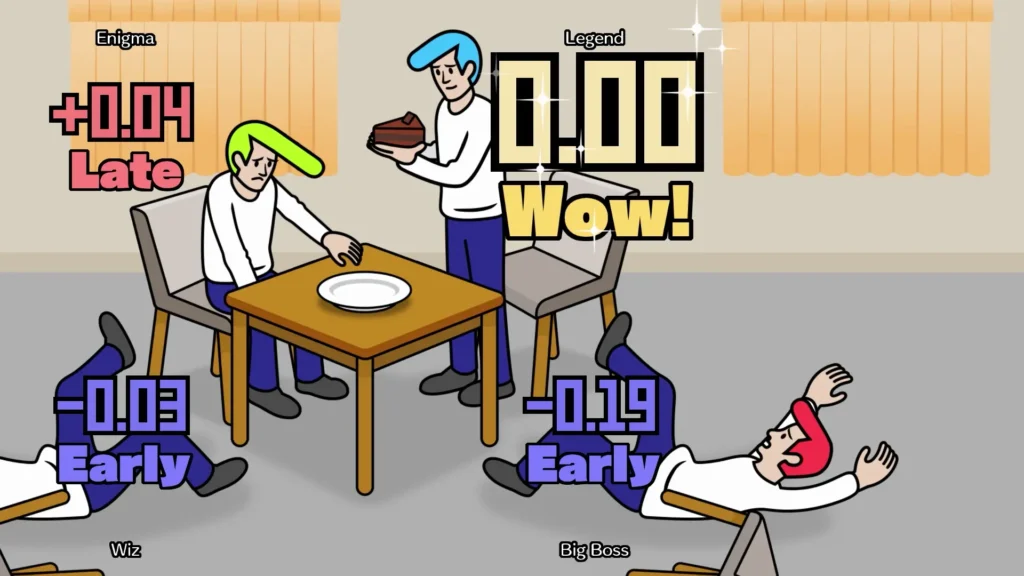
Where Cake Wait shines is in the over-exaggerated art and animation of everyone simultaneously vying for cake, the steady progression of other cake and non-cake items that start to appear on the table and even a bit of meta-progression if you decide to play consecutive turns and a pattern of winner/s emerges. I don’t want to spoil the fun of discovering this stuff, but just the promise of seeing what strange detail would come next compelled our group to keep jumping back in.
The basics of a Rhythm Paradise game are generally enough of a known quantity that I don’t think I needed a preview of the main, solo micro-games to know I’m all in, but between Beatspell and the couple of multiplayer games I tried I’m confident there’s a bit of something here for all occasions. Rhythm Paradise Groove may just be the next big multiplayer party game in my rotation when it launches on July 2 for Nintendo Switch (compatible with Switch 2).
Previewed at an event hosted by Nintendo

Born into the world of video games through SEGA, and in particular Sonic the Hedgehog, Kieron’s gaming tastes now consist of the latest, shiny AAA thing, an indie darling or two, and an embarrassing number of hours of Balatro.