
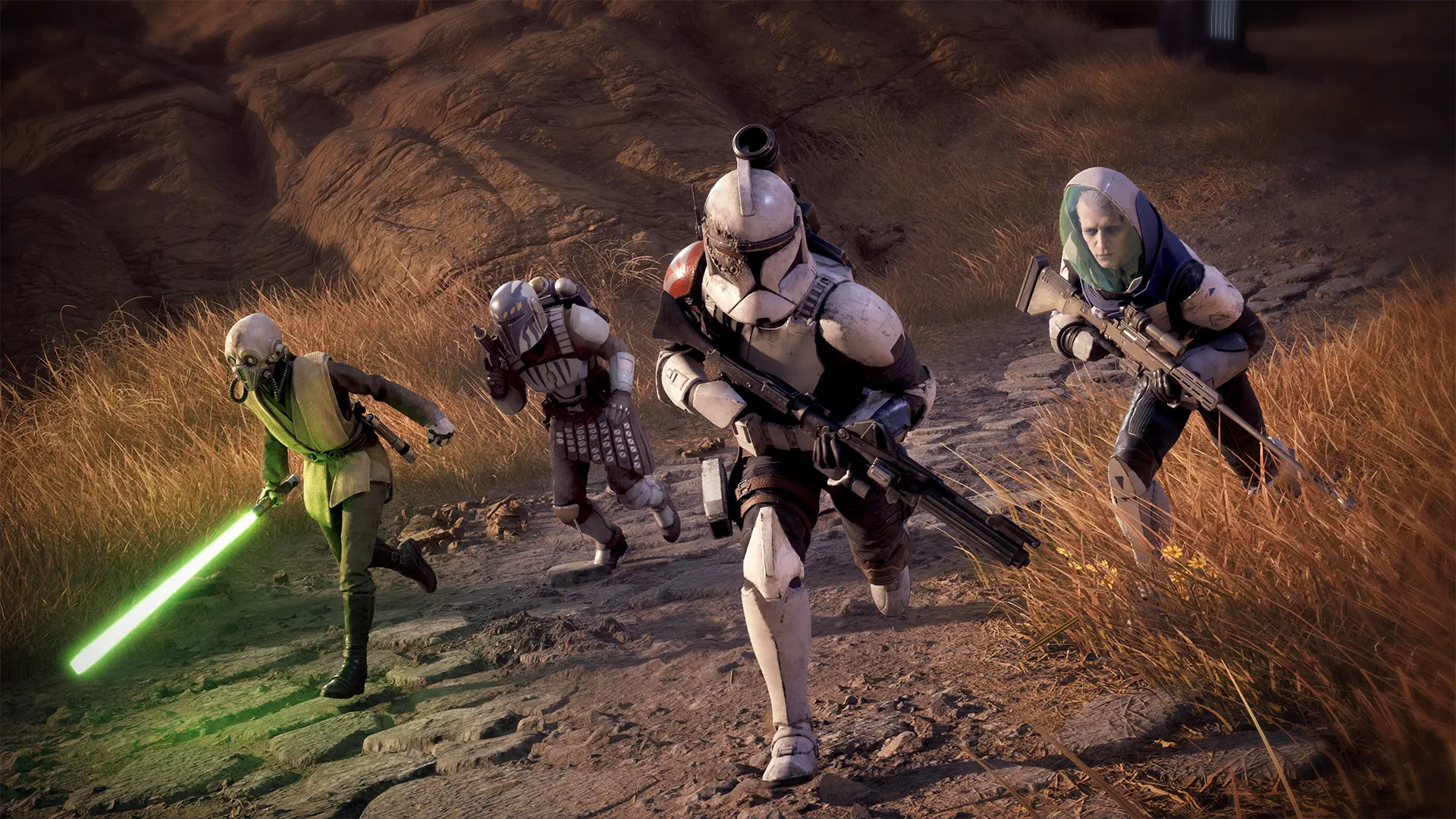
“The depth of the game shouldn’t cost you elegance.”
That’s the prevailing message from Greg Foertsch, founder of Bit Reactor, as he introduces us to Star Wars Zero Company. It’s a message that encompasses the studio’s key pillars when it comes to designing a turn-based tactics game set in the Star Wars universe, but also an affirmation of the Game Director’s beliefs around the genre itself. That tactics games possess more room for growth and innovation than anything else out there, that depth and immersion are not mutually exclusive, and that the cinematic flair of Star Wars and turn-based tactics are a perfect match.
“We couldn’t believe that this hadn’t been done before.”
Having sat in on an introduction from key members of Bit Reactor and LucasFilm Games, and having had the opportunity to play a good few hours of Star Wars Zero Company myself ahead of its August 27 launch date, I’m inclined to agree. Stories of unconventional crews and improbable allies, operating in the shadowy, morally grey seams of galactic warfare lend themselves immensely to a game driven by choice and consequence. And who better at delivering hard-hitting consequence than a studio staffed in part by ex-Firaxis developers responsible for the modern XCOM games – Foertsch included.
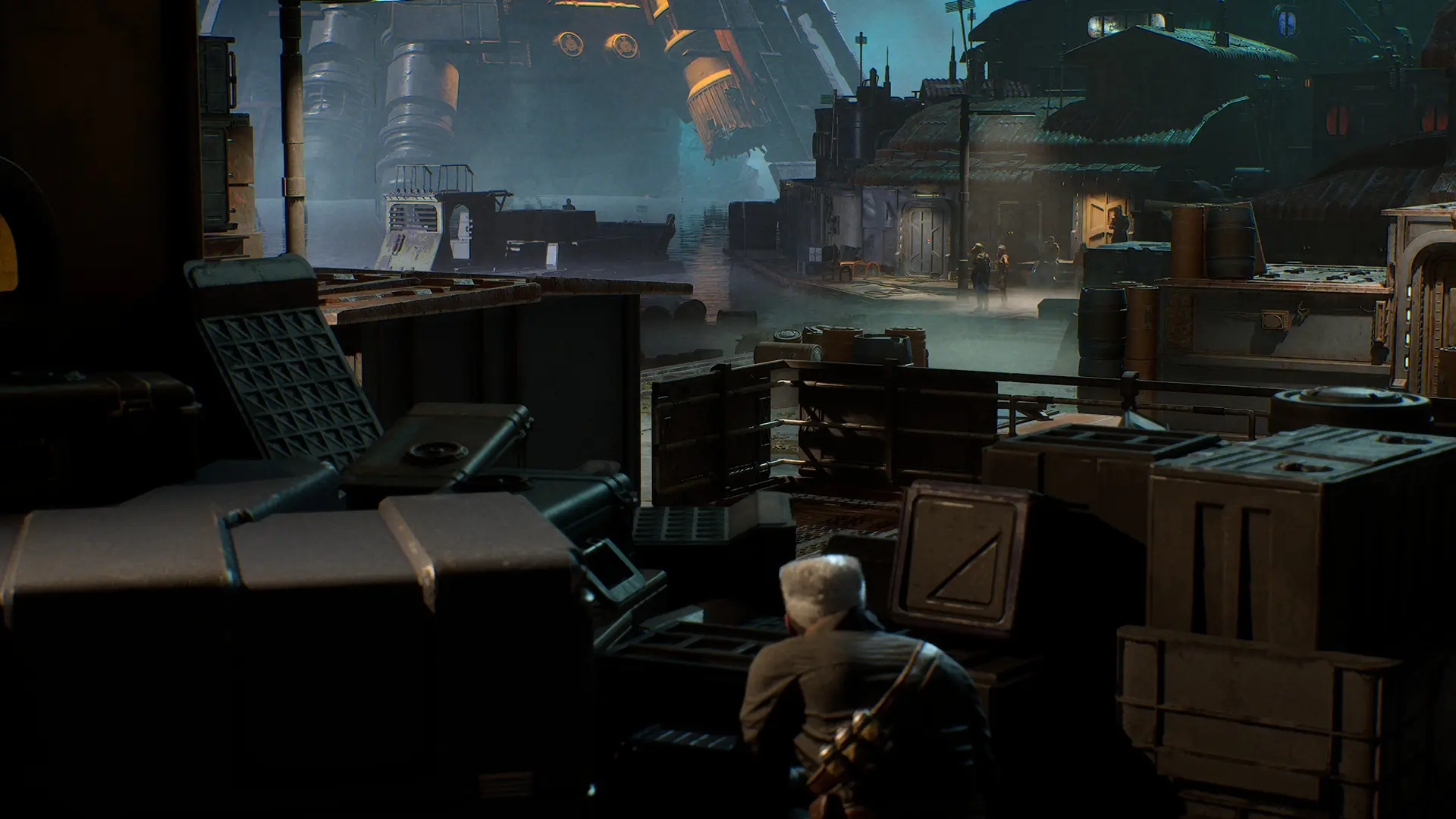
Star Wars Zero Company puts players in control of Hawks, a disgraced ex-Republic officer who now leads an unconventional unit of for-hire pros from all corners of the galaxy and with all kinds of history and personal beliefs, and the events of the game see this ragtag group hired to hunt down the leader of a Separatist-aligned cult named the Infinite Coil.
The Coil, a new creation for Zero Company, turn out to have been instrumental in the events of the Clone Wars, and the attacks on various planets by infiltrating and sabotaging their defenses beforehand. The cult infects all their would-be prospects with something called the Shadow Plague, only accepting the ones that survive it, and who eventually bear great power in exchange for disfigurement and eventual loss of control and their sense of selves. Sorta feels like Space Witchers, no? Anyway, this overall setup feels like a nice “in,” especially for someone like me who hasn’t consumed a ton of Clone Wars-adjacent media. It’s interesting enough thanks to its backdrop of tumult and the rise of morally-grey heroes and opportunists alike in the seedy underbelly of war, with or without the blessing of prior knowledge.
The game’s cutscenes, and especially its character models, animation and acting are also very much on par with what you’d expect from a big, AAA Star Wars action game, and it’s clear this is being positioned as just as important a bit of Star Wars fiction as, say, Respawn’s Star Wars: Jedi franchise. Bit Reactor has been able to inject quite a few original ideas into the canon, including new droid types and even a whole new race, and – without giving too much away – there is at least one big cameo from a key player in the filmic entries.
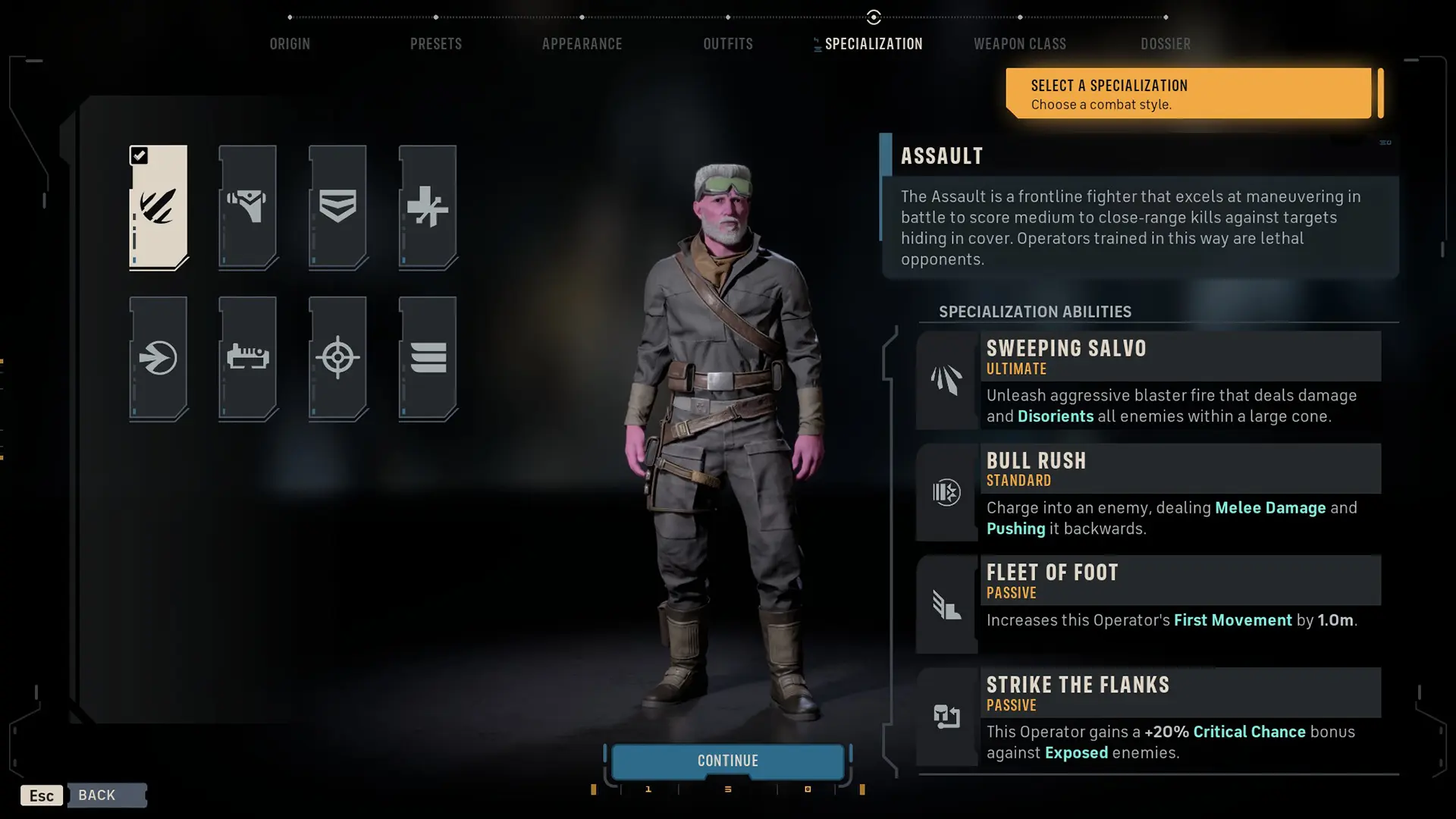
Playing right from the game’s opening, Zero Company doesn’t waste much time on getting you into the thick of things. After a brief cutscene where your soon-to-be-employers drop a bit of exposition to get you familiar with Hawks and their backstory, you’ll then customise your unique Hawks using a pretty robust set of options. You’ve got the choice of species including Human, Mirialan, Devaronian, Togruta, Twi’lek and Zabrak, and then a plethora of skin, hair, face and outfit options beyond that to really make them your own. I ended up with the handsome, silver fox of a Mirialan you see above, who I named Tony Hawks.
At this point in time, Zero Company is already formed and operating, so you’re thrust right into a mission where Hawks and three other members of the crew are scuffling with some B1 battle droids while they attempt to retrieve an artifact of importance to a client. This tutorialised mission sequence introduces us to the basics of the game’s turn-based tactical combat and also happens to impart a harsh lesson about what happens if one of your team member’s suffers too many injuries in battle. Spoiler: They die. For good.
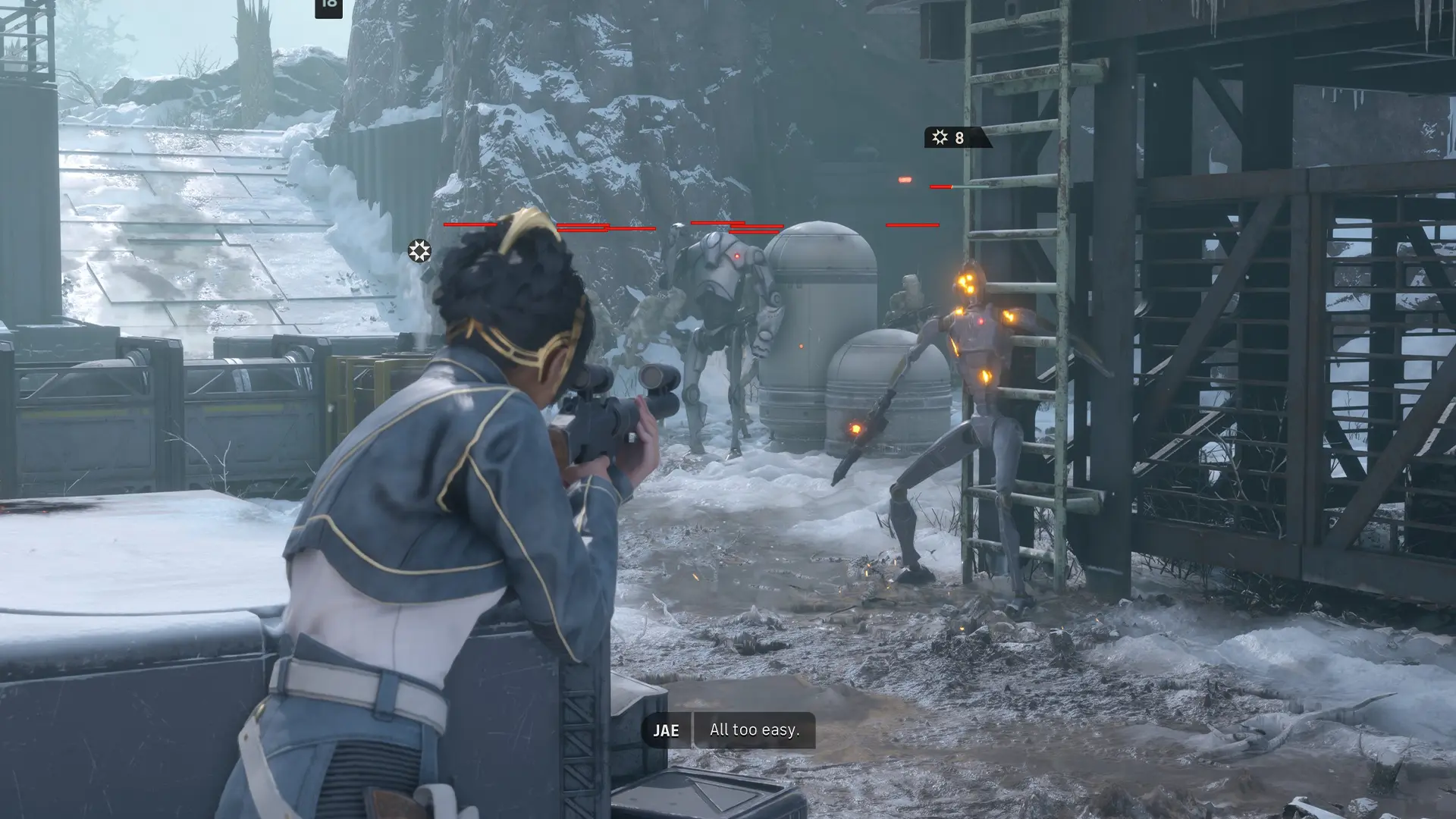
Right away, the basics of combat here should feel familiar to anyone who’s played a similar game – especially anything from Firaxis (Marvel’s Midnight Suns is an underappreciated banger). Each of your team members has a certain number of Action Points to spend every turn, and these are used on things like moving, attacking, using items and abilities or interacting with the environment. Movement in this one is based on a circular radius, and you’re able to spend more Action Points to move further, for times when finding good cover or getting a good angle are important. Your ability to hit an enemy with a shot from a firearm is determined, aside from any inherent character stats, by a percentage chance that takes into account distance and whether they’re behind some kind of cover.
That’s all very straightforward, expected stuff, and there’s obviously a lot more to it, but one thing that Zero Company does well is emphasise teamwork and collaboration. Say, for example, an enemy is behind some cover that’s severely limiting Hawks’ ability to hit them – one option would be for them to call for backup from a nearby teammate before choosing to fire at an enemy. Doing so results in a second shot from your ally, which is more likely to hit and can deal bonus damage if the two have a strong enough Bond (more on that in a bit). A few times I managed to use this to destroy an enemy’s cover with the first shot and then take off a chunk of their health with the second. At least once I called for an assist on a shot I knew my current character would miss, simply so that a character whose shot was clear but AP was already spent could take another crack.
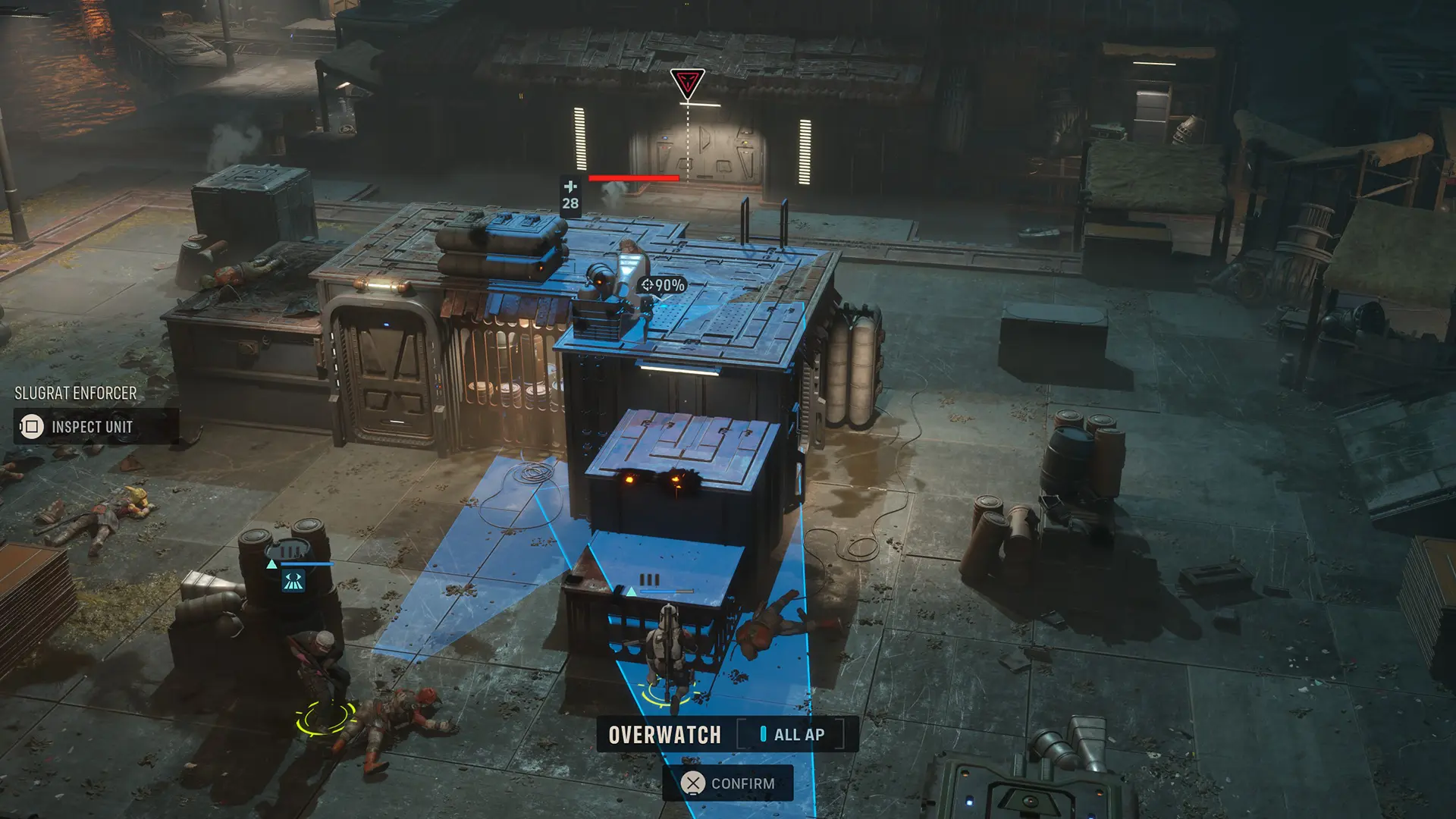
Another incredibly useful mechanic is Overwatch, which allows a character to expand their remaining Action Points and take an observant stance, highlighting a chosen cone of space within their immediate sight. Should an enemy cross into or take an action within this space on their turn, your Overwatch-ing character automatically takes a shot on them. This can be really handy for locking down your position or giving your allies a bit of protection, especially if they’re not looking too hot. Your enemies can also use it, though, which creates an extra strategic layer where one character might need to take a shot and interrupt the enemy’s Overwatch so someone else can move, or even intentionally take the hit in order to cancel it out.
One thing that Star Wars Zero Company does incredibly well is frame all of this action to make it look and feel much more exciting than we typically see from a game about moving little people around from an isometric perspective. The camera shifts to an over-the-shoulder view for shots taken, your characters bark out natural responses and quips based on their personality and what’s happening in-game, and the classical Star Wars audio treatment combined with lush visuals really brings a ton of atmosphere. All of this goes a long way to properly framing the kinds of emergent gameplay moments that tend to make a good turn-based tactical game sing.
But while the tactical combat is, of course, the meat of the Star Wars Zero Company experience, the bits that underpin it are just as deep and just as important. Aboard the Den, your home base nestled within the Ring of Kafrene (as seen in Rogue One), you’ll spend ample time simply walking around and getting to know your crew, recruiting new members, making use of facilities to upgrade your skills and gear, and using the Holotable to determine your next course of action.
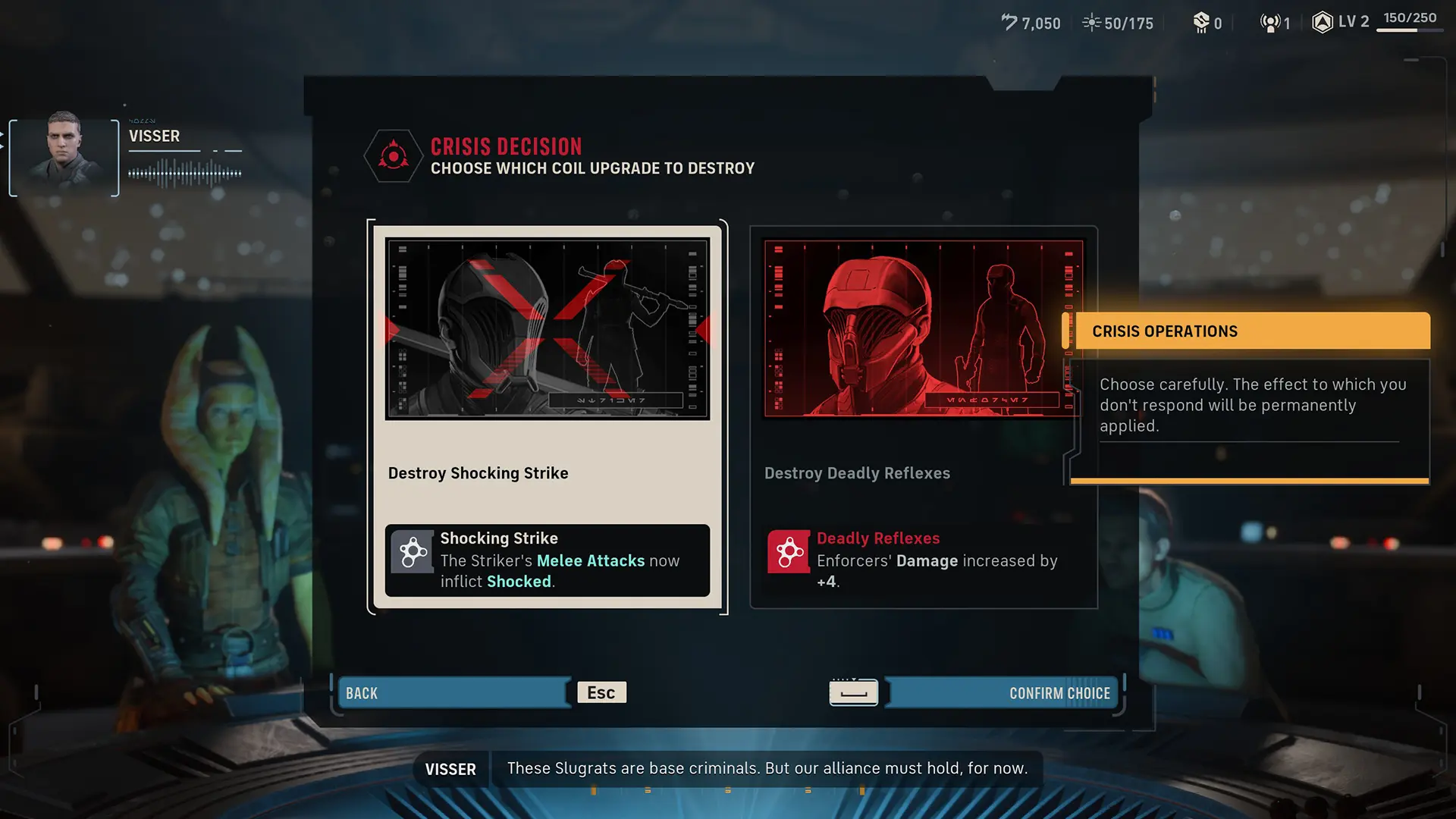
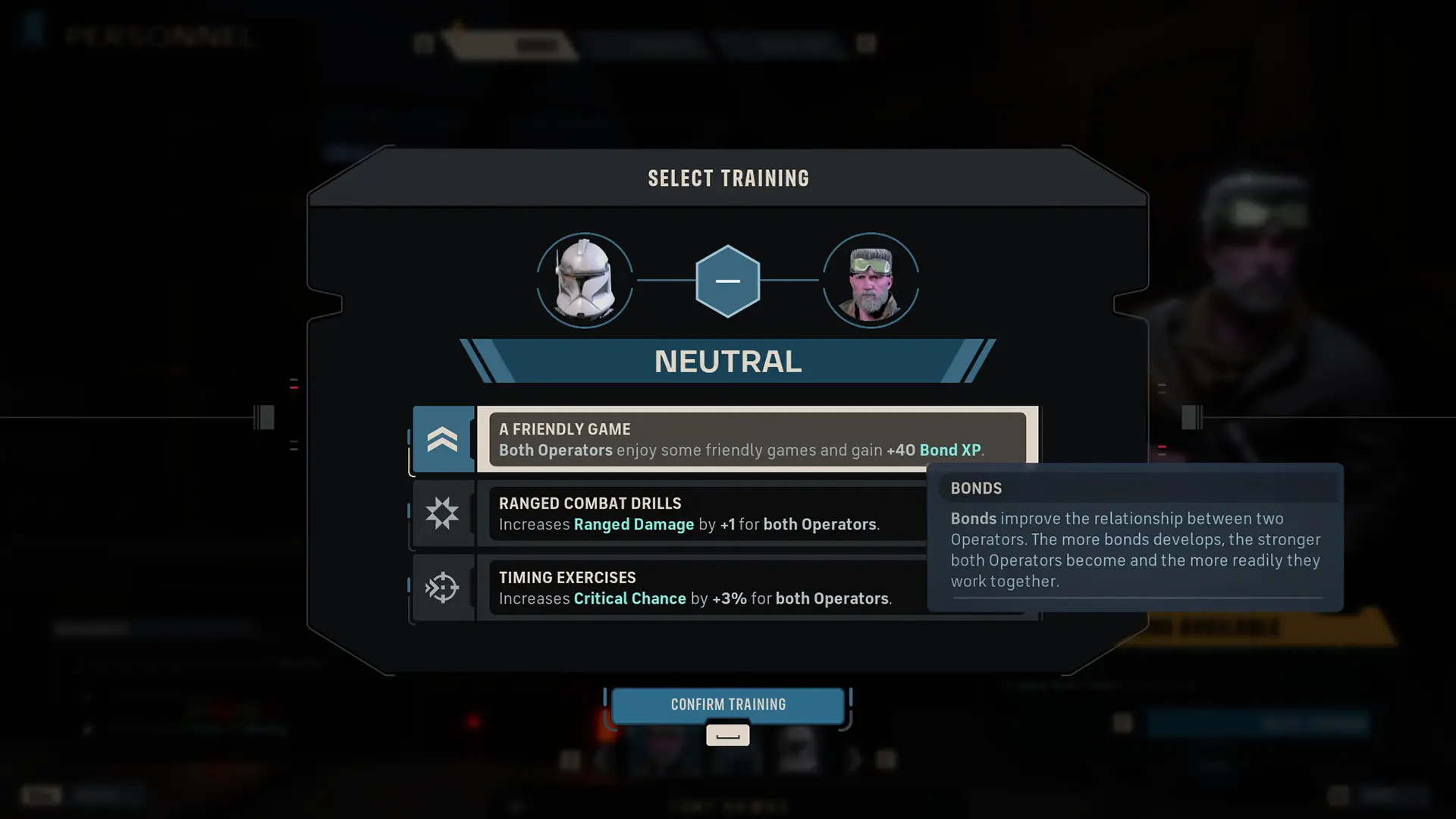
So much of what you do here bleeds into the game’s branching progression, where your choices can determine everything from the Bonds between your teammates – which can help unlock new tactical options and even facilitate cross-training of skills and specialties – to what opportunities become available to you, but nothing affects this more than which jobs you choose to spend your limited time and intel on. Every cycle presents you with new opportunities, be it a quick deal or mediating conversation, an off-screen expedition to send chosen crew members on or a proper, tactical mission – you won’t be able to take every contract, and who you choose to work for (or, in turn, snub) seems like it’ll have fairly profound knock-on effects across the board.
Naturally, it’s hard to get too much of an idea of how this will all play out in the long term, given I only had access to the early moments of the game, but it’s clear that the goal is for no two playthroughs to follow the same path. I’m curious to see just how wide-reaching the game’s branches are, and what it all means for the story being told, but it seems like the bulk of the emphasis is on creating these continual character moments where different opinions, creeds, histories and alliances bubble to the surface whenever tough calls have to be made. While you’re browsing the interactive galactic map, which allegedly is the largest of its kind in a Star Wars video game, you’ll even get input from key team members like Runa (who happens to be voiced by one of my favourite comedians and accomplished talk show host, Vic Michaelis) based on their own beliefs.
And, of course, permadeath remains a looming threat to any of the characters you’re able to bring with you into combat scenarious (aside from Hawks themself – should they perish you’ll simply need to restart your mission). Whether its an “authored” character with their own bespoke lines, backstories and capabilities or a unique recruit to your game, a lot is riding on your ability to cultivate a team that sticks together and stays alive. The studio assures us that permadeath as a mechanic can be toggled off should you choose, but it’s such an integral piece of the experience that they implore everyone to keep it on.
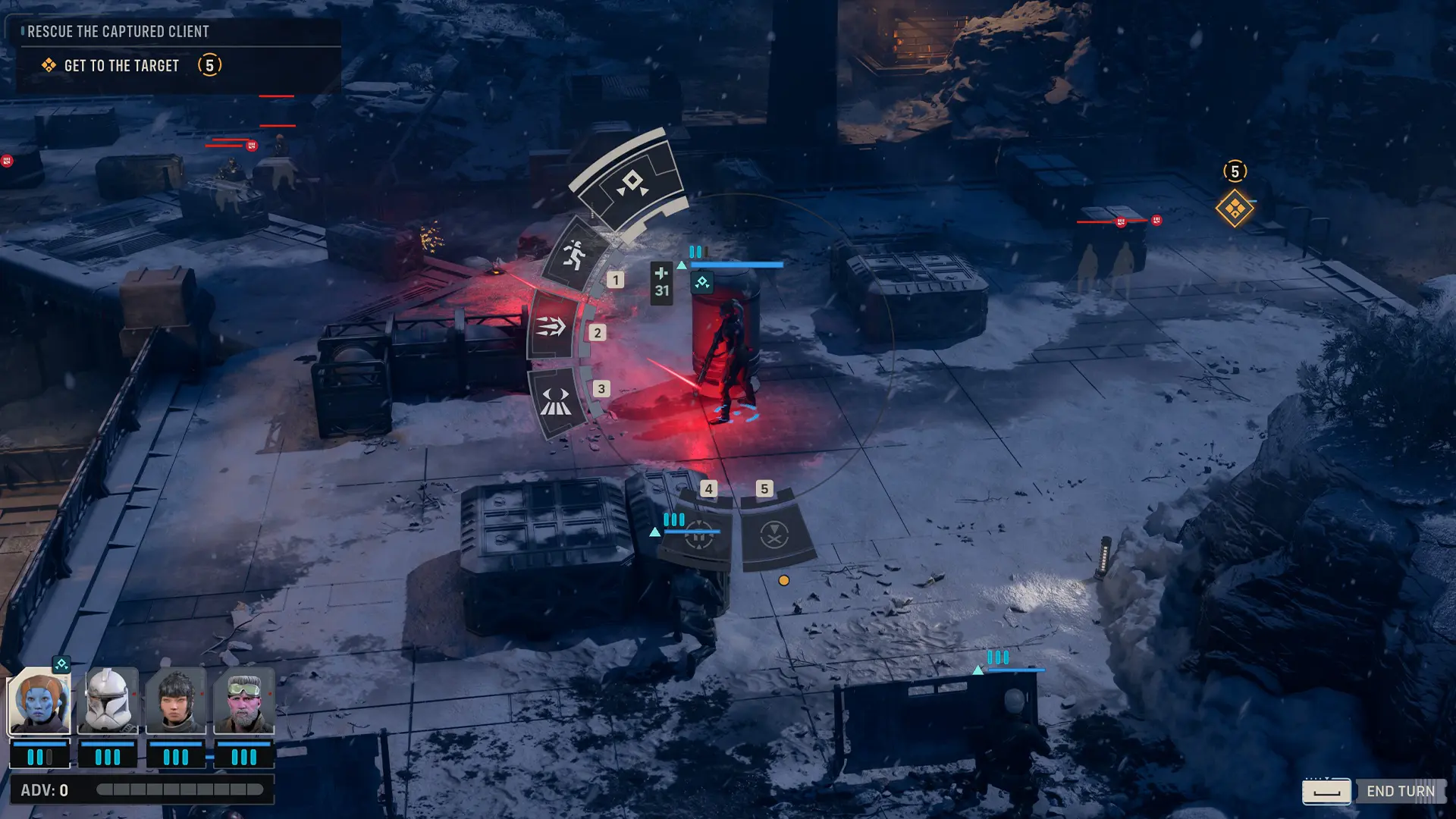
One thing I can appreciate immensely is how playable Zero Company’s is when using a controller. Its radial action menus and direct character control during out-of-combat mission moments in particular feel geared specifically towards playing with a pad in hand. While my preview build was based on the PC version, it really does come across as having been designed with console players in equal mind, as opposed to an afterthought – something that can’t always be said of a game like this.
I’m sure that a lot of Star Wars fans will be jumping into Zero Company as their first tactics game, too, so good controller support is incredibly welcome. I played through the preview build on the game’s standard difficulty, which did feel a little on the easier side for someone of modest experience in the genre, so I’d probably recommend sticking with that only if you’re completely new or unsure or aren’t particularly keen on being with a lot of resistance.
There’s genuinely so much more to talk about and unpack from just this small taste of Star Wars Zero Company, but the short of it is that there’s a lot of promise here for both Star Wars and tactical turn-based fans. Looking at Bit Reactor’s philosophies in approaching a Star Wars story via this genre, what I played first-hand well and truly showcases that vision, and perhaps most importantly –I desperately want to play more.
Previewed on PC | Preview build supplied by publisher

Born into the world of video games through SEGA, and in particular Sonic the Hedgehog, Kieron’s gaming tastes now consist of the latest, shiny AAA thing, an indie darling or two, and an embarrassing number of hours of Balatro.