
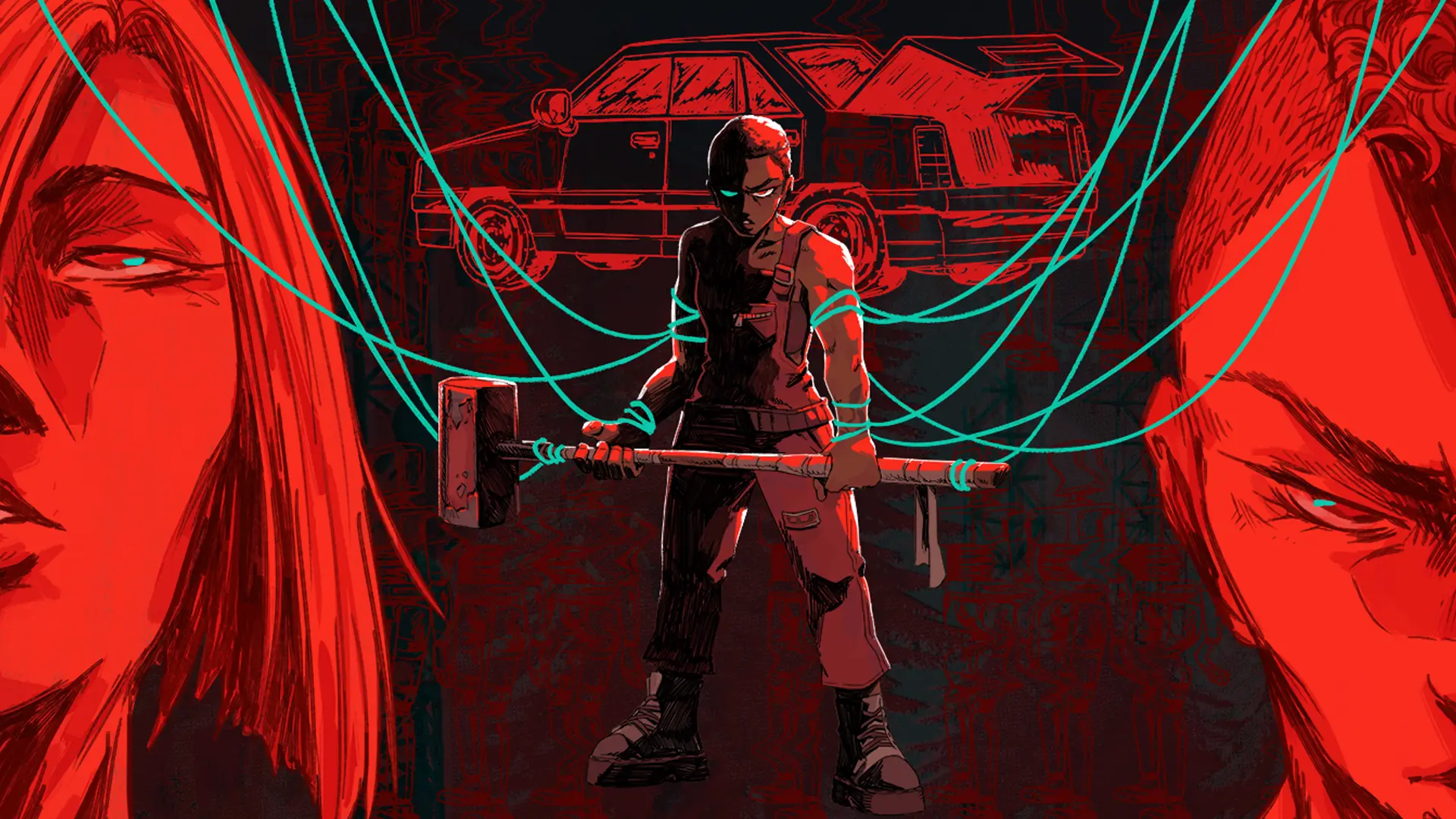
It’s time for 20 pounds of physical media
When I found out about my partner’s affair, a months-long one at that point, I don’t think I felt anger. I felt a lot of things, but none of them read as anger, and it’s an emotion I’ve so rarely felt throughout my life. As I’ve navigated the aftermath of that revelation, though, I’ve begun to learn that anger sits underneath so much of this journey. Anger at myself for not seeing the signs earlier and stopping things before they became what they did. Anger at my partner for misplacing my unwavering trust. Anger at a third party for knowingly inserting themselves into my life in a way I couldn’t control or consent to.
But most of all, anger that I wasn’t angry sooner.
At the outset, Virtue and a Sledgehammer interrogates the player with hypotheticals. You’ll be asked by the game’s protagonist, Pratelle about how far you’d go to prevent a loved one from committing a heinous act, one that would hurt many people. You don’t get a lot more context than that, certainly not enough to make the call on whether violence would factor into your answers – does Pratelle’s definition of heinous match my own? What my partner did was heinous, by my own metric, but how would I genuinely intervene, given the opportunity? Would I, as one of the game’s scenarios suggests, simply cut ties before I could be hurt? Or does that simply create new hurt in kind?
Luckily for us, all we have in Virtue and a Sledgehammer is a single-minded goal. And anger. And a sledgehammer.
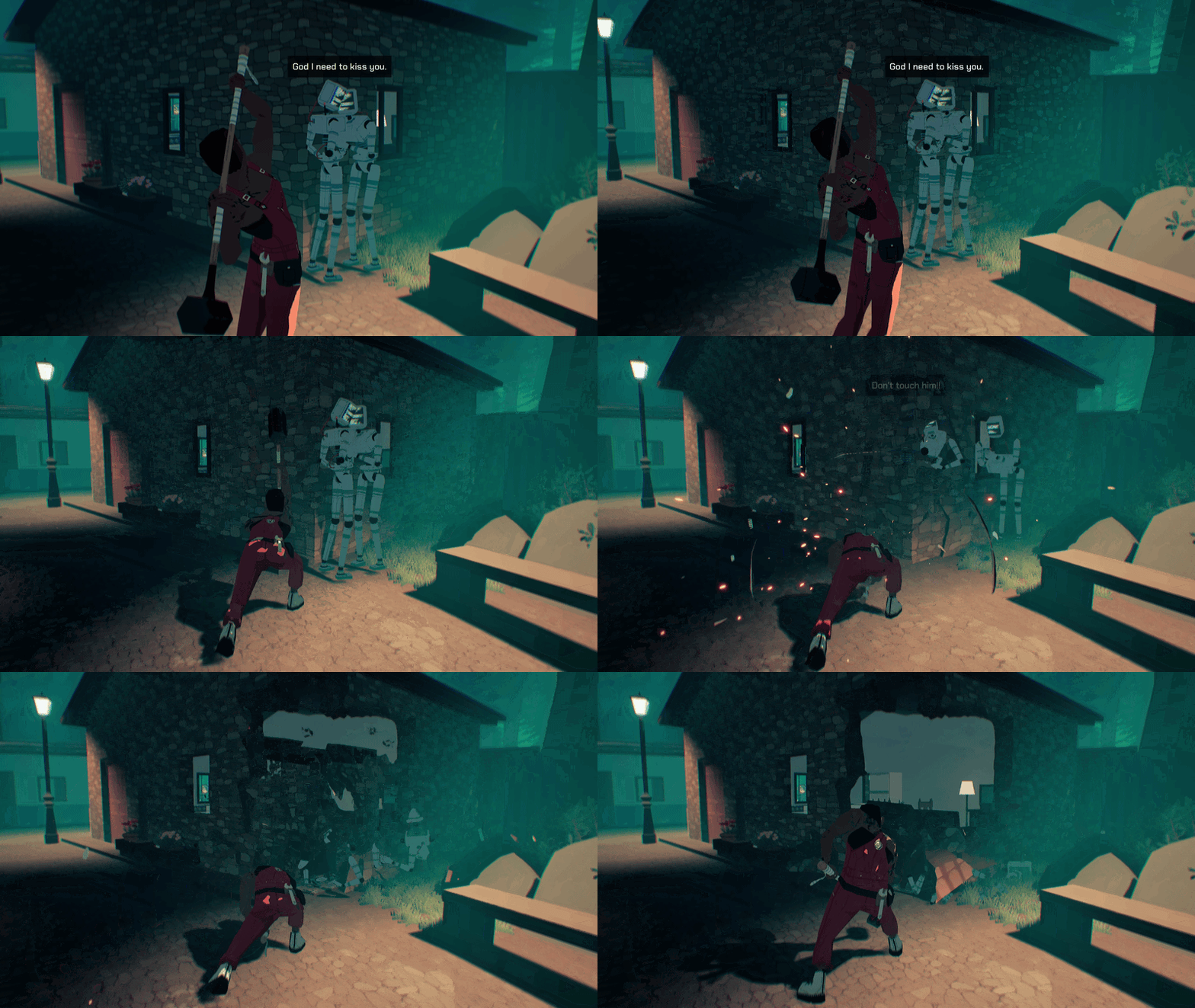
Coming from Deconstructeam and Selkie Harbour – the folks behind Many Nights a Whisper and The Cosmic Wheel Sisterhood, among others – this is a succinct work of just a handful of hours, but one with, well, impact. As Pratelle returns to her hometown, now a twisted snapshot of her childhood, frozen in time as robots bearing the digitised souls of her former neighbours continue to act out the same lives she’d already escaped once, she does so with singular purpose. To smash shit up.
To that end, your sole point of interaction with this world is placed firmly at the end of your sledgehammer, which becomes both a tool to forge a path ahead through whatever homes or hurdles might stand in your way, and a weapon to wield against the android facsimiles of the town’s former citizens. Aside from ambulant navigation, it’s a strictly one-button affair, whether that’s pummeling walls with impressive destruction physics or claiming hidden “collectibles” that lead to further revelations. But the game does well to produce so much juice out of this pulpy pulverisation.
Some of these robots are physically aggressive, and must be put down to prevent an early end. Others inflict violence with their words, and those I chose to punish all the same. And then others still would simply cower, afraid of retribution, or simply afraid of me. I pretty quickly forgot to differentiate between them, and as I sat with myself after my first couple hours with the game, I had to face that, looking inward in hopes of finding a separation between gameplay and gospel within me. I still don’t know what that looks like.
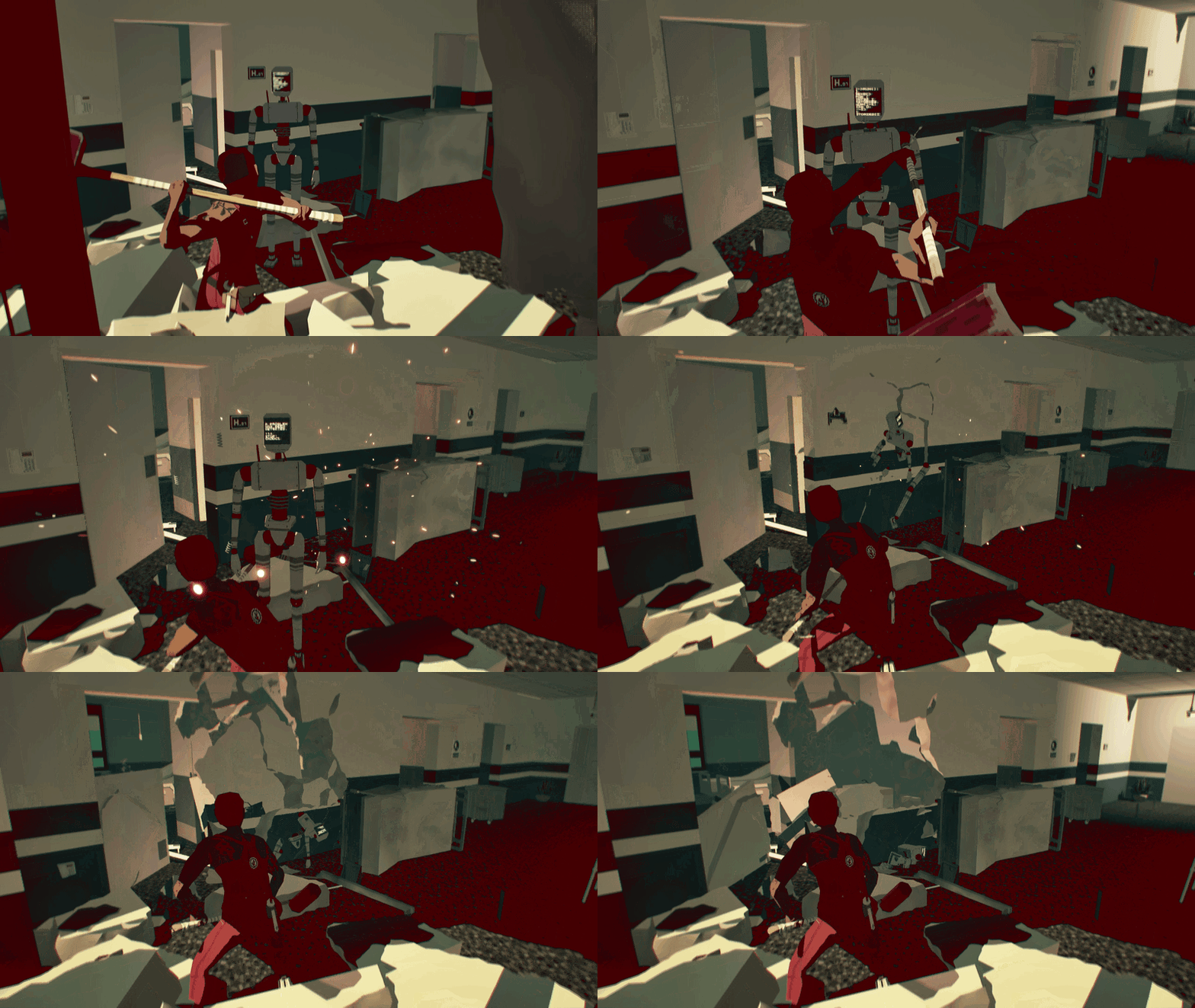
It’s especially effective, or maybe cruel, that everyone here is a faceless machine. It offers Pratelle, and by extension the player, heady conundrums about the nature of humanity, but it also gives both the opportunity to supplant their own anxieties and antagonists onto them.
As I tear down servers and steel simulacrums with exacting force, am I deleting the memories of this artificially-prolonged community, or am I erasing my own? The flashes of conversations, of “work drinks” that end at 4AM, every torrid text and image, the talk of overseas trips with unspoken motives, all of the things that live in my mind like parasites, feeding off of every unoccupied second of every day. How much of it could I insert into this experience, to feel genuine catharsis in an act of virtual violence?
There’s an inherent sentiment here around our current era of AI, of why and how we impose humanity on inhuman things. But as Pratelle pushes further and the true depth of the injustices happening around her becomes more clear, I start to see how the opposite can come to be. Whether it’s fear, love, stupidity, ego, desire, I’m shown – in often starkly confronting fashion – they myriad ways in which a person can be made unrecognisable. And how easy it is for us to dehumanise those who have, in our eyes, buried the version of themselves that we loved and trusted. How quick we are to replace the true image of a person with but a silhouette, a perception of our own making in the shape of their words and deeds, something we can hate.
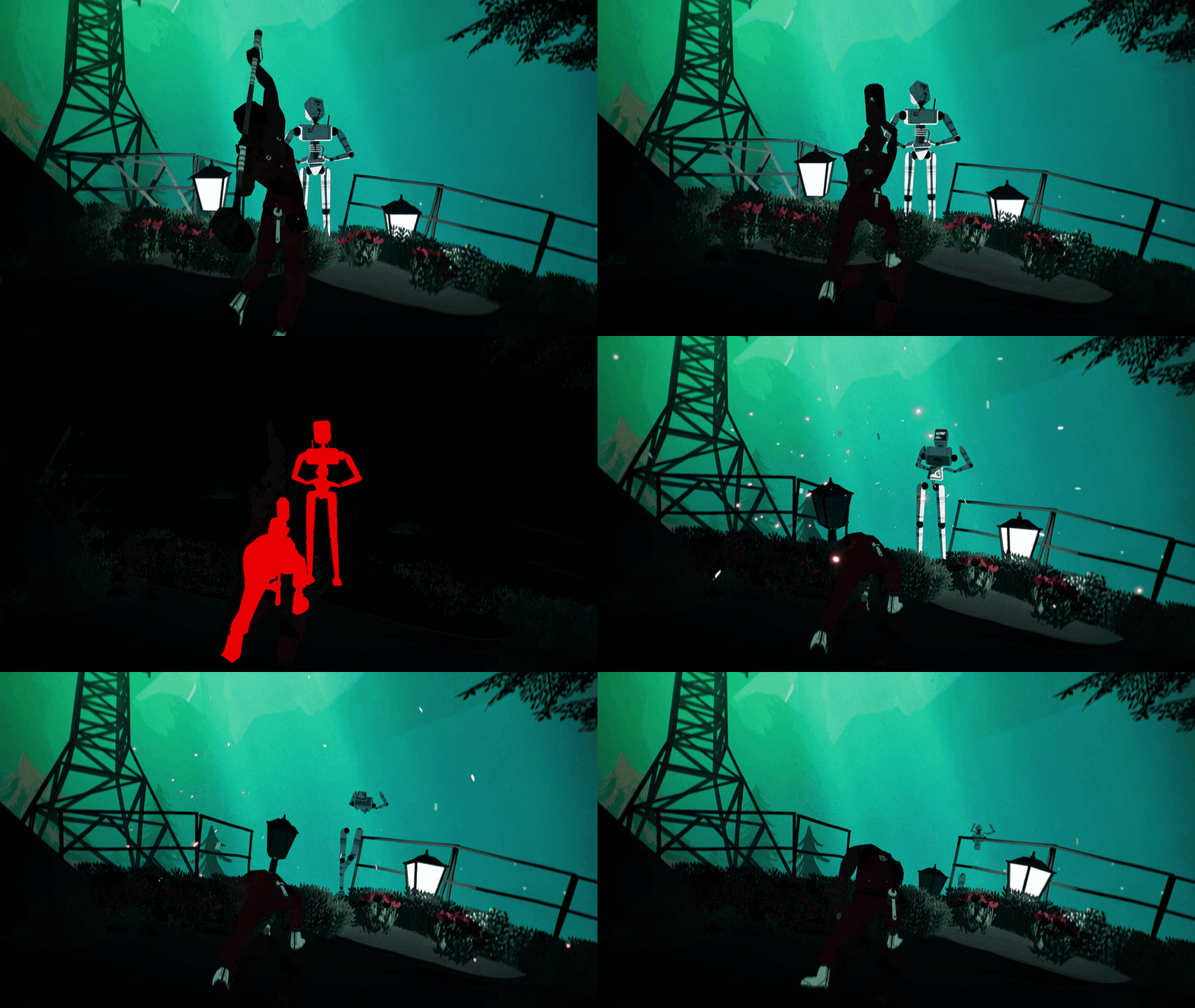
Virtue and a Sledgehammer comes at a time where the world’s response to injustice has become increasingly scrutinised, and at the same rate increasingly powerful. When Pratelle wields her “20 pounds of physical media,” it’s the most direct possible reaction to the racism, homophobia, classism and misogyny she experienced from the very same townsfolk that now walk immortally, encased in steel. And with every continued espousal of their prejudice and bigotry, I feel better and better about watching them hit a brick wall at 50 km/h and shatter into pieces.
I could take hundreds more words to tell you about how these ethical, spiritual and philosophical conversations are gamified in interesting ways, or about the exquisite visual direction and quietly brilliant sound design. I could ruminate on how the slight inelegance and repetition of “combat” or the narrative context tucked behind hidden collectibles can be too evocative of the Video Game of it all. But like all good art there’s the conversation of craft, and the conversation of impact. By the time that Virtue and a Sledgehammer barrels through its brilliantly-effective conclusion, it is nothing if not impactful.
Reviewed on PC | Review copy supplied by publisher


Born into the world of video games through SEGA, and in particular Sonic the Hedgehog, Kieron’s gaming tastes now consist of the latest, shiny AAA thing, an indie darling or two, and an embarrassing number of hours of Balatro.