
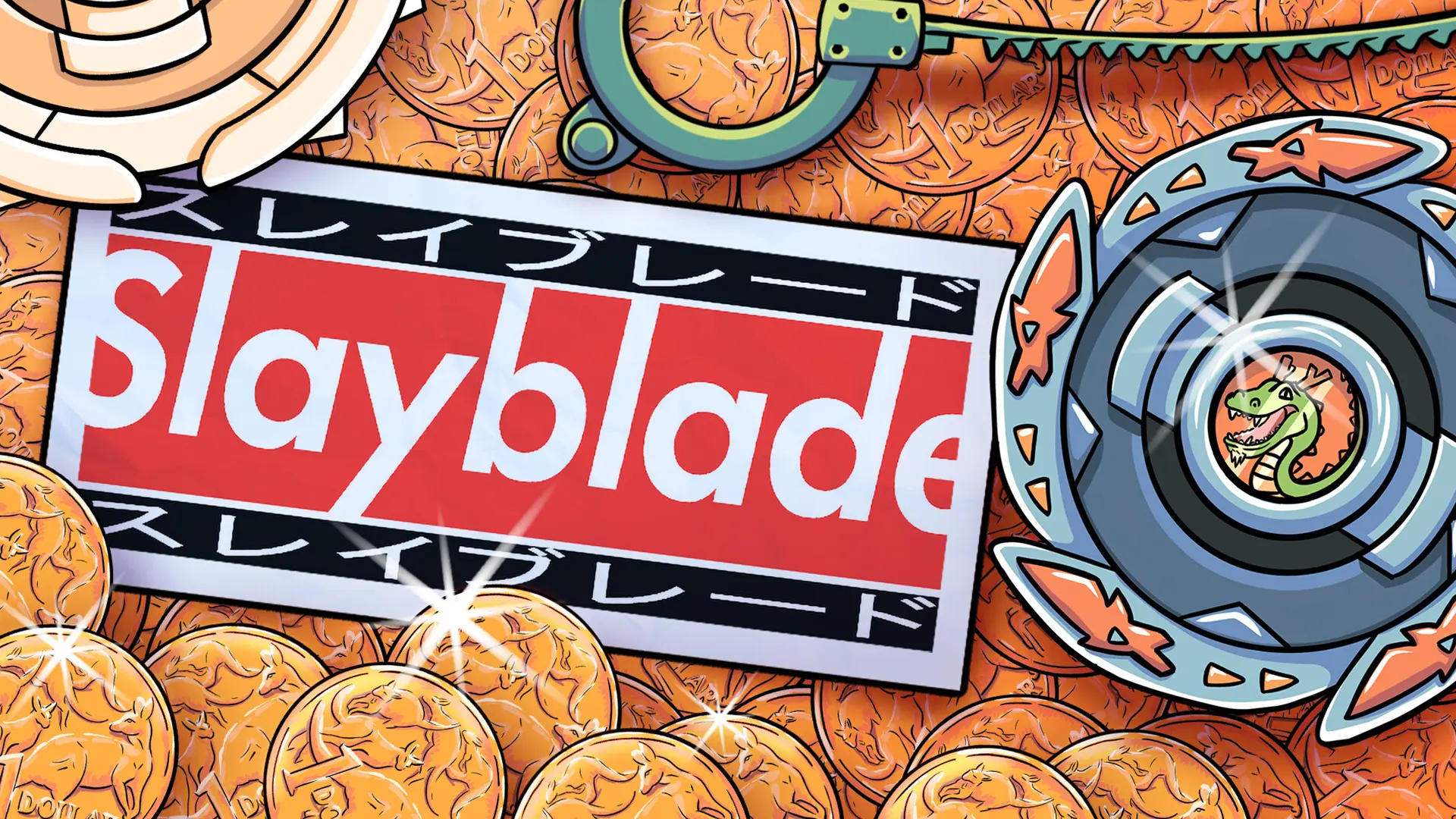
I have personally never been into Beyblade – or indeed any kind of battling tops if others exist. They came in as I was graduating out of my school years, a new hobby I didn’t feel the need to rip-launch myself into. I feel this is important to convey to you at the very start of this review because Slayblade happens to be a roguelite battling top brawler and the bulk of my experience comes from my children’s primary school days, dropping them off and seeing kids with their Beyblade arenas flowing into the gates. Big green translucent plastic affairs, small white plaster-jobs – many styles all wedged under the wing of many a youth. And a few months later, receiving emails from the school that Beyblades were banned from the grounds… oh, heady days.
So why not relive (or just live) those times as a youth, skating around a Y2K city, challenging random children in cash-fuelled clashes or perhaps partaking in illicit night-time brawls with arenas as mysterious as the Slaybladers who stalk them. Or if you’re feeling particularly brave, run as a vigilante, claim victory over criminals who threaten your small city-town, even go so far as to topple the corporate tournament and win your way to fame.
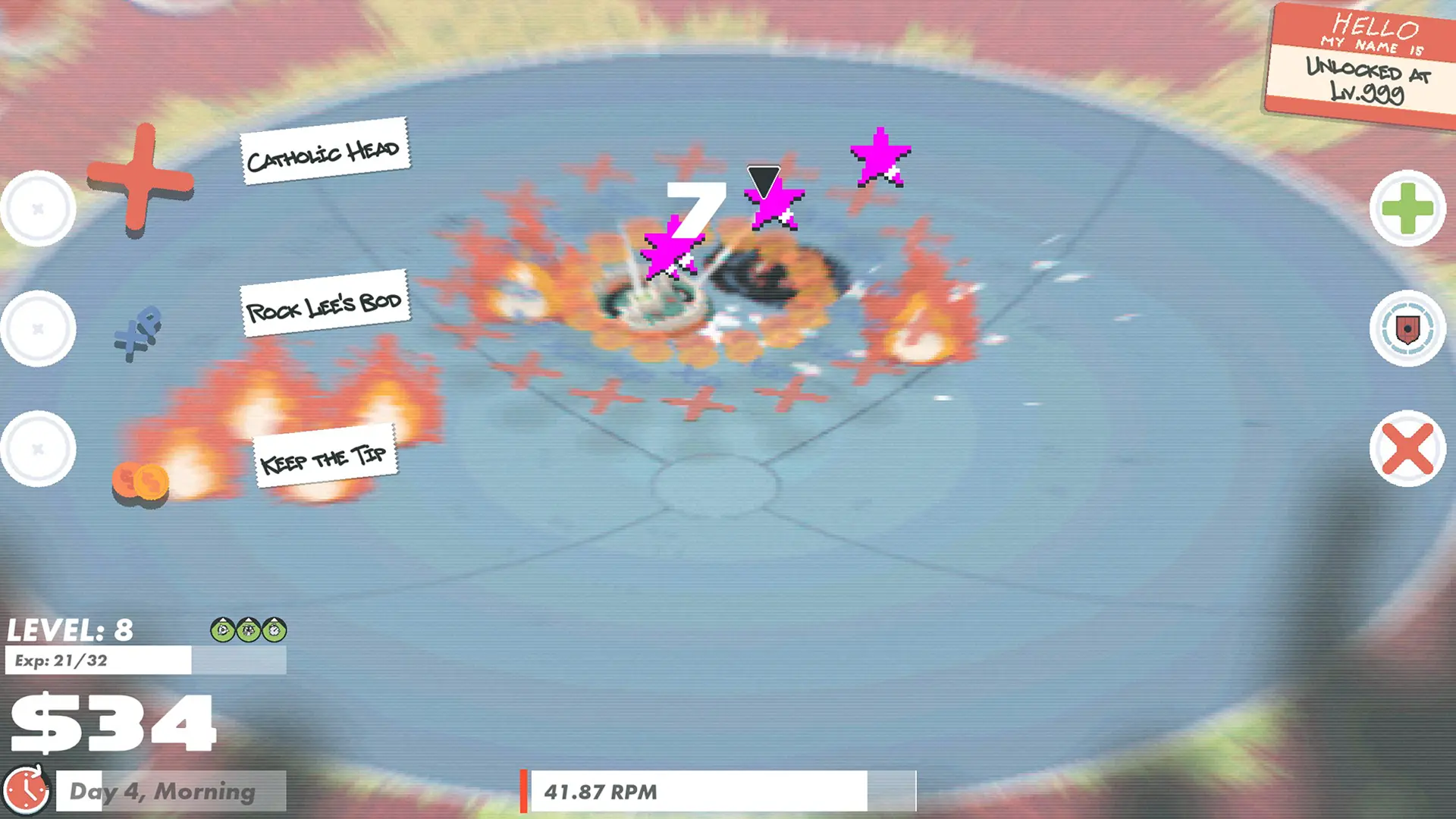
At least that’s the headcanon in Slayblade. The reality of the game is a simple, yet fun loop that provides your mouse-moving wrist with as big a workout as any pro-league eSport. This is not some long-winded affair with a campaign or even heavy progression elements – there are only a handful of hours before you’ll have a firm grasp on the systems. What you do get is a tight, focused game that knows what it wants to be and gives you the required tools to experience it. It’s beautifully lo-fi too, rendered in a seemingly Nintendo DS-inspired art style, the post-processing selling the look of something pulled off a 2005 shelf.
Actual control in Slayblade is all mouse – menus, city navigation, and battles controlled by moving your pointer around your screen, and in this I found my only issues with the game. With no option to lock the cursor to the window, my mouse escaped to my second monitor during particularly erratic bouts, and the excitement further led to actual sore wrists for me. You’ll want a soft mousepad and a proper ergonomic grip. For the adventurous, a touchscreen such as the Steam Deck’s provides a fun setup.
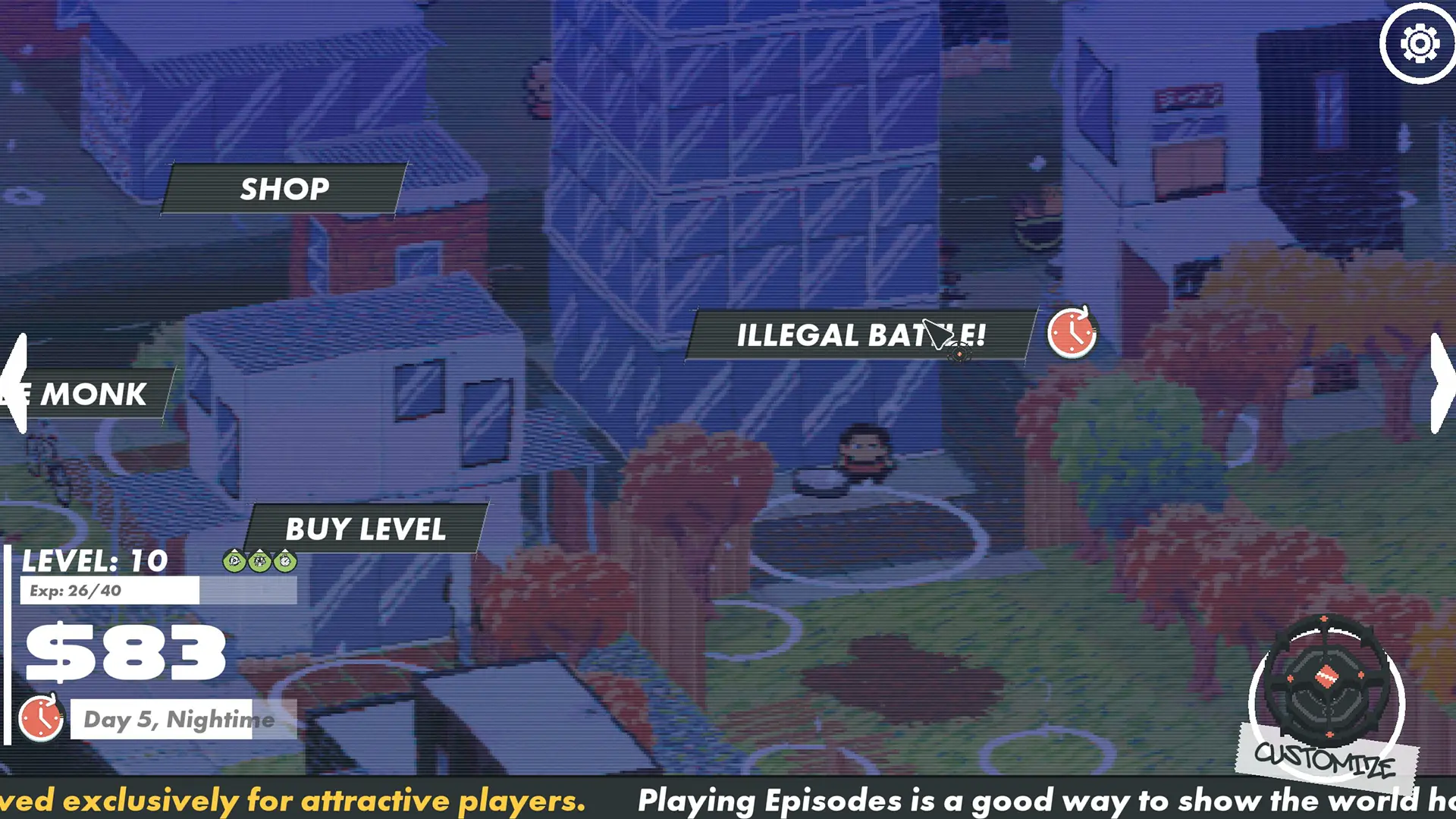
You start each run with a simple Persona-style countdown, giving you twenty days to win the tournament before game over, and you can select three major activities per day with one each for the morning, afternoon, and night. Certain activities only appear at specific times, such as illegal matches at night or a “shrine of morning”. Activities generally grant money – used to buy parts or enter tournament brackets – or experience which increases your battling top’s power and abilities. The choice of said activities is not difficult; generally, you’ll have three time-burning options with varying levels of difficulty and reward, but within this choice come the trade-offs. Mowing the lawn gives experience and money, but not as much as a battle. The battles themselves require you to put up varying levels of cash as a buy-in, which is doubled on a win or forfeited on a loss. Bet more than you have and lose, and your run is over.
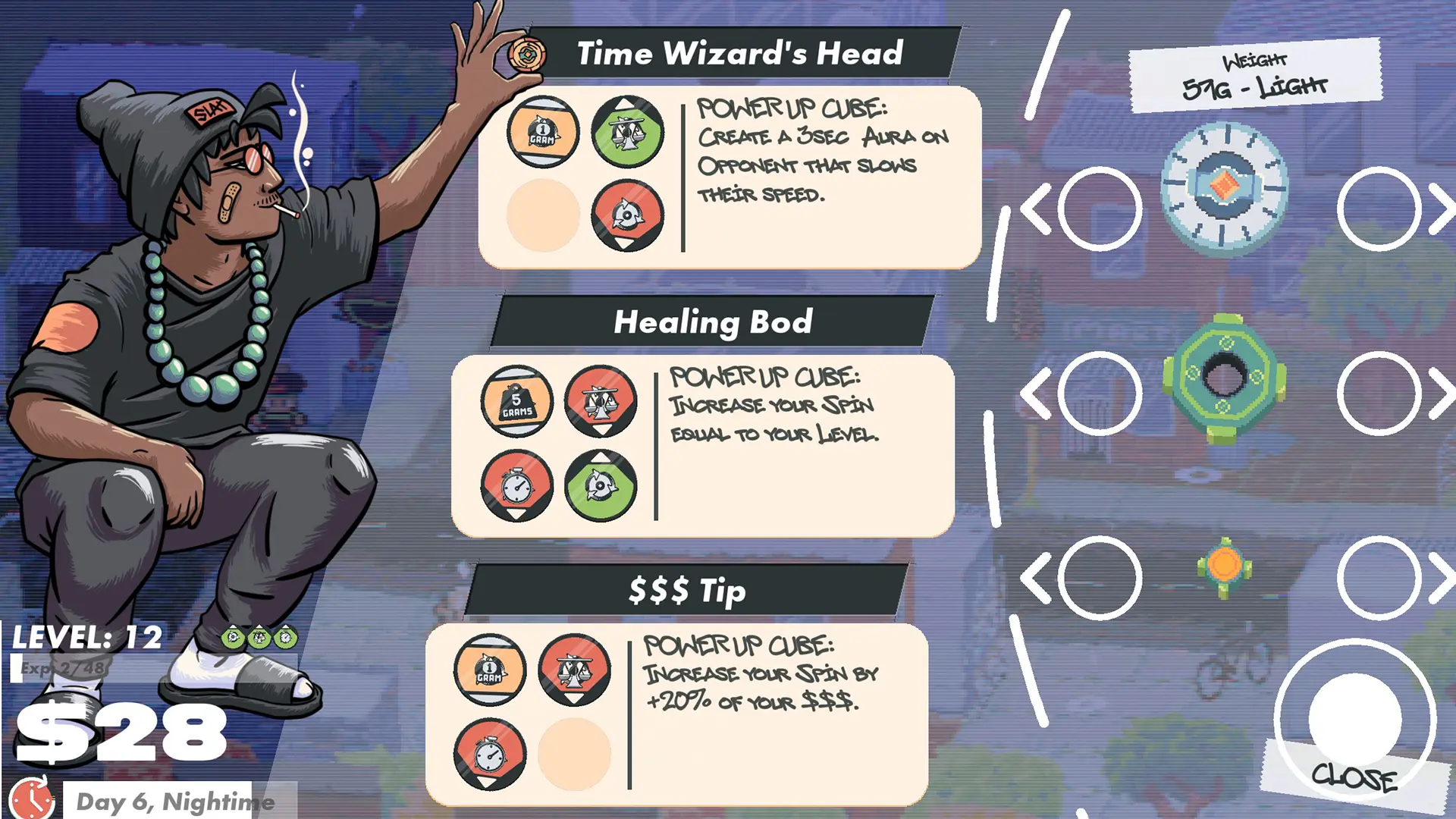
To win with your battling top, you’ll need to upgrade your gear – the tip, head, and body of the Slayblade. The shop offers random selections each day, or you can try your luck at the gacha vending machine and attempt to build a winning combination of auras, buffs, weights, and top speed to compete at the higher level required to win the tournament.
This is about as in-depth as the game gets, and it only takes a short time to win your first tournament, but as you complete runs, you’ll unlock the roguelite portion of the game with new parts and new modifiers, and eventually new “episodes” – specific modifier combinations that can be beaten for prestige (and Steam achievements). Modifiers themselves are quite varied and significantly change the routine of battling, like “Dogzilla” which unlocks early on and brings a pupper into the picture to stomp randomly on the arena, changing the gameplay from a pure battle into trying to avoid impending doom (and perhaps push your opponent into it). Other modifiers change the size of your battling top, give you battles with two opponents, or challenge you with ten-second fights. Over two dozen modifiers provide a good amount of variety. Alongside the sixty parts, there is enough challenge here to keep things interesting.
Altogether, for the modest ($5 USD) price Slayblade asks you get a compelling, succinct experience with fresh and unique gameplay in a world full of “X game but with Y feature”. It’s simple, yet challenging, and has enough replayability with modifiers and run customisation to give you a few hours of fun, especially if you enjoy the battling top movement. With the retro presentation as a cherry on top, I don’t have a problem recommending this one to anyone with some spare lunch money. Give the demo a go if you’re unsure and then grab the full game if you want more on top.
Reviewed on PC | Review copy supplied by publisher


Australian live-streamer and indie-gaming creator, Kymothy “Zigarot” Kennedy has been into gaming and its creative process since his very first PC build, reconstituted from scraps of military hardware in order to play the likes of AngbandTK and Scorched Earth.