
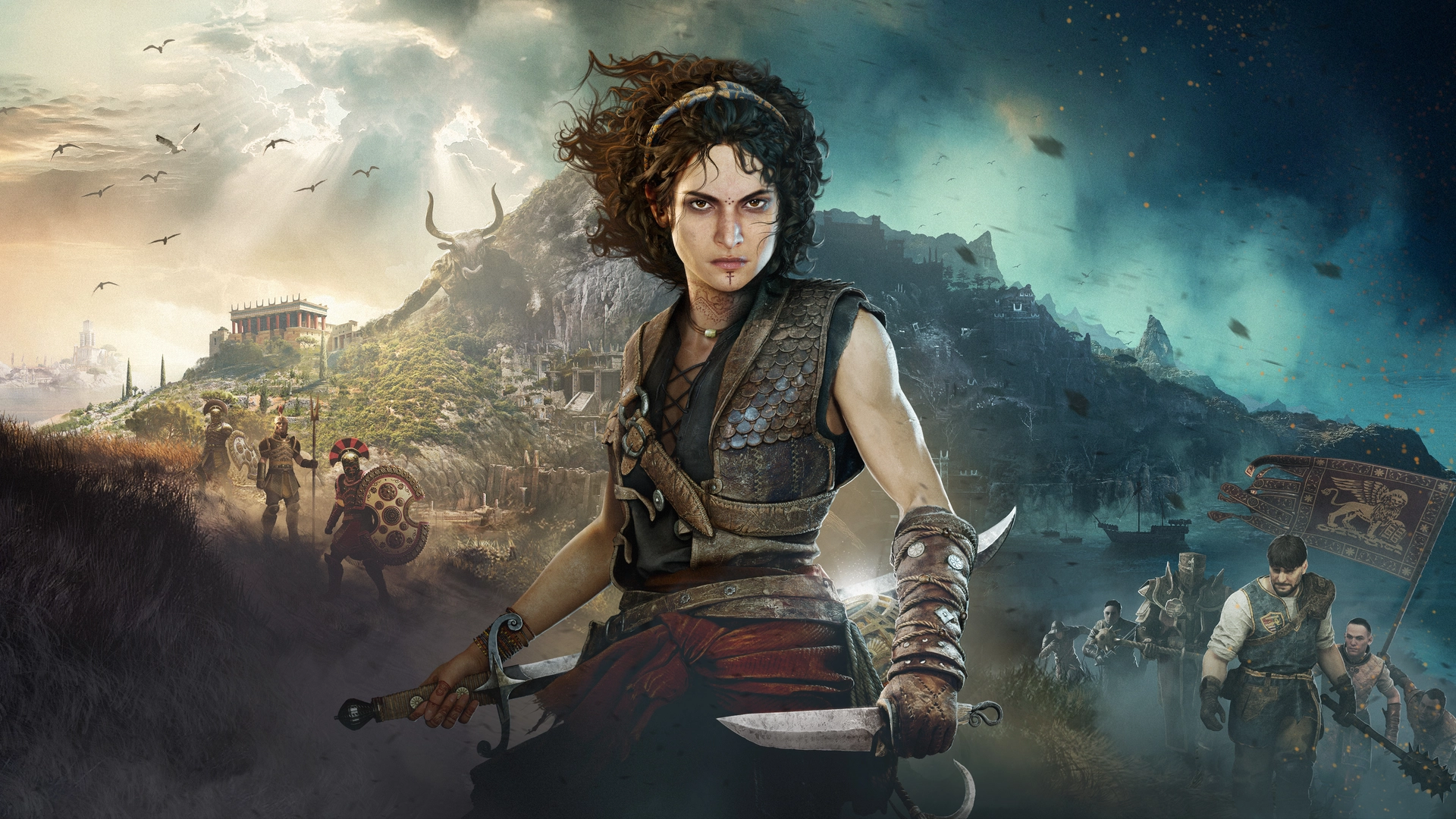
A Plague Tale: Innocence and its sequel, A Plague Tale: Requiem, put the name of Asobo Studio is many more mouths and minds than had been before. These were wonderfully-told stories about family, sacrifice and free will in the form of stealth-forward adventures, and were also uniquely covered in rats. Thousands of the things. Resonance: A Plague Tale Legacy flips the script considerably, not just in a new title format but introducing all-out action combat, repurposing stealth and the interplay of light and darkness, and getting rid of all the rats.
Resonance takes us to a time before the events of the first two A Plague Tale games, but shines the spotlight on a character fans already know and love – Sophia. After having played a major role in Amicia and Hugo’s journey in Requiem, this new game explores the origins of Sophia’s story, which begins with her undergoing cruel experiments in a convent before being rescued by her father and going on to live in a community of bandits. Thanks to said experiments, Sophia is plagued by visions of a mysterious island and a maze, and through a turn of events involving a job in Venice gone bad, she inevitably ends up at that very island – long after her father perished there looking for a cure to her condition.
That’s all a very condensed version of events, and a lot of Resonance’s story is best left unspoiled. But here, at Minotaur’s Island, is where the bulk of the game unfolds. Alongside her closest friend, Leni, Sophia is determined to combine the knowledge gained by her people’s expeditions thus far and the records of her own visions to conquer the island herself and find out what it is that’s been calling her there all these years.
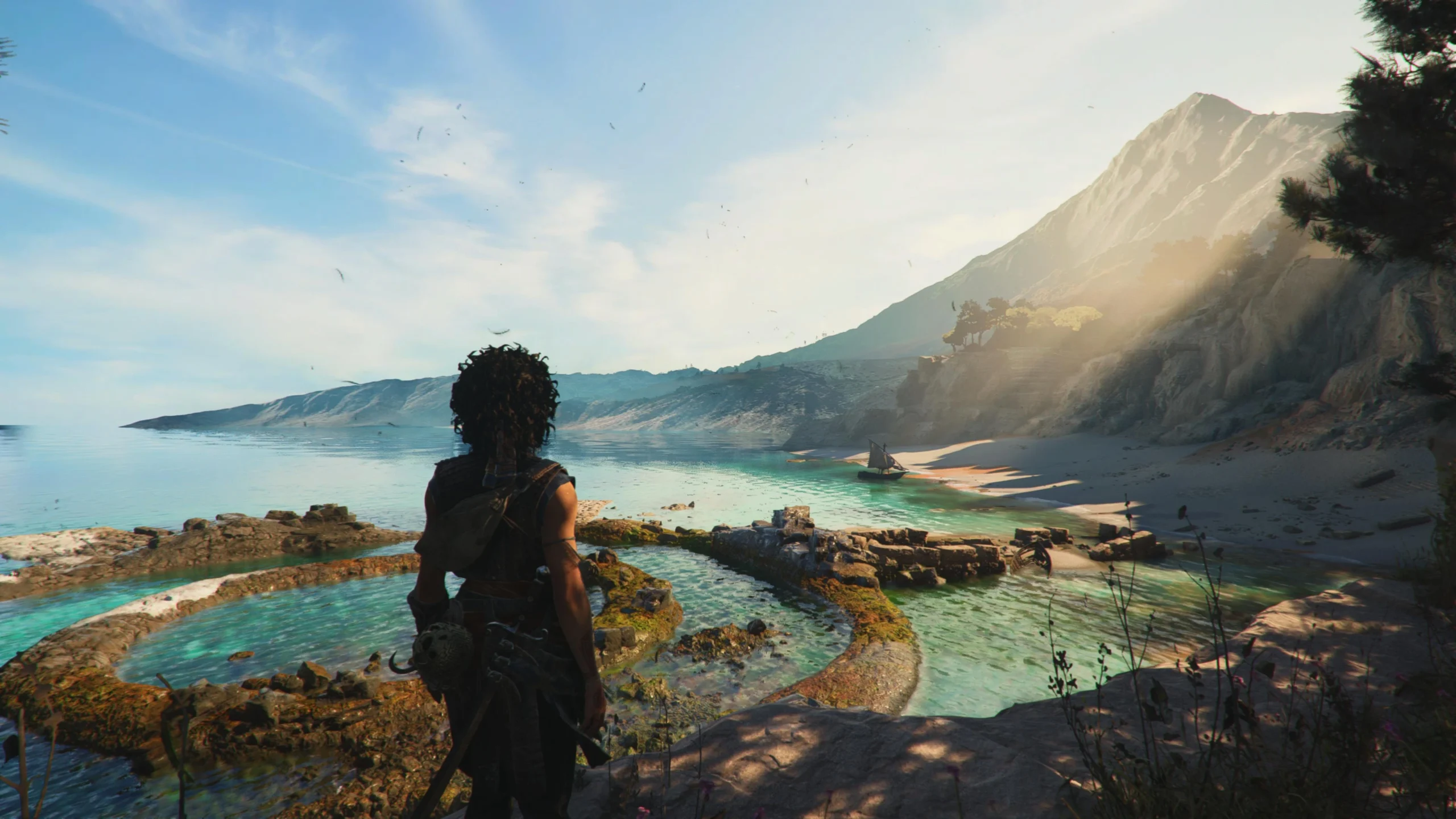
The first act of the game sees the pair on a quest of discovery and desperation, exploring and steadily unlocking the secrets of a long-dead civilization while also avoiding pursuers with their own interests on the island. Your time here is split between traversing ruins both exterior and interior, solving environmental puzzles and getting into fights with bandits and soldiers, which is about two-thirds familiar to anyone who’s played the previous games.
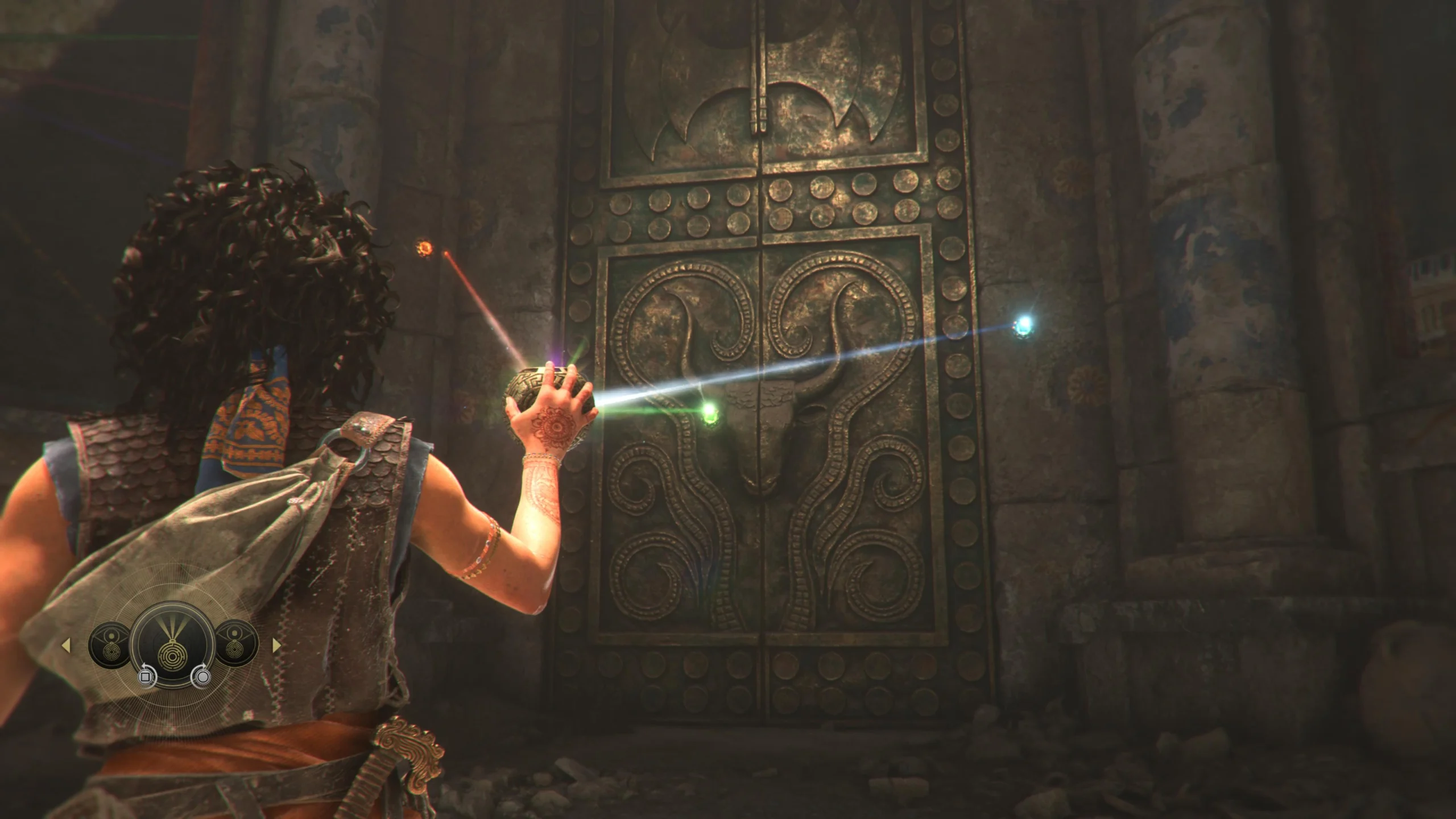
Puzzles in Resonance are largely based around a special artefact known as the Sphere, an ancient key and tool that can manipulate light. These ancient Minoans have seemingly built their entire kingdom around the creation and control of light, for reasons that will eventually become clear, so the early moments will have you doing a lot of the classic reflecting beams off of mirrors or shining light to reveal hidden clues – none of it is incredibly taxing on the brain but there’s been a considerable effort made to have it all feel properly grounded in the world and interesting to execute. Sophia’s journal is an especially neat integration, combining her own vision drawings from her childhood with further notes from the crew’s previous visits to offer a very diegetic hint system that adds to the intrigue of the whole thing.
When it comes time to go toe-to-toe with other humans in battle, Sophia’s bandit upbringing means she’s certainly no slouch. Combat in Resonance isn’t overly complex but it moves fast and feels visceral in execution. Sophia can only take three hits before perishing, but defeating an enemy restores one hit, ensuring you’re always the desperate aggressor, which fits her character perfectly. It’s all about stunning your enemies and then taking advantage of your blades or the environment to end them while they’re staggered, and a small pool of unlockable skills lets you further augment everything to what works best for you.
I can see the simplicity of combat not gelling with everyone, but the game changes things up enough over time to keep it all fresh and exciting. If I have one gripe, it’s that your upgrades and passive buffs require finding arbitrary collectibles throughout the world, most of which are missable as you move through the linear chapters and few of which are hidden at the end of any secret paths or optional puzzles – the vast majority simply require that you forgo any sense of narrative urgency and traipse around each new area scanning for shining spots.
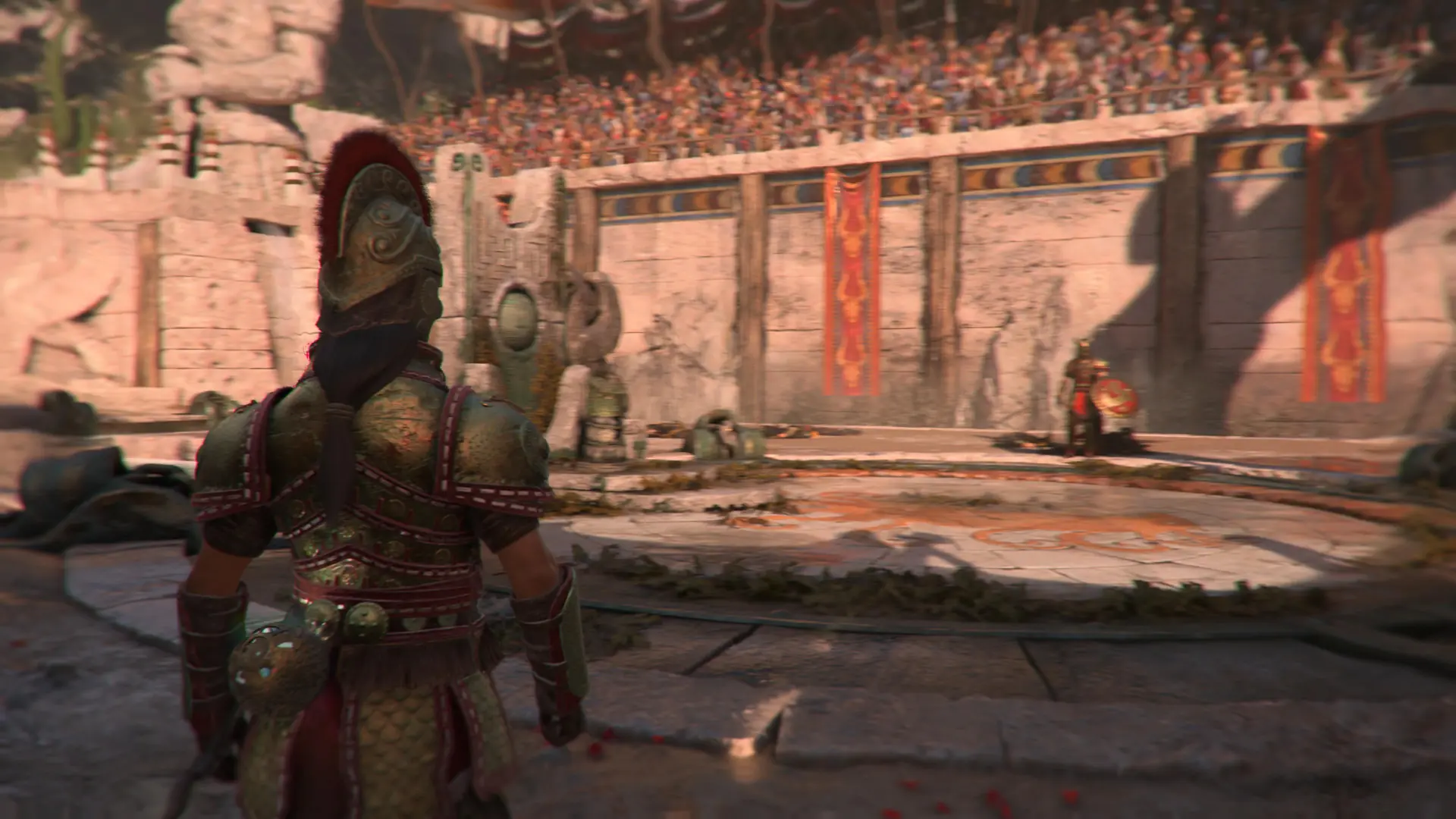
As you delve further into Minotaur’s Island, and breach the inner sanctums of its ancient chambers, Resonance begins to diverge from everything I’ve told you about so far. For one, Sophia’s inexplicable link to an ancient Minoan, Theseus, sees her routinely fall into visions of a time when the civilization thrived and Theseus took part in a series of brutal “trials” to prove their right to ascend to the throne. This means occasionally playing in a long-past parallel to Sophia’s present, donning shining armour and walking the halls as they once stood in all their glory. And the more you fight and progress as Theseus, the stronger the bond between the two become, which benefits Sophia in the form of new and more powerful combat moves.
But there’s also a third major thread being tugged away at here, a deep-rooted darkness that originates from the ancient are and resonates (heh) well into the now. A creature resides and hunts in the depths of the island, stalking any who dare to enter the darkest chambers and nigh-unkillable. When faced with this new threat, Sophia’s only option is to hide and move carefully, sticking to or creating light sources to keep the threat at bay. I don’t want to give any of it away, suffice to say that the game very quickly descends into all-out horror for large portions of its later acts and it’s a hell of a time. It almost feels like slowly being pulled into a whole other game, drastically changing the tone and your approach to things while bringing all of the island’s sordid history bubbling to the surface.
Hue kudos to the to the team at Asobo, too, for inventing such an original creature that’s uniquely interesting both biologically and mechanically. I was led to believe that this A Plague Tale entry had ditched the rats. Turns out, I am the rat this time. A tiny plunderer in a huge home, crawling through the dirt and muck, evading the clawed grip of the beast of the house.
Visually, Resonance is absolutely stunning. Asobo has truly outdone itself in every way with breathtaking environments that range from dense city streets, to hands-down the best video game beaches I’ve ever seen, to enormous ancient temples and the dark underbelly of Minotaur’s Island. The scale and scope of your journey deep into the island is immense, and the artistry on show is consistently impressive, especially as you descend further and the gap widens between your visions of Theseus’ life at the height of their civilization and the increasingly-twisted landscape.
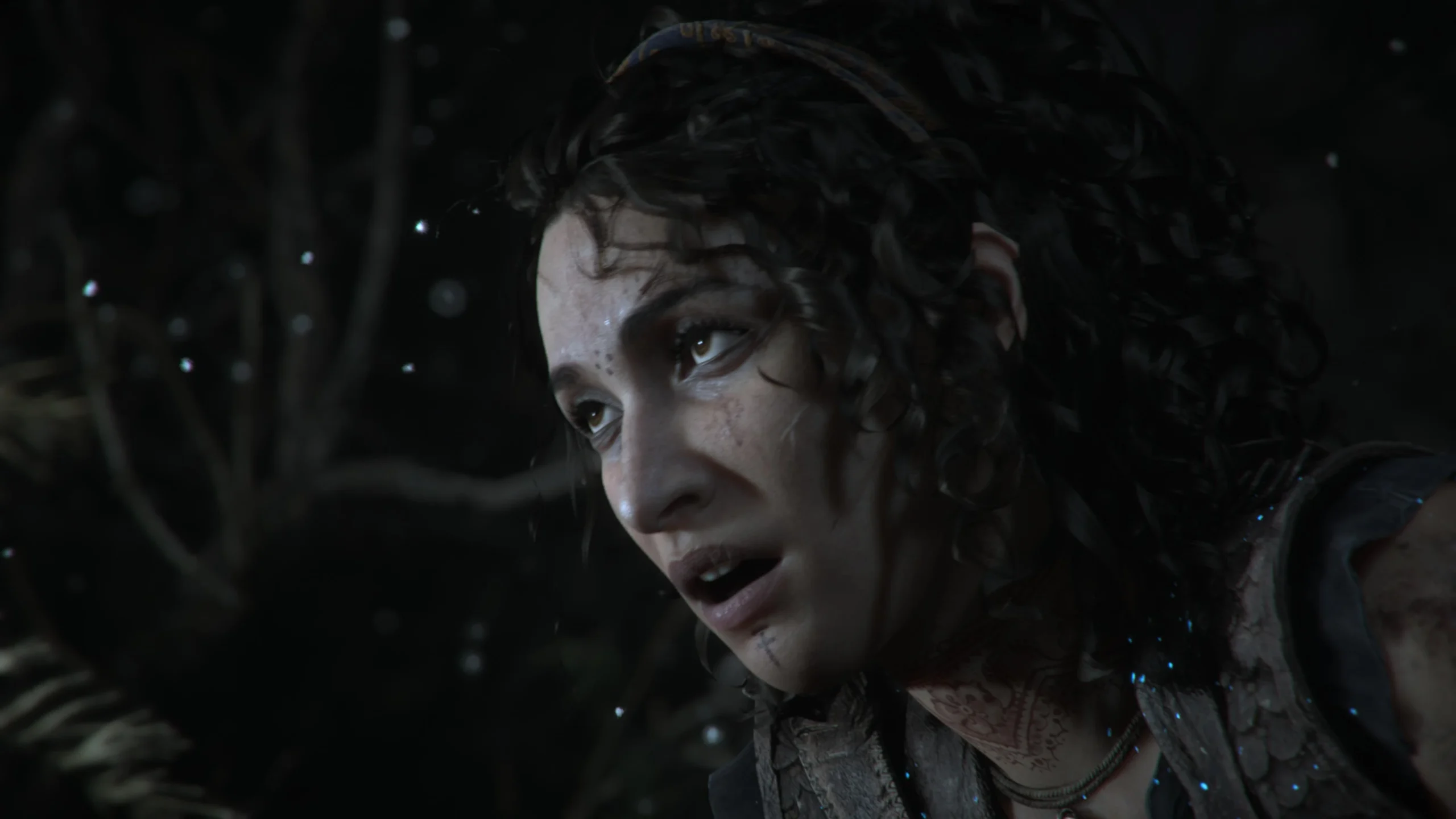
The superbly-detailed character models, and especially performance capture, on show here is something else as well. Sophia is subjected to pretty well the full spectrum of possible human emotions through the course of the game, and each comes through with a sterling combination of range and restraint. It’s all quite incredible. The talented Olivier Derivière also returns once again with another emotive and evocative score, which takes great advantage of the relatively linear, directed experience to sew the perfect button on every important moment.
I did unfortunately suffer some pretty egregious performance issues when playing on a base PS5, where some of the more complex late-game scenarios could grind the frame rate down to halt even when playing in the 60FPS mode. I didn’t notice the same issues on PS5 Pro, so if you’re able to play there it should be a much smoother ride.
By the time I rolled credits on Resonance, I felt a mixture of exhausted relief and gleeful disbelief. At the way things unfolded, at how they concluded, at the ride I had just been on and at this incredible world that Asobo has created and now drawn on for three separately fantastic video games. Here’s to more.
Reviewed on PS5 Pro | Review copy supplied by publisher


Born into the world of video games through SEGA, and in particular Sonic the Hedgehog, Kieron’s gaming tastes now consist of the latest, shiny AAA thing, an indie darling or two, and an embarrassing number of hours of Balatro.