
Okay, so here’s the thing – I never played a whole lot of the original The Legend of Zelda: Ocarina of Time. I was a PlayStation kid when it first launched, only eventually finding the series through Twilight Princess on the Wii, with subsequent attempts to go back and see what the fuss is about typically thwarted by something else new and shiny on the horizon. I’m sorry, I really did try.
That said, the impending arrival of a modern remake of the game for the Switch 2 has me ready to see the adventure through, for real. By appealing to my shallower sensibilities with a complete visual overhaul and the invention of a “jump” button, Nintendo might finally have me – especially after they invited covergeek to go and play through a solid couple hours of the game recently.
Our preview demo took us through three, curated slices of the Ocarina of Time remake – Kokiri Village and the beginning of the Great Deku Tree dungeon, a jaunt across Hyrule Fields and into Hyrule Castle Town, and finally the entirety of the Forest Temple. Those first two are familiar enough to me, but the latter is something I’ve not played before, so this felt like the perfect blend of “old” and “new” for my first taste of the Switch 2 exclusive. Luckily, I also had friend of covergeek and massive Zelda nerd, Kieran, on hand to be the nostalgic voice in the room.
The thing that’s immediately clear when firing up this version of Ocarina of Time and sitting at the title screen for the first time, and the central theme of this entire write-up, is that this is an outrageously good-looking game. There are of course arguments to be had, and already being had, about how the original game’s art has been updated for this remake, but witnessing it first-hand feels different. Everyone in the room, including the Nintendo reps on hand who’d already seen this demo multiple times, was constantly in awe of what was on-screen, from the re-orchestrated melodies of the title theme to every hand-placed thread of Link’s tunic.
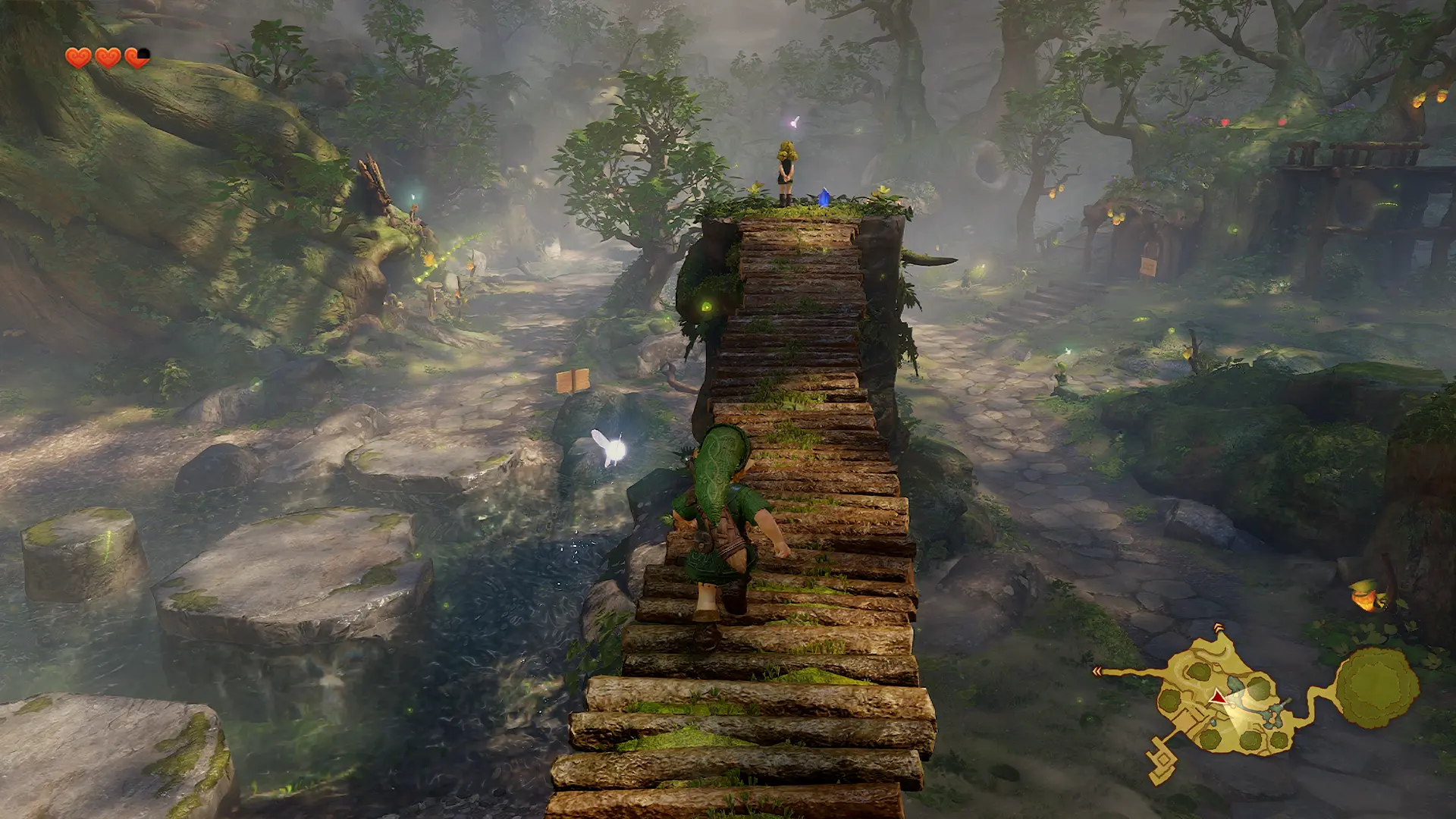
Kicking off in Kokiri, as is tradition, it’s obvious that this is a visual remake in the typical sense. The broad strokes of the original environmental layout are here, but the artists have filled in the “gaps” created by the more primitive technology of 1998. Where once were flat ground or wall textures are now fully-modelled terrain, gnarled trunks and mossy, busy rock faces. The shopkeeper’s counter and shelves have been carefully carved out of the hollow of the tree it inhabits, vines and lit-up pitcher plants hanging overhead to provide a warm, natural light for potential shoppers to better inspect the wood-carved detail of the Deku Shield on display. Nothing here appears to take away from the existing art, only add to it in a way that asks what those early artists’ intent may have been, as well as what fans might want to see.
The same goes for gameplay. Link can now dive in bodies of water, for example, or walk along fences, and – controversially – jump on command. These aren’t transformative updates, but they do work to add a little more flavour along with introducing subtle opportunities to diverge from the source material. If you’re a returning player, muscle memory should serve you in just about every part of this opening tutorial sequence, but there are differences to be found, like the little alcove where Link finds his first sword in Kokiri. It now has a slightly different layout, one that’s more encouraging of manual jumping, a change that surely wasn’t necessary but which hopefully points to more of these little hooks for fans who’ve seen everything there is to possibly see of the original game to date.
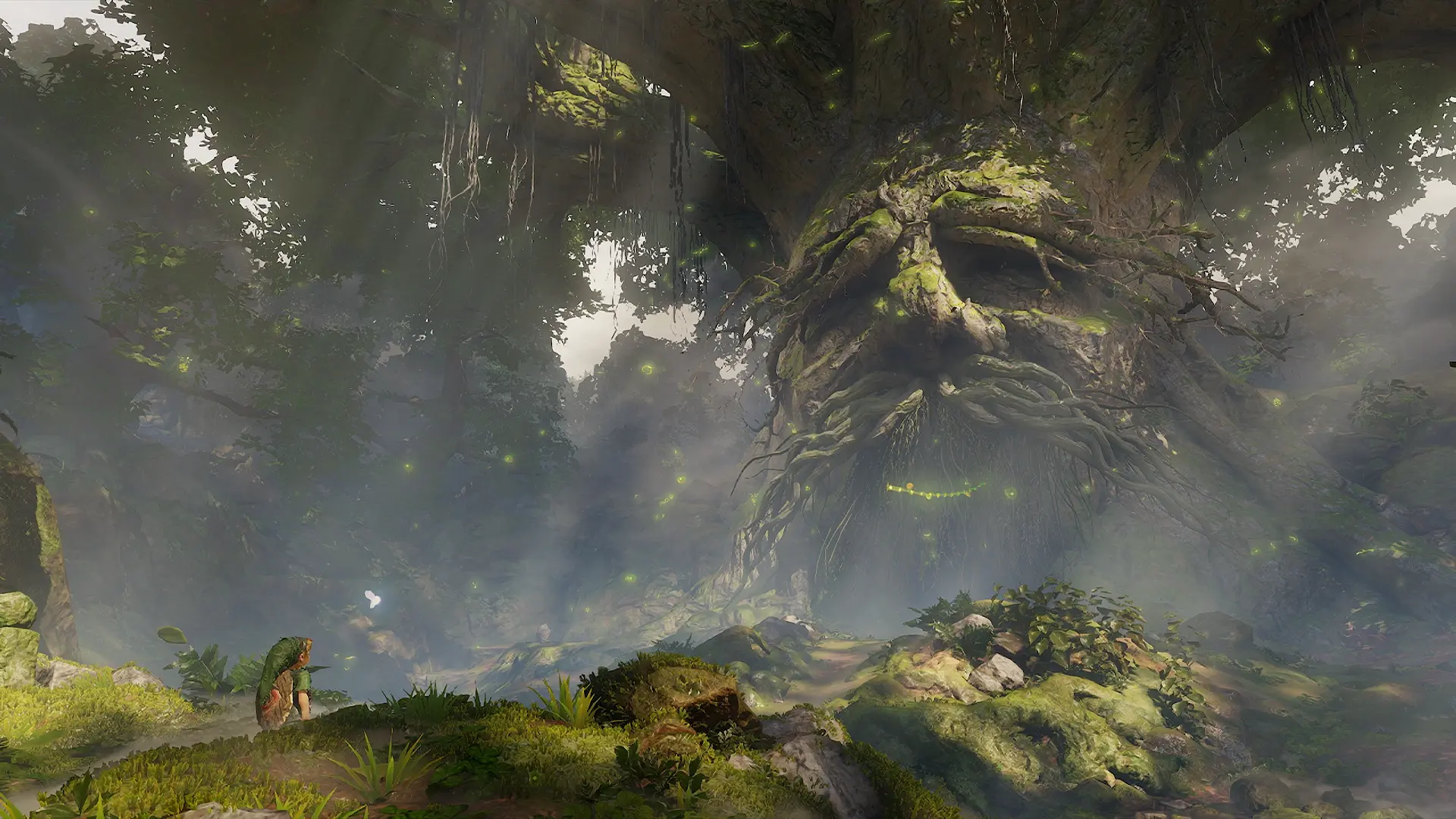
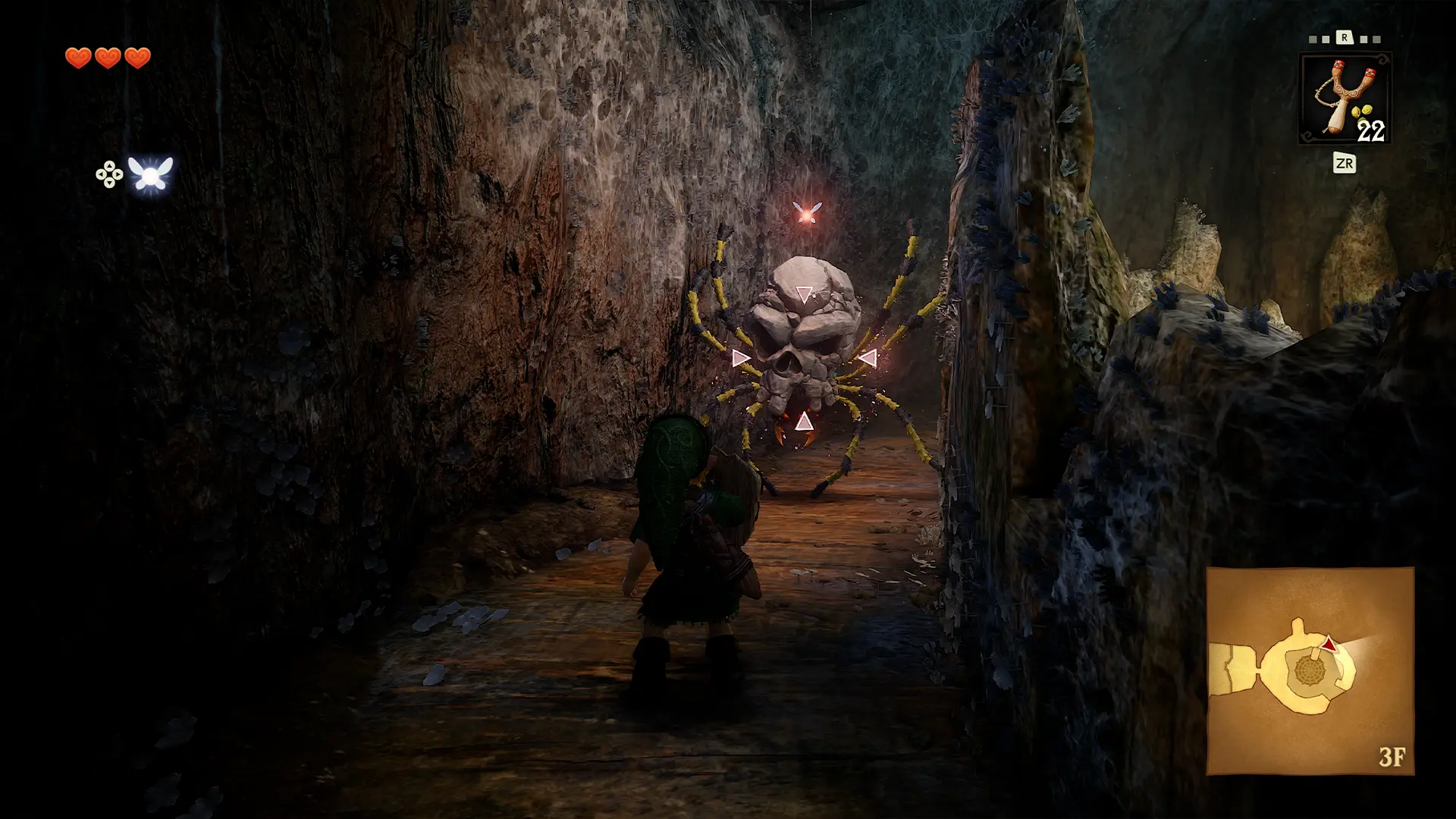
This trend follows on through the the inside of the Great Deku Tree, where thick, leafy vines extend out from the inner walls as Link’s climbing structures, fungus grows alongside moss and grass to add texture and the subtle glow of Navi’s light catches on dust particles drifting around dormant burrows. Entering this section also highlights Ocarina of Time’s new voice acting, which is limited only to major cutscenes but lends these big moments – like meeting the wise, old tree – a new level of grandeur. Link remains a silent protagonist, mercifully, and regular dialogue is still delivered in text boxes, though an amusing new UI feature is the ability to hide the text boxes. Just in case you want to take thousands of screenshots of two characters standing in silence, I guess?
Once again, aside from what seems like some slightly adjusted Skulltula placements in service of the updated geometry, going through here again is like riding a bike. If the bike was the same one from your childhood, only given a fresh coat of crushed-diamond paint and a bell sound that makes grown men cry. The Skulltulas in particular look infinitely more menacing now, their spindly, polygonal legs replaced with striking yellow-and-black fuzz and their skulls carving a newly-threatening expression out of craggy, cracked bone.
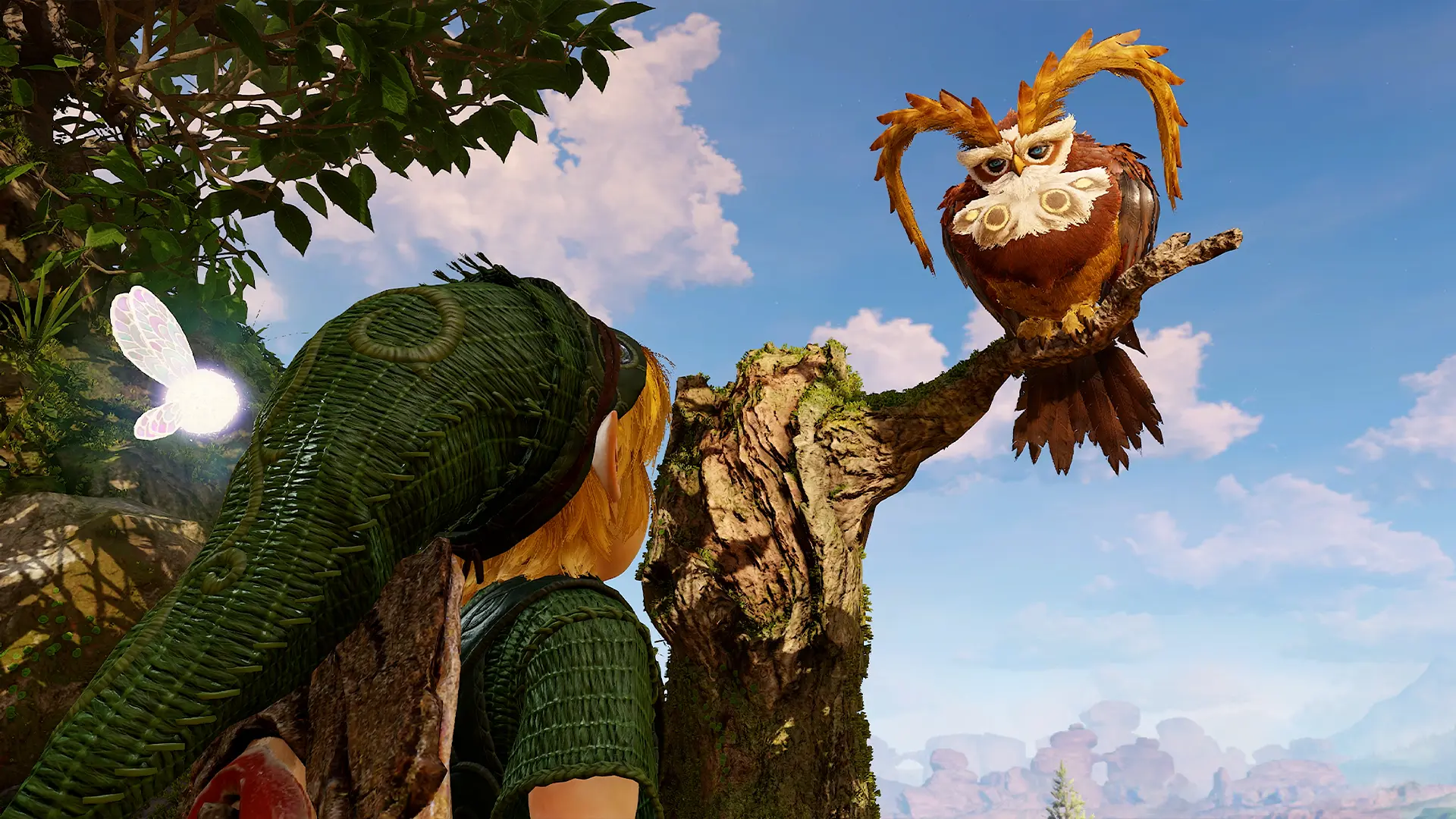
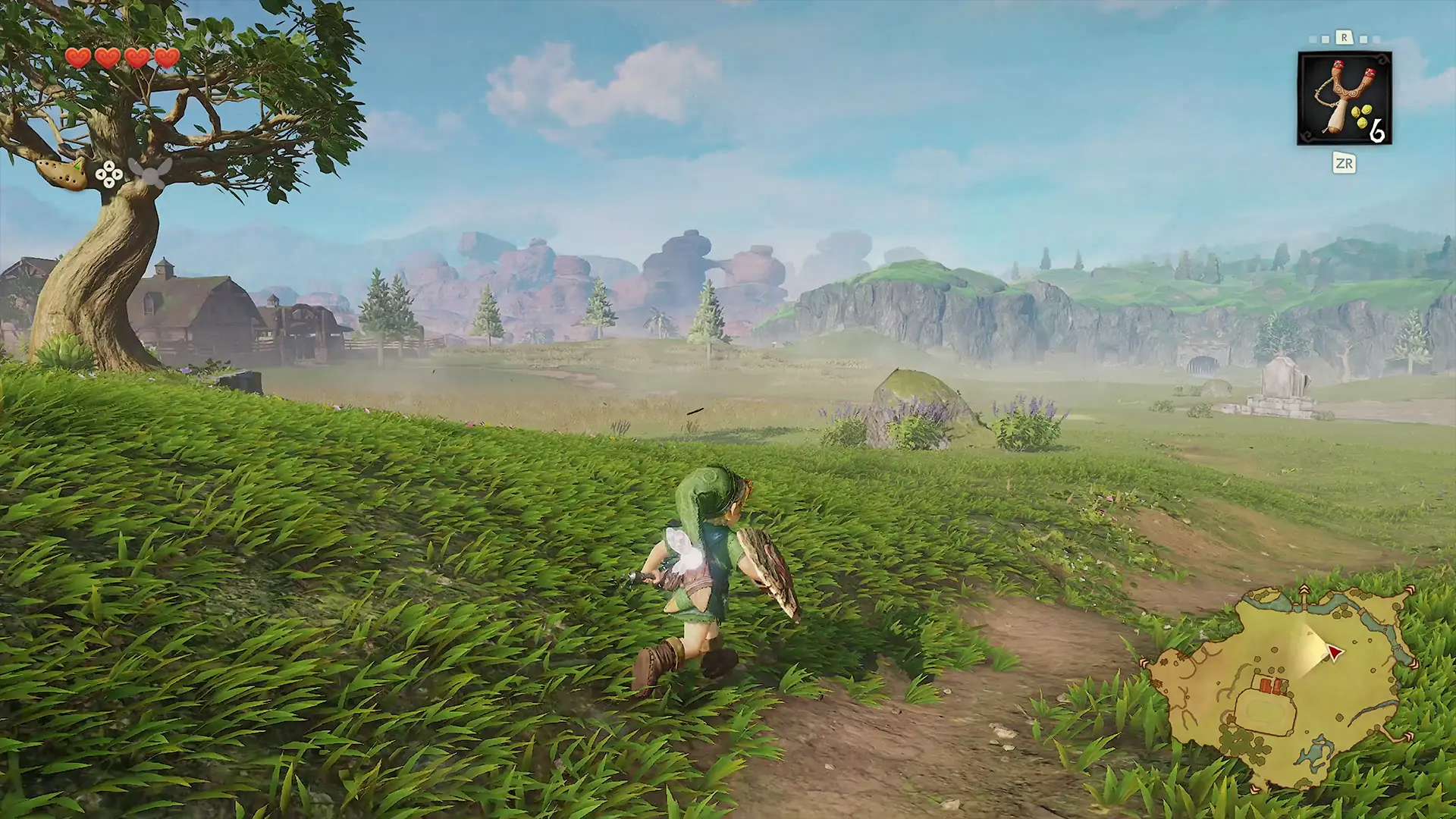
After being cut-off before fully completing the Deku Tree, we’re whisked away to Hyrule Field by way of some familiar cutscenes, like Link receiving the Ocarina and meeting Kaepora Gaebora. The game’s new Threads of Time menu chronicles what we’ve seen so far, and reminds us of our current goal – to head for Hyrule Castle and meet the mysterious princess that the great owl tells of before flying away. Just the early stages of the slowly-revealed tapestry that chronicles your journey, the same one revealed by Nintendo in that most recent Direct presentation, are already beautiful to see come together.
Exploring Hyrule Field was an interesting experience from a demo perspective, mainly because we were fairly restricted in what were able to do or look at in the context of a huge, open area that connects to a lot of interesting things. You may be able to tell from the screenshots we’ve got here that the mini-map looks slightly different, not just in having more detail but in the actual layout and shape of the land. Interesting, no? I absolutely love the way the Peheats/Peheat Larvae look in the remake, which is to say far less like killer pineapples and far more like weird, flying coral plants with razor-sharp leaves.
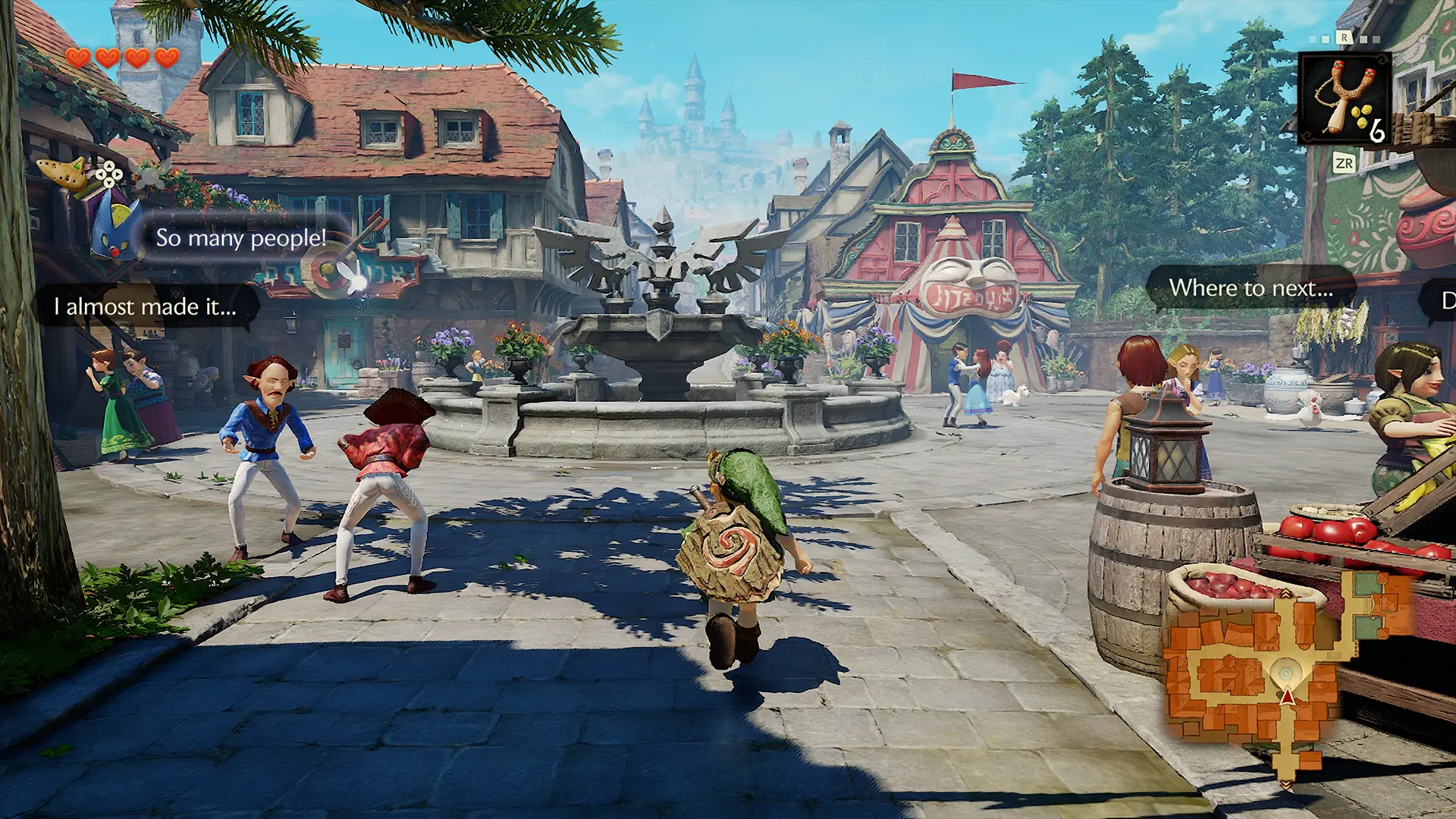
Unfortunately, while Hyrule Castle Town would no doubt be great fodder for a comparison to the original Ocarina of Time, given it’s been entirely 3D-modelled for the first time – the N64 version involved a lot of static, pre-rendered images to create the illusion of a more detailed space – we had almost no time to properly explore here. It’s still not that large of a traversable space all told, but just the central plaza area is absolutely brimming with life and lovingly-crafted design in a way that completely transforms the experience. There are some recognisable folks milling about, and some new ones, but one small update that I love are the little speech boxes that pop up over NPCs as you walk around, without having to initiate a conversation, that makes it seem more like they’re doing things with their lives.
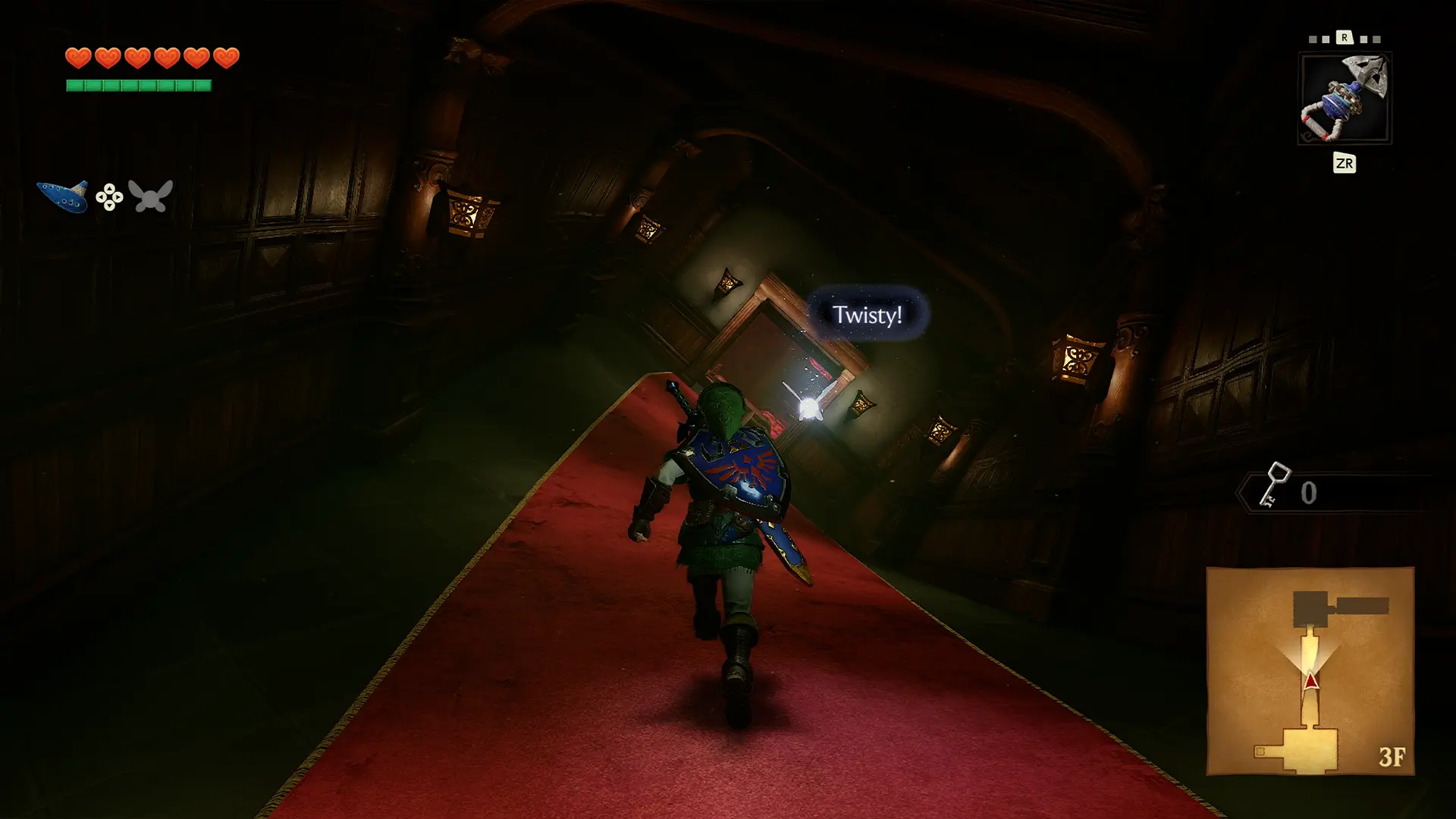
The final part of our demo fast-forwarded us to the Forest Temple, now as an adult Link. Like I said up top, this bit is actually all-new to me, so I enjoyed seeing first-hand what a classic 3D Zelda dungeon is like. Turns out, it’s a lot like a modern 3D Zelda dungeon, more so than I expected. There were a few moments – like the ghosts you need to contend with inhabiting paintings in the hallways – where I turned to Kieran and asked if I was looking at something brand new. And each time I learned that this was stuff straight out of the N64 version, albeit significantly prettier, of course.
Am I just underestimating what Nintendo was doing back in the 90s? Perhaps, but it’s heartening to experience a decades-old game for the first time and not immediately pick what’s a relic.
This dungeon, where Link must make liberal use of his Hookshot, also highlights some of the handy updates to Ocarina of Time’s UI. Chief among these is an item quick select, not unlike what we’ve seen in recent TLOZ games, which helps mitigate menu-diving. The titular ocarina is, of course, a staple feature here, and while I wasn’t game to test out the newly-added ability to hum, sing or play the various songs straight into the Switch 2’s mic, I did witness it in action and I’m suitably impressed by how well it works.
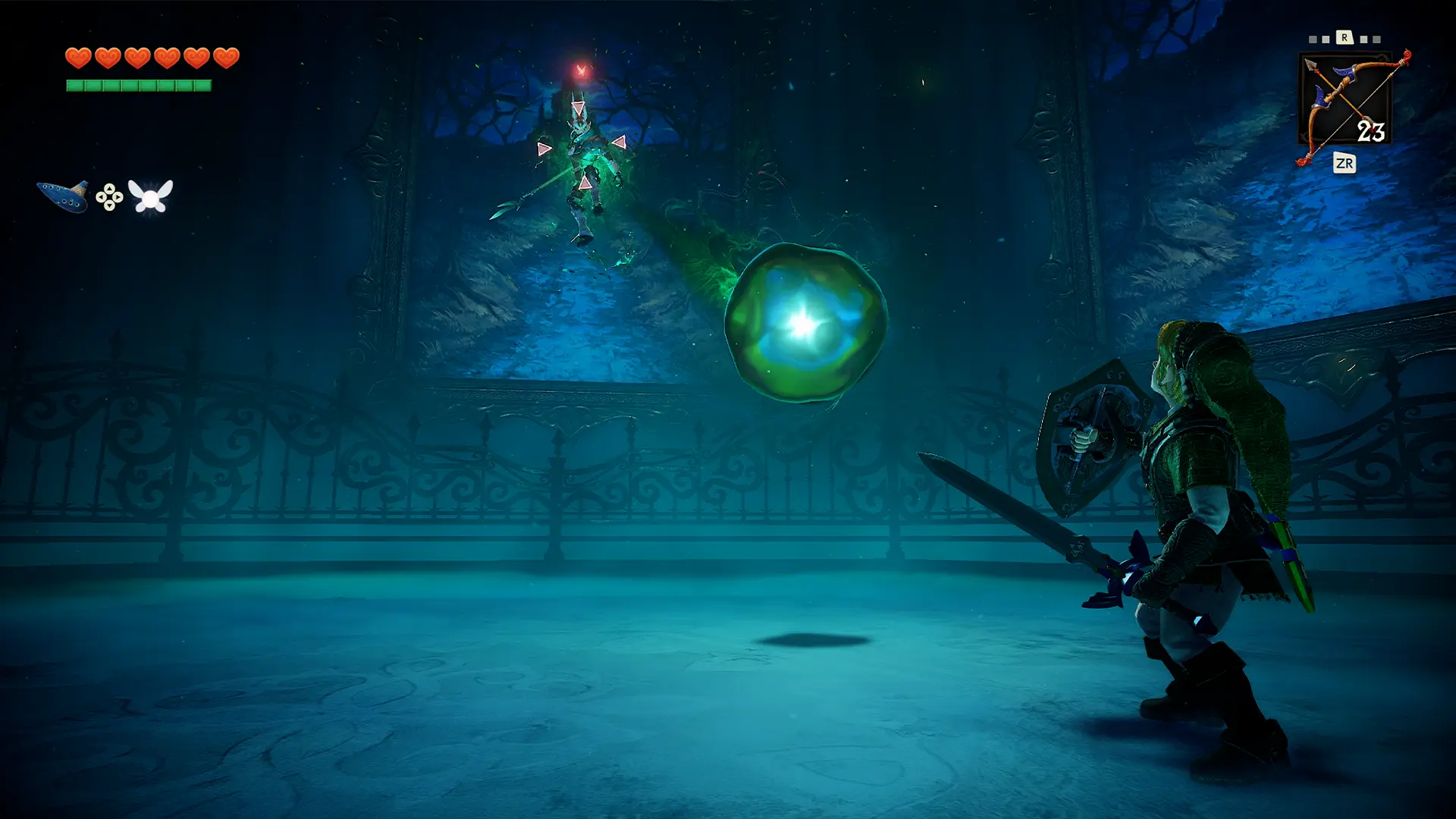
By the time we reached the Forest Temple’s finale, a confrontation with Phantom Ganon, I feel I that I’d had a pretty straightforward, pre-Breath of the Wild Zelda experience, modernised just the right amount to be acceptable as a flagship Switch 2 game. There were further contemporary updates to be found here, like the way Link will instinctively grab onto a ledge with one arm if you happen to walk off of it, which is neat. Again, it’s an exercise in filling in gaps, in thinking about the stuff between what fans already know without either drastically altering or simply transposing the original work.
Will all of that hold true for the full release? Is my lack of nostalgia for The Ocarina of Time a blessing or a curse? Time will only tell, but for now my biggest takeaway from a short time with this remake of the game is that Nintendo has chosen the right moment for a very visual overhaul of this game – the technology afforded by the Switch 2 hardware has already made this one of the most arrestingly beautiful video games I’ve played this year.
Previewed at an event hosted by Nintendo Australia
Like our content on covergeek? Hate dodgy AI summaries? Click here to add us as a Preferred Source on Google and see our posts more often!

Born into the world of video games through SEGA, and in particular Sonic the Hedgehog, Kieron’s gaming tastes now consist of the latest, shiny AAA thing, an indie darling or two, and an embarrassing number of hours of Balatro.